

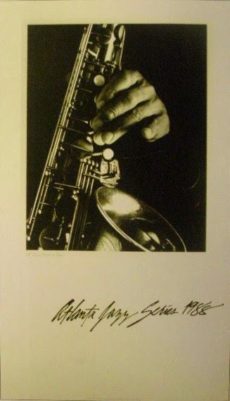
Atlanta Jazz Festival… 1988

More Posts: festival,forty,free,history,jazz,music,tradition,years
Daily Dose Of Jazz…
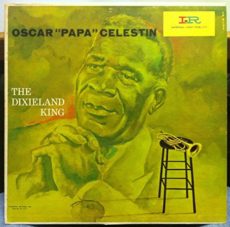
Oscar “Papa” Celestin was born on January 1, 1884 in Napoleonville, Louisiana to a Creole family. As a youth he worked on rural Louisiana plantations but eager for a better life, he worked as a cook for the Texas & Pacific Railroad, saved up money and bought used musical instruments. He played guitar and trombone before deciding on cornet as his main instrument. He took music lessons from Claiborne Williams, who traveled down the Bayou Lafourche from Donaldsonville.
Celestin played with the Algiers Brass Band by the early 1900s, and with various small town bands before moving to New Orleans in 1904, at age 20. There he played with the Imperial, Indiana, Henry Allen senior’s Olympia Brass Band, and Jack Carey’s dance band. Early in his career he was sometimes known as Sonny Celestin. Around 1910 he landed a job as leader of the house band at the Tuxedo Dance Hall on North Franklin St. at the edge of Storyville.
Keeping the name Tuxedo as the band’s name after the Dance Hall closed, they dressed in tuxedos and became one of the most popular bands hired for society functions, both black and white. He co-led the Tuxedo Band with trombonist William Ridgely and made their first recordings during the Okeh Records field trip to New Orleans in 1925. Following a fallout with Ridgely, the two led competing Tuxedo bands for about five years. Celestin’s Original Tuxedo Orchestra had Louis Armstrong, Bill Mathews, Octave Crosby, Christopher Goldston, Joe Oliver, Mutt Carey, Alphonse Picou and Ricard Alexis as a members over the years and made an additional series of recordings for Columbia Records through the 1920s. He also led the Tuxedo Brass Band, one of the top brass bands in the city.
Forced out of the business by depression economics, Papa worked in a shipyard until putting together another band after the World War II. The new Tuxedo Brass Band was tremendously popular and became a New Orleans tourist attraction. By 1953 he appeared in the travelogue Cinerama Holiday, became a regular feature at the Paddock Lounge on Bourbon Street and gave a command performance for President Eisenhower at the White House. He made regular radio broadcasts, television appearance, and more recordings with his last recording was singing on Marie LaVeau in 1954.
Bandleader, trumpeter, cornetist and vocalist Papa Celestin passed away in New Orleans, Louisiana on December 15, 1954, amassing 4000 people who marched in his funeral parade. The Jazz Foundation of New Orleans had a bust made and donated to the Delgado Museum in New Orleans, in honor of his contributions to the genre. #preserving genius

Give A Gift Of Jazz – Share
Daily Dose Of Jazz…
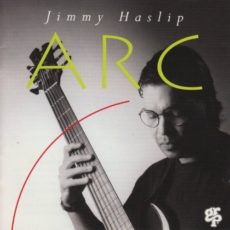
James Robert Haslip was born in the Bronx, New York on December 31, 1951 to Puerto Rican immigrants, Spanish being his first language and learned to speak English in kindergarten. His family moved to Huntington, New York when he was four years old. At age seven, he began playing drums and then moved onto other instruments such as trumpet and tuba until at age 15 when he started playing bass.
Considering himself self-taught though he took music lessons and went to a private music school, he originally went to a local music shop with his father and purchased a right-handed bass and learned to play it upside down, as he is left-handed. Surrounded by music as a young boy, from visiting nightclubs and concert venues, there was always music in the house as well. His older brother listened to classic jazz, his father to Latin and orchestra jazz and his aunt listening to sappy stuff like Jerry Vale and Johnny Mathis. In high school, Jimmy created his first band called Soul Mine with his high school classmates, playing soul music at school dances and parties.
By the early 1970s he toured alongside musicians, and moved to Los Angeles, California in 1976, playing with guitarists Tommy Bolin and Harvey Mandel. A founding member of the jazz fusion group the Yellowjackets, in 2012 he took a year hiatus that turned permanent and has gone on to produce independent projects as well as being involved with the charitable organization Union Station Foundation that serves the needs of the homeless. He has worked with Jeff Lorber, Eric Marienthal, Bruce Hornsby, Rita Coolidge, Gino Vannelli, Kiss, Tommy Bolin, Allan Holdsworth, Marilyn Scott, Chaka Khan, Al Jarreau, Donald Fagen, and Anita Baker.
A part of a combo with Allan Holdsworth, Alan Pasqua, and Chad Wackerman, he has also collaborated with Jing Chi with Robben Ford and Vinnie Colaiuta, and Modereko. Bass player and record producer Jimmy Haslip, who is an early user of the five-string electric bass, continues to produce and perform.
Inspire A Young Mind
More Posts: bass
Daily Dose Of Jazz…
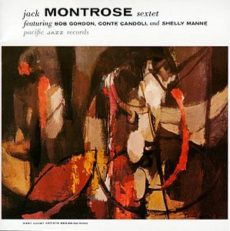
Jack Montrose was born December 30, 1928 in Detroit, Michigan. After attending university in Los Angeles, California he worked with Jerry Gray, then Art Pepper and did arrangements for Clifford Brown. He became known for cool jazz and/or West coast jazz.
Beginning in the mid-1950s Montrose’s heroin addiction became a liability and by the time he had kicked his habit, his style of jazz was no longer popular. For a while he played in strip joints until relocating to Las Vegas, Nevada where he worked in the casinos. He returned to recording in 1977 and in 1986 found some success collaborating with Pete Jolly.
He recorded with Clifford Brown, Bob Gordon, Red Norvo, Ron Stout, Ross Tompkins, Richard Simon, Paul Kreibich, Chet Baker, Elmer Bernstein, Frank Butler, Shelly Manne, Shorty Rogers and Mel Torme. Tenor saxophonist and arranger Jack Montrose aka West Coast Jack, passed away on February 7, 2006 in Las Vegas, Nevada.
Sponsored By

www.whatissuitetabu.com
More Posts: saxophone

Daily Dose Of Jazz…
Reuben Radding was born on December 29, 1966 in Washington, DC and began his musical career in the DC punk scene. After moving to New York City in 1988, he studied double bass with Mark Dresser and composition with Edgar Grana, who were strong influence on his musical development as well as William Parker.
He played in various genres from avant-garde jazz to swing, folk, pop, Klezmer and chamber music with musicians such as John Zorn, Elliott Sharp, Anthony Coleman, Andrea Parkins, Dave Douglas, Roy Campbell and Rashid Bakr. With Marc Ribot he toured Europe and Canada in 1995 and leading his own band Myth Science, he played compositions by Sun Ra. He recorded the album Love in Outer Space at the Knitting Factory. Radding co-founded the experimental trio Refuseniks with John Hollenbeck and Ted Reichman .
By early 1997 he moved to Seattle, Washington playing in the trio of alto saxophonist Wally Shoup, and performing improvisationally with musicians Saadet Türköz , Carlo Actis Dato and Wolfgang Fuchs . In 2001 he performed in a duet with Daniel Carter on the Earshot Jazz Festival, and in 2003 gained international notoriety with his release of Luminescence.
He has recorded albums with Ursel Schlicht , Stephen Gauci, Carlos Bechegas, Nate Wooley, Mary Halvorson, Frank London and Tomas Fujiwara. Currently back in New York, bassist Reuben Radding performs and records with his trio comprised of vibraphonist Matt Moran and clarinetist Oscar Noriega, as well as with an improvising trio with Tara Flandreau and Carrie Shull, and operates Pine Ear Music label.
Dose A Day-Blues Away
More Posts: bass