Daily Dose Of Jazz…
Jimmy Nottingham was born December 15, 1925 in New York City. His first professional job was with Cecil Payne in 1943 prior to serving in the Navy from 1944 to 45 and playing in Willie Smith’s band. Following his discharge from the service he worked with Lionel Hampton for two years and then with Charlie Barnet, Lucky Millinder, Count Basie and Herbie Fields through the rest of the decade.
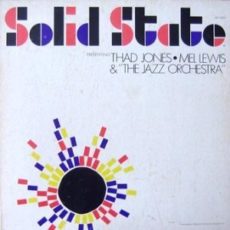
He played Latin jazz from 1951–53, then was hired by CBS as a staff musician in 1954, working for the network for more than 20 years. In his spare time he played jazz with Budd Johnson, Dizzy Gillespie, Oliver Nelson, Benny Goodman, Thad Jones/Mel Lewis and Clark Terry. He recorded with Mose Allison, Joe Cain, Coleman Hawkins, Billy Byers, Seldon Powell, Charlie Mariano, Kenny Burrell, Tony Scott, Maynard Ferguson, Jimmy McGriff, Chico O’Farrill, Shirley Scott and Sonny Stitt among numerous others.
Trumpeter Jimmy Nottingham was such a valuable big band and studio musician that he spent most of his life playing anonymously in the background and had limited chances to solo. He never released an album as a leader, but did, record four songs for Seeco Records in 1957. He passed away at the age of 52 on November 16, 1978 in his home city.
Sponsored By


More Posts: trumpet

Daily Dose Of Jazz…
Viola Wells was born Viola Gertrude Wells Evans on December 14, 1902 in Newark, New Jersey, the first child of Robert Olivia Simmons and Earle Henry Wells, who had moved to Newark from Surry County, Virginia. When her mother died from giving birth to her sister Estelle, she briefly went to live with her maternal grandparents Rev. Morgan and Annie Simmons in Virginia, who only liked to listen to secular music. In contrast, his son “Uncle Charlie” was popular locally for his song and dance routines.
Returning to Newark in 1910 after her father remarried, she started to sing in her church’s Salika Johnson choir under the direction of her music and piano teacher, Ruth Reid. This choir performed in cities outside of New Jersey and WOR Radio in Newark invited her to sing on air to raise money for the first Black YMCA. Wells also sang in her high school glee club and competed in talent shows. At nineteen she married her first husband, tap dancer Howard Nicholas.
Her career began singing in traveling shows, once filled in for Mamie Smith and was on the Theater Owners Booking Association (TOBA) circuit by 1921. Viola frequently sang at local Newark jazz clubs, eventually moving to Harlem and finding singing engagements in nightclubs there. The Twenties saw her touring throughout the US with different bands and in the 1930s, her first big break came while touring with the Banjo Bernie Band from Baltimore and then with Ida Cox.
As the 30s came to a close she moved to Kansas City, where she ran a nightclub and headed a band. Moving back to Newark in the Forties, she met and married guitarist Harold Underhill and began singing at various New York City clubs, sometimes under her married name. She replaced Helen Humes as a singer in the Count Basie Orchestra. During that period in her career she was often billed as The Ebony Stick Of Dynamite and sang at United Service Organizations (USO) shows on military bases.
She retired from music in 1946 due to diabetes and in an effort to spend more time with her family after her father was murdered. Brought out of retirement by blues historian Sheldon Harris who helped revive her career in the 1960s, Viola recorded on the album Encore For The Chicago Blues released in 1968 by Spivey Records. She also produced a blues album in 1972 called Miss Rhapsody and toured with the Harlem Blues and Jazz Band in the 1970s.
Vocalist Viola Wells received many honors in her later years, including the key to Newark. She passed away on December 22, 1984 in Belleville, New Jersey. The book Swing City: Newark Nightlife, 1925-50 by Barbara J. Kukla is dedicated to her.

Take A Dose On The Road
More Posts: vocal
Daily Dose Of Jazz…
Sonny Greer was born on December 13, 1895 in Long Branch, New Jersey. He played with Elmer Snowden’s band and the Howard Theatre Orchestra in Washington, D.C. before joining Duke Ellington, whom he met in 1919. He was Ellington’s first drummer, playing with his quintet, the Washingtonians, before moving with Ellington into the Cotton Club.
As a result of his job as a designer with the Leedy Drum Company of Indiana, Greer was able to build up a huge drum kit worth over a considerable $3,000 at the time, including chimes, a gong, timpani, and vibes.
A heavy drinker and a pool-hall hustler, often needing to retrieve his drums from the pawnbroker, in 1950 Ellington responded to his drinking and occasional unreliability by taking a second drummer, Butch Ballard, with them on a tour of Scandinavia. Sonny became enraged and the subsequent argument led to their permanent estrangement.
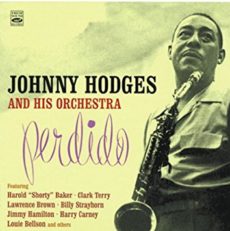
Greer continued to play, mainly as a freelance drummer, working with musicians such as Johnny Hodges, Red Allen, J. C. Higginbotham, Tyree Glenn, and Brooks Kerr. He appeared in films, briefly led his own band and never recorded as a leader. He was part of a tribute to Ellington in 1974, which achieved great success throughout the United States.
Drummer, percussionist and vocalist Sonny Greer passed away on March 23, in 1982.
Sponsored By
More Posts: drums,percussion,vocal
Daily Dose Of Jazz…
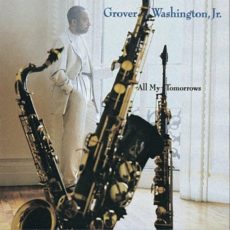
Grover Washington Jr. was born on December 12, 1943 in Buffalo, New York. His mother was a church chorister and his father was a saxophonist and collected old Jazz gramophone records, which put music everywhere in the home. Growing up he listened to Benny Goodman, Fletcher Henderson, and others like them. At the age of eight his father gave him a saxophone and he practiced and would sneak into clubs to see famous Buffalo blues musicians.
Leaving Buffalo he played with a Midwest group called the Four Clefs and then the Mark III Trio from Mansfield, Ohio. Then drafted into the U.S. Army he met drummer Billy Cobham, who as a mainstay in New York City, he introduced Washington to musicians around the city. After leaving the Army, he freelanced around New York City, but eventually landed in Philadelphia in 1967. The first two years of the Seventies decade provided his first recording sessions on Leon Spencer’s debut and sophomore albums on Prestige Records, together with Idris Muhammad and Melvin Sparks.
His big break came when alto saxophonist Hank Crawford couldn’t make a recording date with Creed Taylor’s Kudu Records and Grover took his place. This led to his first solo album, Inner City Blues in which he displayed his talent on the soprano, alto, tenor, and baritone saxophones.
His rise to fame with his first three albums established him as a force in jazz and soul music, but it was his fourth album in 1974, Mister Magic, that became his major commercial success. The album crossed over all the charts and with guitarist Eric Gale in tow again for the 1975 follow-up album Feels So Good proved both could reach #10. A string of acclaimed records brought Washington through the 1970s, culminating in the signature piece Winelight in 1980, in which he collaborated on Just The Two Of Us with Bill Withers and dedicated Let It Flow to Dr. J of the Philadelphia 76ers. The album went platinum, won two Grammy awards for Just the Two Of Us and Winelight and was nominated for both Record and Song Of The Year.
During the late 1980s and early 1990s Washington gave rise to Kenny G, Walter Beasley, Steve Cole, Pamela Williams, Najee, Boney James and George Howard. Over the course of his career he performed and recorded with Kathleen Battle, Kenny Burrell, Charles Earland, Dexter Gordon, Urbie Green, Eddie Henderson, Masaru Imada, Boogaloo Joe Jones, Gerry Mulligan, Don Sebesky, Johnny “Hammond” Smith, Mal Waldron and Randy Weston.
On December 17, 1999 while waiting in the green room after performing four songs for The Saturday Early Show, at CBS Studios in New York City, saxophonist Grover Washington Jr. collapsed. He was pronounced dead at about 7:30 pm at St. Luke’s-Roosevelt Hospital and his doctors determined he had suffered a massive heart attack. He was 56. In tribute, a large mural of him, part of the Philadelphia Mural Arts Program, is just south of the intersection of Broad and Diamond streets.
Give The Gift Of Knowledge

Atlanta Jazz Festival… 1985
More Posts: festival