

Daily Dose Of Jazz…
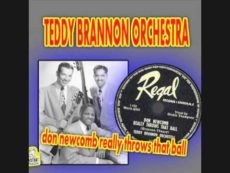
Teddy Brannon was born Humphrey Brannon on September 27, 1916 in Moultrie, Georgia. He began learning piano at age nine and played in dance bands in high school while working locally in Newark, New Jersey nightclubs from 1937 – 1942.
Between 1942 to 1945 he was a member of Benny Carter’s ensemble, after which he freelanced on 52nd Street in New York City. The 1950s and 1960s saw Brannon working in the studios with doo wop groups and though he never recorded as a leader, he recorded as a leader with his orchestra in the late Forties and played extensively in the jazz idiom with but not limited to Don Byas, Roy Eldridge, Buddy Rich, Bennie Green, Johnny Hodges, Jonah Jones, Don Newcomb and Illinois Jacquet.
An accomplished accompanied he performed and recorded with such singers as Dinah Washington, Ruth Brown, Billie Holiday, and Babs Gonzales, who was Brannon’s cousin. Pianist Teddy Brannon passed away on February 24, 1989 in Newark, New Jersey.

Give A Gift Of Jazz – Share

More Posts: piano
Daily Dose Of Jazz…
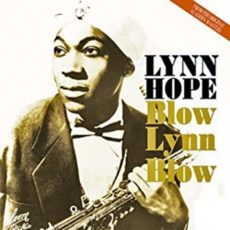
Lynn Hope was born on September 26, 1926 in Birmingham, Alabama and was noted for his apparel and instrumental remakes of established pre-rock pop anthems. He joined King Kolax’s band when he graduated from high school during the 1940s. He later converted to Islam becoming known for wearing a turban, though few ever called him by his Muslim name, Al Hajji Abdullah Rascheed Ahmed.
He signed with Miracle Records in 1950, but the contract proving invalid moved to Premium Records, There he cut Tenderly, a song that was later picked up by the Chess label. Hope recorded often for Aladdin Records between 1951 and 1957, doing interpretations of such jazz standards as September Song and Summertime. While these numbers were often performed with little or no melodic embellishment or improvisation, the flip sides were often fierce up tempo blues or jump tunes.
Tenderly earned him his only hit in 1950, reaching number eight R&B and #19 pop charts. He made his last sessions for King in 1960, then fell from sight. Tenor saxophonist Lynn Hope passed away on February 24, 1993.
Inspire A Young Mind
More Posts: saxophone
Daily Dose Of Jazz…
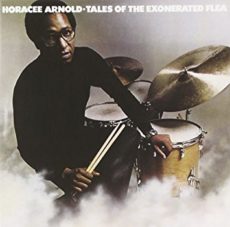
Horacee Arnold was born Horace Emmanuel Arnold on September 25, 1937 in Wayland, Kentucky. The drummer first began playing in 1957 in Los Angeles, California while holding down a position in the Coast Guard. It was in 1959, he began performing as “Horacee” when he joined the David Baker big band, and also played with Roland Kirk and Charles Mingus that year. In 1960 he became the drummer in a trio with Cecil McBee and Kirk Lightsey.
By the 1960s he was working with pianist and composer Hasaan Ibn Ali and Henry Grimes, and in 1964 with The Bud Powell Trio at Birdland. Horace also performed as part of the Alvin Ailey American Dance company on a tour of Asia. The late Sixties saw him performing with Hugh Masekela and Miriam Makeba.
Continuing his education Arnold studied composition under Heiner Stadler, Hy Gubenick, and classical guitar with Ralph Towner. In 1967 he founded his own ensemble, The Here and Now Company, with Sam Rivers, Karl Berger, Joe Farrell, and Robin Kenyatta in tow.
The 1970s was when Arnold became one of the best-known jazz fusion drummers, playing and recording with Return to Forever, Stan Getz, Archie Shepp and Billy Harper. During this period of his career he released two of his own solo albums. He later formed a three-ensemble called Colloquium III with Billy Hart and Freddie Waits.
In the 1980s Arnold became an educator conducting workshops at the New York Drummers’ Collective and a professor at William Paterson College in New Jersey. He worked as a session musician and played with Kenny Burrell. He formed a trio that featured Dave Friedman and Anthony Cox.
Sponsored By

www.whatissuitetabu.com
More Posts: drums
Daily Dose Of Jazz…
John Wallace Carter was born on September 24, 1929 in Fort Worth, Texas and attended I.M. Terrell High School. He played music with schoolmates Ornette Coleman and Charles Moffett in the 1940s.
From 1961, he was based mainly on the West Coast, where he met Bobby Bradford in 1965 and went on to work together on a number of projects, most notably the New Jazz Art Ensemble. He also played with Hampton Hawes and Harold Land. In the Seventies he became well known for his extraordinary solo concerts.
At New Jazz Festival Moers 1979 he and the German clarinetist Theo Jörgensmann performed for three days. This catapulted him to garnering wide recognition from around the world. He and Jörgensmann met again in 1984. The program of the Berlin Jazz Fest was built around the clarinet and after Carter’s solo performance, he and Jörgensmann also played together.
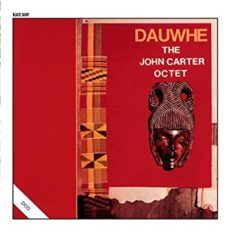
Between 1982 and 1990 Carter composed and recorded Roots and Folklore: Episodes in the Development of American Folk Music, five albums focused on African Americans and their history. The complete set was acclaimed by jazz critics as containing some of the best releases of the 1980s.
A clarinet quartet with Perry Robinson, Jörgensmann and Eckard Koltermann was planned for 1991, but Carter did not recover from a nonmalignant tumor. Later that same year he was inducted into the Down Beat Jazz Hall of Fame.
He recorded fourteen albums as a leader on the Black Saint, Flying Dutchman, Revelation, Dark Tree, Emanem, and Gramavision record labels. As a sideman he recorded with Horace Tapscott, Vinny Golia, and the Clarinet Summit. Clarinetist, saxophonist and flutist John Carter passed away on March 31, 1991.
Dose A Day-Blues Away
Daily Dose Of Jazz…
Bill Tole was born on September 23, 1937 and raised in Pittsburgh, Pennsylvania. His father was a high school band director, trombonist and pianist, his mother a music teacher, played piano and performed as a vocalist. Graduating from Duquesne University School of Music, he auditioned for the Tommy Dorsey Orchestra, went on tour and then joined the Air Force dance band, The Airmen of Note. He was solo trombonist and assistant leader for four years.
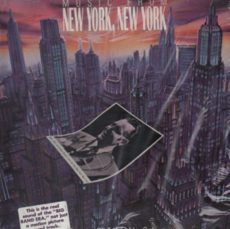
Moving to New York City in the 1960s he played with Broadway shows, headliners artists, club dates and recording during the studio’s prime years. Afterwards, he moved to Los Angeles in 1967 and recorded albums, commercials, television and movies. His career took a turn when a producer put out a casting call for a trombonist to portray Tommy Dorsey in a film starring Liza Minelli and Robert Deniro. They realized their luck with Tole who understood the era of music, professionally played trombone and had his own big band for the movie. He played as sweet as Dorsey, looked the part of the character and his band recorded their version of the soundtrack of New York, New York after the film was completed.
Bill has worked with Ray Anthony, Tex Beneke, Louis Bellson, Les Brown, Bob Crosby, Harry James, Quincy Jones, Nelson Riddle and Si Zentner as well as vocalists Frank Sinatra, Tom Jones, Ella Fitzgerald, Pearl Bailey and Tony Martin, to name a few.
Trombonist Bill Tole, very much in demand, continues to perform, record and tour as a soloist, teacher and clinician across the globe.
Take A Dose On The Road
#preserving genius
More Posts: trombone