

Daily Dose Of Jazz…
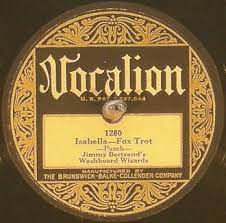
Jimmy Bertrand was born on February 24, 1900 in Biloxi, Mississippi, and moved to Chicago, Illinois in 1913. He began playing in the State Theatre Orchestra before joining Erskine Tate’s Vendome Orchestra from 1918 to 1928. He became active on the blues and jazz scene of the 1920s in Chicago.
During the 1920 he did a great deal of teaching and his pupils included Wallace Bishop, Lionel Hampton, and Big Sid Catlett. He recorded with Louis Armstrong, Johnny Dodds, Erskine Tate, and Blind Blake, amongst many others.
Jimmy went on to play with Don Cooke and Lee Collins. He led own group, Jimmy Bertrand’s Washboard Wizards during that period, and worked often with pianist Jimmy Blythe.
He led his own band during the 1930s and early 40s before retiring and going to work in a meat packing plant. Percussionist and xylophonist Jimmy Bertrand, who was the brother-in-law of Jelly Roll Morton, transitioned in Chicago in August 1960.

More Posts: bandleader,drums,history,instrumental,jazz,music,xylophone
Daily Dose Of Jazz…
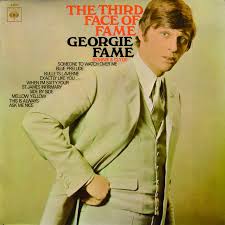
Leslie Richard Condon born February 23 1930 in Kennington, London, England of Irish stock, took up the trumpet in his late teens. Largely self-taught, he worked with local dance bands before doing his national service, when he played for the Eager Beavers at RAF Wroughton, Wiltshire.
Turning professional in 1952, he played with the usual round of palais bands and then took to the sea as a member of Geraldo’s Navy. Working as a musician on Cunard liners crossing the Atlantic allowed him to worship at the feet of the great exponents of bebop on New York’s 52nd Street. Originally a conventional jazz player, like others of the second wave of modernists he was bowled over by bebop, forging an eloquent style of his own, building on what he knew of Dizzy Gillespie, Fats Navarro and Miles Davis.
In 1954, he became a founder member of British bebop pioneer Tony Crombie’s new band, playing alongside trumpeter Jimmy Deuchar and trombonist Ken Wray. Despite having little formal musical education, he was a valued composer and arranger, contributing to the Crombie band book and recording with the drummer for Decca in 1955. He also began to record and solo regularly with bands led by Vic Lewis and Hayes, before joining drummer Tony Kinsey’s successful quintet.
Condon was among the local players added to form Woody Herman’s (Anglo-American) Herd when the veteran US bandleader toured the UK in 1959. He formed a rewarding friendship with Herman’s lead trumpeter Reunald Jones, formerly a key member of the Count Basie orchestra.
He went on to have a year-long association with Jamaican alto-saxophonist Joe Harriott, famous for his pursuit of “free form” jazz alongside his more structured pieces. He went on to work with a dazzling array of local movers and shakers, recording with the Hayes and Tracey big bands and performing with just about every other significant jazz modernist of the day. An active studio musician, he played for radio and television shows, recorded with singer Georgie Fame and appeared on the Beatles’ Revolver album. His theatre work included a two-year stint with the musical show Bubbling Brown Sugar and a visit to South Africa in 1981, accompanying the singer Jack Jones.
Dental problems forced Condon to cease playing the trumpet in 1990, after which he confined himself to playing the piano at home, composing and studying music. Trumpeter Les Condon, one of the modern players, transitioned on October 30 2007.
More Posts: history,instrumental,jazz,music,trumpet
Daily Dose Of Jazz…
Gordon “Whitey” Mitchell was born on February 22, 1932 in Hackensack, New Jersey. He began on clarinet and tuba as a youngster before choosing bass as his primary instrument. He studied radio & television at Syracuse University and then plunged into the New York jazz scene, becoming a regular at the famed nightspots Birdland and Basin Street East.
He led his own groups at The Village Vanguard and The Embers and later toured with big band greats Benny Goodman and Pete Rugolo, played Carnegie Hall with Gene Krupa, appeared with Buddy Rich, Ella Fitzgerald, Dizzy Gillespie and Lester Young on Jazz At The Philharmonic.
In the early 1950s he played with Elinor Sherry and Shep Fields before serving in the Army during the Korean War. From 1954 he worked freelance in New York City, playing with Gene Krupa, Mel Tormé, Jack Jones, J.J. Johnson, Kai Winding, Lester Young, Charlie Ventura, Herbie Mann, Betty Roche, Oscar Pettiford, Gene Quill, Joe Puma, Johnny Richards, Peter Appleyard, André Previn, Benny Goodman, and again with Rugolo.
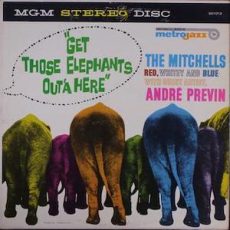
He performed on hundreds of recording sessions, television and film scores but only released one album under his own leadership on ABC-Paramount in 1956, and one with his brother Red and Blue Mitchell in 1958 as The Mitchells: Red, Whitey & Blue, released on MetroJazz Records. Whitey recorded with Anita O’Day, Barbra Streisand, Anthony Newley, and played the bass solo introduction on Ben E. King’s hit record Stand By Me.
After 1965 he largely ceased playing jazz and moved to Hollywood, California on advice from Lenny Bruce and André Previn to pursue a career as a television writer. He worked on shows such as Get Smart, All In the Family, The Jeffersons, Good Times, The Mary Tyler Moore Show, The Odd Couple, Mork and Mindy, and several Bob Hope television specials. He wrote the feature film Private Resort starring Johnny Depp.
As an educator he taught screenwriting at UCLA and UC Riverside. In 1995 he had his own radio show, The Power Lunch and wrote a golf column for a local magazine. He recorded his CD Just In Time and played jazz in all the nightclub venues. He was the author of two books, Hackensack to Hollywood: My Two Show Business Careers and Star Walk: A Guide to the Palm Springs Walk of Stars.
Bassist and television writer/producer Whitey Mitchell, who often placed in the Metronome and Downbeat jazz polls, transitioned on January 16, 2009.
More Posts: bandleader,bass,history,instrumental,jazz,music
Daily Dose Of Jazz…
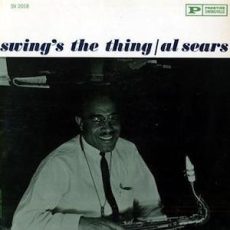
Albert Omega Sears was born February 21, 1910 in Macomb, Illinois. His first major gig came in 1928 when he replaced Johnny Hodges in Chick Webb’s ensemble. The Thirties had him first playing with Elmer Snowden, then led his own groups between 1933 and 1941.
In the early 1940s he joined Andy Kirk and Lionel Hampton before he became a member of Duke Ellington’s Orchestra in 1944, replacing Ben Webster. He remained with Ellington until 1949, when first Jimmy Forrest and then Paul Gonsalves took over his chair. He played with Johnny Hodges in 1951–52 and recorded the tune Castle Rock with him. The tune became a hit but unfortunately was released under Hodges’s name.
Sears was in Alan Freed’s band when Freed did live shows, being introduced as “Big Al Sears”. He played as a studio musician on R&B albums in the 1950s and recorded two albums for Swingville in 1960. He also owned several record labels, including Arock, Serock, and Gator.
Tenor saxophonist and bandleader Al Sears, who recorded four albums as a leader, transitioned on March 23, 1990 in St. Albans, New York at the age of 80.
More Posts: bandleader,history,instrumental,jazz,music,saxophone
Daily Dose Of Jazz…
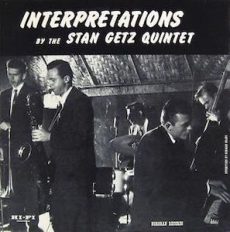
Frank Isola was born on February 20, 1925 in Detroit, Michigan and was heavily influenced by Gene Krupa. He played in the U.S. military during World War II and then studied and performed in California with Bobby Sherwood and Earle Spencer.
Moving to New York City he played with Johnny Bothwell and Elliot Lawrence in 1947. Following this, in the Fifties Frank played with Stan Getz and Gerry Mulligan, as well as with Mose Allison, Eddie Bert, Bob Brookmeyer, Jimmy Raney, Johnny Williams and Tony Fruscella.
By the late 1950s Isola returned to Detroit and kept working periodically with local bands or in jam sessions but well out of the spotlight. He was active in the Cass Corridor area of Detroit in the 1970s playing jazz standards with pianist Bobby McDonald and others at Cobb’s Corner Bar.
He worked as a drummer briefly at Captain Hornblower’s in Key West, Florida in the late 1980s with pianist Johnny Williams. By the early Nineties, he moved back north and was playing weekly at Tom’s Steamer’s Bar in Grosse Pointe, Michigan. In 1994 and 1995 Isola played at The Windsor Jazz Festival in Ontario, Canada backing Franz Jackson and Marcus Belgrave. The 1994 concert was released on Parkwood Records as Live at Windsor Jazz Festival III with Jackson and Belgrave as co-leaders.
He recorded fourteen albums between 1954 and 1981 with Getz, Mulligan, Mose Allison, Bob Brookmeyer, Dick Garcia, Franz Jackson, Charlie Parker and Bob Szajner. Drummer Frank Isola, who never led a recording session, transitioned on December 12, 2004.
More Posts: drums,history,instrumental,jazz,music