
Daily Dose Of Jazz…
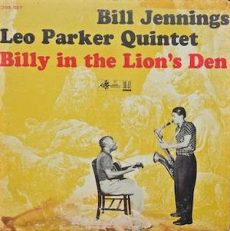
Bill Jennings was born September 12, 1919 in Indianapolis, Indiana and started out with his twin brother, Albert, in a trio called The Three Spades. He would later work with Louis Jordan and his Tympany Five, Wild Bill Davis Trio, Jack McDuff, Willis “Gator” Jackson, Bill Doggett, Louis Armstrong, Chris Powell And His Five Blue Flames, Hot Lips Page and others.
Recording as both a leader and a sideman, Bill has influenced numerous musicians in the genres of jazz, soul, R&B, and blues guitar. B.B. King often mentioned Jennings as one of his biggest influences. He recorded with such artists as Leo Parker, King Curtis, Ella Fitzgerald, Jerry Daniels of the Inkspots, Kenny Burrell, Betty Roche and Stuff Smith.
His unique ability to play in many styles included swing, bop, jump blues, R&B, and pop. Jennings played on Fever by Little Willie John, which made the Billboard R&B chart in the U.S. and peaked at number 24 on the Billboard Hot 100.
A left-handed player, Bill played guitar upside down, with the high strings at the top, which gave him a different approach to phrasing and bending the strings. Later in his career, he lost a finger on his fretting hand and began playing bass guitar.
Guitarist and composer Bill Jennings, who was described as “The Architect Of Soul Jazz”, transitioned at Veterans Hospital in Indianapolis on November 29, 1978 at the age of 59.
More Posts: bandleader,composer,guitar,history,instrumental,jazz,music
Daily Dose Of Jazz…
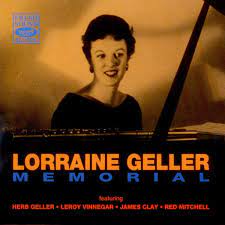
Lorraine Winifred Geller was born Lorraine Walsh on September 11, 1928 in Portland, Oregon. She started out with the all-female big band Sweethearts of Rhythm, based in New York. She met saxophonist Herb Geller, married him in 1951, and together they moved to Los Angeles, California where they played with many musicians on the West Coast jazz scene, such as Shorty Rogers, Zoot Sims, Stan Getz, and Red Mitchell. She also did sessions with Charlie Parker and Dizzy Gillespie.
In 1957, she accompanied Kay Starr and the following year, concentrating on raising her daughter, she pared down her performances. She did, however, play at the first Monterey Jazz Festival. On October 13, 1958 pianist Lorraine Geller transitioned in Los Angeles, attributed to heart failure or pulmonary infection.
More Posts: bandleader,history,instrumental,jazz,music,piano
Daily Dose Of Jazz…
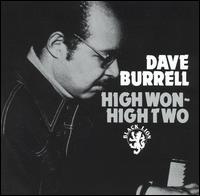
Herman Davis Burrell was born September 10, 1940 in Middletown, Ohio and grew fond of jazz at a young age after meeting Herb Jeffries. He studied piano and music at the University of Hawaii from 1958 to 1960, then starting in 1961 he attended the Berklee College of Music in Boston, Massachusetts. 1965 saw him walking across the stage to receive degrees in composition/arranging and performance. While in Boston, he played with Tony Williams and Sam Rivers.
After graduation Dave moved to New York City, where he worked and recorded with Grachan Moncur III, Marion Brown, and Pharoah Sanders. He also started the Untraditional Jazz Improvisational Team with saxophonist Byard Lancaster, bassist Sirone, and drummer Bobby Kapp. Three years later he co-founded The 360 Degree Music Experience with Moncur and Beaver Harris, recording two albums with the group. The following year, Burrell began an association with Archie Shepp, with whom he would play the 1969 Pan-African Festival in Algiers, Algeria. They would go on to record nearly twenty albums.
Burrell’s debut as a leader was an album titled High Won-High Two that was released in 1968. This was followed by Echo and La Vie de Bohème recorded in Paris in 1969, and Round Midnight for Nippon Columbia.
In 1978, with Swedish poet and lyricist Monika Larsson he composed a jazz opera entitled Windward Passages, with an album of the same name, based on the opera, released in 1979. Their touring and recording collaborations resulted in four more albums. He would later appear on seven David Murray albus recorded between 1988 and 1993.
Burrell tours and performs as a soloist and as a leader of a duo, trio, and larger ensembles. His recordings have received high praise from Down Beat, Village Voice, Jazz Times and others. Into the new millennium he has continued to perform, record and release several albums including a live recording in Italy. In 2022, pianist Dave Burrell donated his archive to the Center for American Music in the University of Pittsburgh Library System. He continues to be active in jazz.
More Posts: bandleader,composer,history,instrumental,jazz,music,piano
Daily Dose Of Jazz…
Fred Stone was born on September 9, 1935 in Toronto, Ontario, Canada and was the son of saxophonist Archie Stone. His initial musical studies were with his father. At the age of 14 he began studying the trumpet with Donald Reinhardt in Philadelphia, Pennsylvania and spent every summer in that city from 1950–1955. At home he studied music theory and music composition with Gordon Delamont and John Weinzweig.
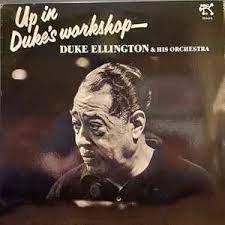
Commencing his performance career in 1951 at the age of 16 he played in Benny Louis’s big band. From 1955 to 1967 he was a trumpeter in various orchestras related to the Canadian Broadcasting Corporation, including the CBC Symphony Orchestra. During the late 1950s and 1960s he performed widely as a concert soloist with orchestras throughout North America. He was an active performer as a jazz musician, playing regularly with Ron Collier , Phil Nimmons , the Boss Brass, and Lighthouse and he toured North America and Europe with the Duke Ellington Orchestra.
Returning to Toronto in 1971, Stone became highly involved with his work as a teacher, and operated his own private studio where he taught improvisational theory and music composition. His performance career virtually ceased for the remainder of the decade, although he remained active as a composer. Between 1971 and 1983 he mainly focused on his work as a composer and teacher, making only periodic public performances, and often with ensembles composed largely of his students.
In 1984 he formed Freddie’s Band, a jazz ensemble in residence at The Music Gallery in Toronto. Flugelhornist, trumpeter, pianist, composer, writer, and music educator Fred Stone recorded eleven albums as a sideman before he transitioned on December 10, 1986.
More Posts: educator,flugelhorn,history,instrumental,jazz,music,trumpet,writer

Daily Dose Of Jazz…
Elmer Schoebel was born in East St. Louis, Illinois on September 8, 1896. Early in his career he played along to silent films in Champaign, Illinois. After moving on to vaudeville late in the 1910s, he played with the 20th Century Jazz Band in Chicago, Illinois in 1920.
1922-23 saw him as a member of the New Orleans Rhythm Kings, then led his own band, known variously as the Midway Gardens Orchestra, the Original Memphis Melody Boys and the Chicago Blues Dance Orchestra, before joining Isham Jones in 1925. After returning to Chicago, Elmer played with Louis Panico and Art Kassel, and arranged for the Melrose Publishing House.
By the 1930s, Schoebel was writing and arranging, working as the chief arranger for the Warner Brothers publishing division. From the 1940s onward he did some performing with Conrad Janis, Blue Steele’s Rhythm Rebels (1958), and with his own ensembles in St. Petersburg, Florida. He continued to play up until his death.
Schoebel wrote a number of standards, including Bugle Call Rag, Stomp Off- Let’s Go, Nobody’s Sweetheart Now, Farewell Blues, and Prince of Wails. While a member of the New Orleans Rhythm Kings he wrote I Never Knew What A Girl Could Do, Oriental, and Discontented Blues.
Pianist, composer and arranger Elmer Schoebel, who as a leader only recorded one of his own compositions in 1929 titled Prince of Wails, transitioned on December 14, 1970.
More Posts: arranger,bandleader,composer,history,instrumental,jazz,music,piano