

Daily Dose Of Jazz…
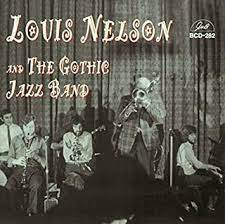
Louis Nelson was born September 17, 1902 in New Orleans, Louisiana. Both parents and his sister played the piano, his brother played the saxophone. In December 1902, his parents moved to Napoleonville, Louisiana because his father couldn’t get medical patients after the July 1900 Robert Charles Race Riots in New Orleans.
At the age of fifteen he started playing the valve trombone and switched to the slide trombone, studying under Professor Claiborne Williams. Graduating high school in 1919, Louis’ first band was Joe Gabriel’s band playing in dance halls for a dollar a night.
While in New Orleans in the 1920s, Nelson played jazz with Buddy Petit, Kid Rena, Kid Punch Miller, Sam Morgan, Chris Kelly, Papa Celestin, Willie Pajeaud, Kid Howard, Sidney Cates, and Kid Harris’ Dixieland Band. He would go on to join the Sidney Desvigne Orchestra. During the Depression, he joined the Works Progress Administration and became first chair in the WPA band, then volunteered for the U.S. Navy during WWII. Post Navy he played with Sidney Desvigne’s Orchestra, Kid Thomas Valentine, and Herbert Leary Orchestra. To make ends meet he took numerous day jobs from the post office to a janitor. In 1949, made his first recording with clarinetist and leader Big Eye Louis Nelson Delisle. This recording, by jazz historian Bill Russell of AM Records, marked the beginning of an extensive recording career for him.
Preservation Hall gave Louis permanent work, exposure to a new audience, and provided numerous opportunities for travel abroad as both a soloist and band member of the Billie and De De Piece and Kid Thomas Valentine’s bands.
He toured extensively from 1963, beginning with the George Lewis Band in Japan, Eastern and Western Europe, South America, Australia, Canada, and Mexico, as well as throughout the United States. Nelson appeared at every New Orleans Jazz and Heritage Festival, joined the Legends of Jazz and was featured in many New Orleans jazz documentaries.
Trombonist Louis Nelson, who in 1981 received a NEA grant and developed a program in which he played for New Orleans public school students and discussed New Orleans jazz history, passed away on April 5, 1990 of injuries suffered from a March 27 hit-and-run automobile accident. The driver was never caught.

More Posts: bandleader,history,instrumentl,jazz,music,trombone
Daily Dose Of Jazz…
Larry Binyon was born on September 16, 1908 in Urbana, Illinois and his mother shared some of her musical knowledge. By age eighteen he was at the University of Illinois at Urbana-Champaign,playing E flat soprano flute in the school’s concert band as well as flute and piccolo in its first regimental band during the 1926-27 school year.
After spending one year at college by 1927 he was already playing professionally in Chicago as part of Beasley Smith’s band, which also included drummer Ray McKinley and clarinetist Matty Matlock. Flute may have been his first instrument, or his primary one at school, but tenor saxophone became his main instrument for dance bands.
Later that year Binyon joined bandleader Ben Pollack when he returned to Victor’s Chicago studio after a five-month hiatus. History does not reveal him as a bandleader as there is little evidence of him having led his own bands, and no recordings were ever issued under his own name. He certainly has a load of credits as a band member, however, and was adept in both big band and small group settings.
Working a variety of radio jobs during the day, one eye glued open to help recover from the previous night’s late-ending gig.During the 1920s he worked with Irving Mills’ Hotsy-Totsy Gang, Roger Wolfe Kahn & His Orchestra, and Mildred Bailey with the Tommy Dorsey Orchestra to name a few.
His widest exposure on recording is his backup work on records by the Boswell Sisters, Bing Crosby, Billie Holiday, Fats Waller & His Buddies sessions, Henry “Red” Allen, Eddie Condon, Toby Hardwicke, Gene Krupa. Saxophonist, clarinetist, and flutist Larry Binyon passed away on February 10, 1974.
More Posts: clarinet,flute,history,instrumental,jazz,music,saxophone
Daily Dose Of Jazz…
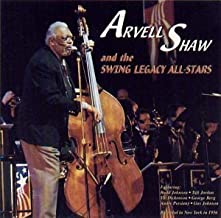
Arvell Shaw was born on September 15, 1923 in St. Louis, Missouri and learned to play tuba in high school, but switched to bass soon after. In 1942 he worked with Fate Marable on the Mississippi riverboats before serving in the Navy from 1942 to 1945. After his discharge he played with Louis Armstrong in his last big band, from 1945 to 1947. He and Sid Catlett then joined the Louis Armstrong All-Stars until 1950, then he broke off to study music. Returning to play with Armstrong in 1952, he performed with vocalist Velma Middleton, and in the 1956 musical, High Society.
He then worked at CBS with Russ Case, did sometime in Teddy Wilson’s trio, and played with Benny Goodman at the 1958 Brussels World’s Fair. After a few years in Europe, he played again with Goodman on a tour of Central America in 1962. From 1962–64 Arvell again joined Armstrong, and occasionally accompanied him through the end of the decade. The Seventies saw him mostly freelancing in New York City.
Bassist Arvell Shaw, who recorded only once as a leader, a live 1991 concert of his Satchmo Legacy Band, kept playing until he passed away on December 5, 2002 in Roosevelt, New York.
More Posts: bandleader,bass,history,instrumental,jazz,music
Daily Dose Of Jazz…
William Richard Berry was born on September 14, 1930 in Benton Harbor, Michigan. The son of a bass player in a touring dance band, he spent his early years traveling with his parents sleeping in the bass case under the bandstand when he was only a few months old. From the age of five, he took piano lessons at home in South Bend, Indiana. In high school in Cincinnati, Ohio he switched to trumpet, and played in a Midwest band led by Don Strickland, after which he served four years in the Air Force.
He studied at the Cincinnati College of Music and Berklee College of Music in Boston, Massachusetts then played trumpet with the Woody Herman and Maynard Ferguson orchestra. In 1961, he became one of the Duke Ellington orchestra’s first white members. After his working with Ellington, he played with the Thad Jones-Mel Lewis Jazz Orchestra and led his own big band in New York.
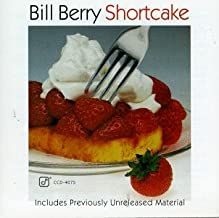
In 1965 he joined The Merv Griffin Show, where he remained for fifteen years, moving to Los Angeles, California with Griffin and reforming his group as the L.A. Big Band in 1971. Among the most successful of his own 1978 recording Shortcake, an album of jazz for small groups in the Ellington style. He appeared on many albums by other musicians, including Rosemary Clooney, Scott Hamilton, Jake Hanna, and Coleman Hawkins.
He recorded four albums as a leader and fifty-five as a sideman with Frank Capp, Duke Ellington, Maynard Ferguson, Thad Jones/Mel Lewis, Ruth Brown, Benny Carter, Ray Charles, Chris Connor, Randy Crawford, Bing Crosby, Dave Frishberg, Woody Herman, Earl Hines, Johnny Hodges, Milt Jackson, Irene Kral, Trini Lopez, Johnny Mathis, Gary McFarland, Dave Pell, Herb Pomeroy, Jimmy Rowles, Jack Sheldon, Patty Weaver, and Joe Williams.
Trumpeter Bill Berry passed away on November 13, 2002.
More Posts: bandleader,history,instrumental,jazz,music,trumpet
Daily Dose Of Jazz…
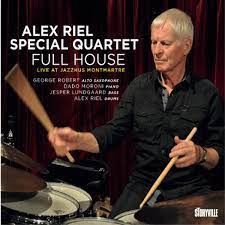
Alex Riel was born in Copenhagen, Denmark on September 13, 1940. His career began in the mid-Sixties when he got the house drummer position at the club Montmarte in his home city with bassist Niels-Henning Ørsted Pedersen, and pianists Tete Montoliu or Kenny Drew. They accompanied visiting American musicians Ben Webster, Dexter Gordon, Kenny Dorham, Johnny Griffin, Don Byas, Donald Byrd, Brew Moore and Yusef Lateef.
Among those mentioned above he also worked with Ray Brown, Don Cherry, Art Farmer, Stéphane Grappelli, Hank Jones, and Thad Jones. He formed a renowned jazz ensemble with bass player Niels-Henning Ørsted Pedersen and Kenny Drew.
Riel has recorded thirteen albums as a leader and another twenty-five as a sideman with Drew, Gordon, Webster, Kenny Werner, Bob Brookmeyer, Thomas Clausen, Bill Evans, Eddie “Lockjaw” Davis, Ken McIntyre, Archie Shepp, Lars Gullin, Sahib Shihab, Thorgeir Stubø and Jackie McLean.
Delving into rock music, in 1968 Alex was a founding member of the Danish rock group The Savage Rose. His album The Riel Deal won a Danish Grammy Award Jazz in 1996.
In September 2010, Riel turned seventy years old and the milestone was celebrated at the famed Jazzhus Montmartre. The event was broadcast live with the title Celebration of a Living Jazz Legend by the Danish national television station TV2 which was also showing rare photos depicting Riel with Duke Ellington, Ben Webster, Bill Evans and The Savage Rose.
His first group Alex Riel/Palle Mikkelborg Quintet won the Montreux Grand Prix Award at the Montreux Jazz Festival in 1968. Over the course of his career drummer Alex Riel has founded several groups and continues to advance the music.
More Posts: bandleader,drums,history,instrumental,jazz,music