

Daily Dose Of Jazz…
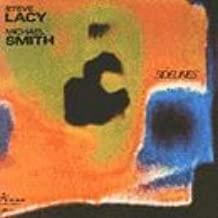
Michael Joseph Smith was born August 13, 1938 in Tiline, Kentucky. At the age of 6 years, he gave his first concert of original solo piano music in Nashville, Tennessee. After serving in the United States Navy, he studied electro-acoustic music, moving between Boston, Massachusetts and New York City. He became involved with the New England Conservatory of Music and the Juilliard School and developed a philosophy and notation form of his original music, titled Geomusic, and composed works with this method for various chamber groups, solo piano, and symphony orchestra.
Embarking on his first European concert tour in 1970, he completed his initial recordings in Italy and developed an interest in Jazz and improvisation. Moving to Paris, France in 1972 he had several concert tours and recordings in Western Europe and America with Steve Lacy, Anthony Braxton and others. In 1975 he began recording various albums in Europe and America and toured, mostly solo, Italy, Poland, East Germany, Hungary, Western Europe, South America and Scandinavia over the next year. 1977 saw Michael admitted to the Swedish Composers Society andtwo years later he became a member of the International Society for Contemporary Music.
A return to the United States landed a composer-in-residence in Atlanta, Georgia and completed three ballet projects, has been awarded numerous cultural prizes and stipends in Europe and Scandinavia, and has composed scores for films, television projects, and music for 10 major ballet works.
He has lectured in Atlanta, Boston, Massachusetts, Brunswick, Maine and in Beijing and Xian, China. He has founded three music corporations and has been inducted in the Royal Swedish Academy of Music’s Swedish Musical Heritage project as a “living musical heritage” of Sweden. Pianist and composer Michael Smith, who has released 55 recordings of original compositions in 17 countries and has three film portraits of his life, continues to remain active.


Daily Dose Of Jazz…
Billy Douglas was born on August 12, 1912 in New Haven, Connecticut. He played with Larry Ringold while young, both having been in the same boys’ institution. He played locally in his teens, then moved to New York City in 1932 as a member of Earle Howard’s band.
In 1933-34 he went on to play with Percy Nelson in Hartford, Connecticut. He then played in the South with Jimmy Gunn. Don Albert picked him up in 1934, and Douglas remained in Albert’s orchestra through 1937.
Doing freelance work for a time, he then worked with Earl Hines for several years in the early 1940s. After 1945 he returned to New Haven where he performed locally until his retirement. Trumpeter and vocalist Billy Douglas passed away in 1978.
More Posts: history,instrumental,jazz,music,trumpet

Daily Dose Of Jazz…
Bruz Freeman was born Eldridge Freeman on August 11, 1921 in Chicago, Illinois. With his brothers, guitarist George Freeman and tenor saxophonist Von Freeman, he played for several years in the house band at the Pershing Hotel.
In 1950, he was a member of John Young’s trio with LeRoy Jackson on bass, and recorded with Young’s orchestra backing vocalist Lurlean Hunter. That same year with his brothers George and Von, originally misidentified as Claude McLin, LeRoy Jackson, and Chris Anderson, he played with Charlie Parker shortly before his death, at a jam session recorded at Bird’s apartment which was released in 1960 by Savoy Records.
The mid-1950s saw him as a member of the Hampton Hawes Quartet, with Red Mitchell and Jim Hall, and with line-ups led by Herb Geller. In 1977-8, he joined a short-lived band based in California, led by Kenny Mann and with Britt Woodman on trombone. Drummer Bruz Freeman, who was also known as Buzz and the uncle of Chico Freeman, the son of Von Freeman, passed away in 2006.
More Posts: drums,history,instrumental,music
Daily Dose Of Jazz…
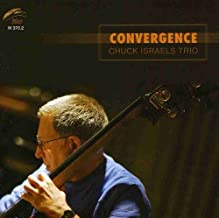
Chuck Israels was born Charles H. Israels on August 10, 1936 in New York City, New York. He was raised in a musical family which moved to Cleveland, Ohio when he was 10 and his stepfather Mordecai Bauman was a singer who performed extensively with composer Hanns Eisler. With music a part of normal daily activity, folks like Paul Robeson, Pete Seeger, and The Weavers were regular visitors. In 1948, the appearance of Louis Armstrong’s All Stars in a concert series produced by his parents gave him his first opportunity to meet and hear jazz musicians.
In college, Israels had the opportunity to perform with Billie Holiday. His first professional job after college was working with pianist Bud Powell in Paris, France. His first professional recording was Stereo Drive a.k.a. Coltrane Time with John Coltrane, Cecil Taylor, Kenny Dorham, and Louis Hayes.
>Israels is known for the Jazz Repertory as Director of the National Jazz Ensemble from 1973 to 1981. He made recordings with the Kronos Quartet and Rosemary Clooney in 1985. He was the Director of Jazz Studies at Western Washington University in Bellingham, Washington until 2010. In 2011, he created the Chuck Israels Jazz Orchestra and recorded Second Wind: A Tribute to the Music of Bill Evans in 2013.
He has worked with Billie Holiday, Benny Goodman, Coleman Hawkins, Stan Getz, Herbie Hancock, J. J. Johnson, John Coltrane, and Judy Collins. Bassist, composer, arranger and bandleader Chuck Israels, who is best known for his work with the Bill Evans Trio, continues to perform.
More Posts: arranger,bandleader,bass,composer,history,instrumental,music
Daily Dose Of Jazz…
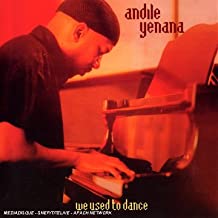
Andile Yenana was born on August 9, 1968 in King William’s Town, South Africa. His love of music was triggered at an early age and he grew up in a household where music was really loved. His father, Felix Thamsanqa Yenana, had a huge collection of music, ranging from jazz to Motown, and other forms of urban black music and this had a huge influence in his life.
Andile began music studies under Darius Brubeck at the University of Natal’s School of Jazz and Popular Music It was here that he became friends with saxophonist Zim Ngqawana and trumpeter Feya Faku.
Joining the Zim Ngqawana Quartet and worked with Zim on all five of his albums, including San Song recorded with Bjorn Ole Solburg and his Norwegian San Ensemble. He also worked on the Pan-African music project Mahube with saxophonist Steve Dyer and others. He has also worked as arranger for Sibongile Khumalo, Gloria Bosman and Suthukazi Arosi. In 2005 he was selected as the 2005 Standard Bank Young Artist for Jazz.
Pianist Andile Yenana, who made an indelible mark on the industry by switching from teaching to studying jazz, continues to perform and record.
More Posts: history,instrumental,music,piano