


Daily Dose Of Jazz…
Paul D. “Polo” Barnes was born on November 22, 1901 in New Orleans, Louisiana, the brother of Emile Barnes. He attended St. Paul Lutheran College and began playing alto saxophone in 1919. He and Lawrence Marrero formed the Original Diamond Band, later known as the Young Tuxedo Band.
In 1922 he was with Kid Rena, then the Maple Leaf Orchestra in 1923, and Papa Celestin’s Original Tuxedo Band. Later that year; Celestin’s group recorded his composition My Josephine, which became quite popular. He went on to play with Chick Webb in 1927 and with King Oliver three times between 1927 and 1935. He toured with Jelly Roll Morton in 1928-29.
In 1932-33 he led his own band then through that decade he played with Chester Zardis and Kid Howard. He played in Algiers, Louisiana in a Navy band during World War II, then returned to work with Celestin from 1946 to 1951. The Fifties saw him moving to California and left music, however, upon his return to New Orleans in 1959, he played with Paul Barbarin in 1960. but from 1962-65 joined the Young Men from New Orleans band that played on a riverboat at Disneyland.
Returning once again to New Orleans in 1964 he played at Preservation Hall and Dixieland Hall. While touring Europe in 1973-74, poor health ended his career in 1977. Clarinetist and saxophonist Polo Barnes, a mainstay of the New Orleans jazz scene of the 1920s and 1930s, passed away on April 3, 1981 in his hometown.
More Posts: clarinet,hitory,instrumental,jazz,music,saxophone
Daily Dose Of Jazz…
Peter Warren was born November 21, 1935 in Hempstead, New York and learned to play the cello as a child, studying the instrument formally, giving a recital at Carnegie Hall in 1953. After studying at Juilliard School, he went on to play with the Atlanta Symphony Orchestra before switching to double-bass and studying jazz under Chuck Israels.
From 1965, for two years Peter was Dionne Warwick’s touring bassist, and following this, he played with David Izenzon in the New York Bass Revolution. Working in Belgium in the early Seventies, he played with Chick Corea, John Surman, Rolf Kuhn, Joachim Kuhn, Jean-Luc Ponty, Don Cherry, Terumasa Hino, Masahiko Sato, Albert Mangelsdorff, John Tchicai, Anthony Braxton, and Tomasz Stańko.
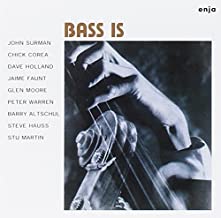
Settling once again back in the United States in 1974, he played with Jack DeJohnette and Carla Bley, and in 1976 he received a National Endowment for the Arts grant in cello composition. The early Eighties saw him working with Mike Stern, Ken Vandermark, and again with DeJohnette. He recorded three albums as a leader Bass Is on Enja Records in 1970, Solidarity for JAPO Records, in 1981, and Bowed Metal Music in 2001. Cellist and bassist Peter Warren continues to perform.
More Posts: bandleader,bass,cello,history,instrumental,jazz,music

Daily Dose Of Jazz…
Skeeter Best was born Clifton Best was born on November 20, 1914 in Kinston, North Carolina. From 1935 to 1940 he played in Philadelphia, Pennsylvania recording with Slim Marshall and Erskine Hawkins. In 1940, he joined the Earl Hines Orchestra, playing with him until he joined the U.S. Navy in 1942.
After his Naval discharge, he played with Bill Johnson from 1945 to 1949. He toured East Asia with Oscar Pettiford in 1951 and 1952, forming his own trio in during the decade. He did a critically acclaimed session with Ray Charles and Milt Jackson in 1957 called Soul Brothers.
In 1958, he recorded with Mercer Ellington and taught in New York City. He also recorded with Harry Belafonte, Etta Jones, Nellie Lutcher, Milt Hinton, Osie Johnson, Paul Quinichette, Jimmy Rushing, Sonny Stitt, Charles Thompson, and Lucky Thompson.
From 1959 to 1980 he recorded twenty-six albums as a sideman with Eugenie Baird, Aretha Franklin, Bennie Green & Paul Quinichette, Lionel Hampton, Erskine Hawkins, Earl Hines, Marva Josie, Mahalia Jackson, Milt Jackson, Ray Charles, Etta Jones, Frankie Laine, Buck Clayton, Ellis Larkins, Howard McGhee, The Modern Jazz Sextet, Mel Powell, Ike Quebec, Freddie Roach, Jimmy Rushing, Charles Thompson, Lucky Thompson, Cootie Williams. Guitarist Skeeter Best passed away on May 27, 1985, New York City.
More Posts: guitar,history,instrumental,jazz,music
Daily Dose Of Jazz…
Keg Johnson was born Frederic Homer Johnson on November 19, 1908 in Dallas, Texas. His father was a choir director and he and his younger brother, Budd began their musical careers singing and playing first with their father and later with Portia Pittman, daughter of Booker T. Washington. They played in Dallas-area bands like the Blue Moon Chasers, then with Ben Smith’s Music Makers, eventually performing with Gene Coy and The Happy Black Aces.
Playing a variety of instruments but most noted as a trombonist, around 1928, in Kansas City, Missouri they played in several bands but by 1930 Keg left for Chicago, Illinois to play with Louis Armstrong, recording his first solo on Armstrong’s Basin Street Blues album. His move to New York City in 1933 Keg played with Fletcher Henderson, Benny Carter, and Cab Calloway at the Cotton Club, remaining with Cab for 15 years.
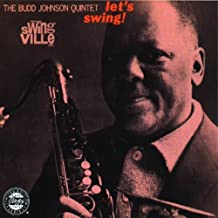
Leaving New York City for Los Angeles, California he briefly changed careers renovating houses. During the 1950s he returned to New York City where he and his brother reunited and recorded the album Let’s Swing. In 1961, he began playing with Ray Charles and was still in his band when trombonist Keg Johnson passed away in Chicago on November 8, 1967.
More Posts: history,instrumental,jazz,music,trombone
Daily Dose Of Jazz…
Victor Sproles was born on November 18, 1927 in Chicago, Illinois. During worked in the 1950s with Red Rodney and Ira Sullivan and appears on the Sun Ra recordings Super-Sonic Jazz, Sound of Joy and Deep Purple.
>As a session player he recorded with Stan Getz and Chet Baker on the 1957 Verve album Stan Meets Chet. In 1960 he joined Johnny Griffin’s Big Soul Band and the following year he played in Muhal Richard Abrams’ Experimental Band.
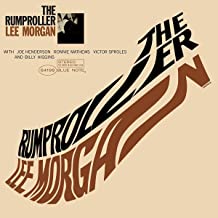
1964 saw him joining Art Blakey’s Jazz Messengers, recording the album ‘SMake It for Limelight, Lee Morgan and his old Sun Ra bandmate John Gilmore were in the group. He recorded two more albums with the Messengers after Gilmore left. This led to his subsequent appearance on Morgan’s Blue Note albums The Rumproller and The Sixth Sense.
In 1974 he played in Clark Terry’s big band and appeared on Buddy DeFranco’s album Free Fall. He recorded sixteen albums as a leader and another fifteen as a sideman. Bassist Victor Sproles passed away on May 13, 2005.
More Posts: bass,history,instrumental,jazz,music