

Daily Dose Of Jazz…
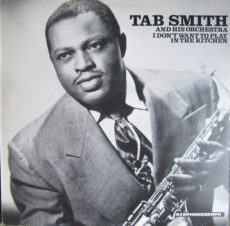
Frank Galbreath was born on September 2, 1913 in Robeson County, North Carolina. He got his start with local groups such as the Domino Five of Washington and Kelly’s Jazz Hounds of Fayetteville. He then found work with groups in other regions such as the Florida Blossoms minstrel show and the Kingston Nighthawks, a territory band. He was with Smiling Billy Steward’s Floridians when they played the 1933 World’s Fair in Chicago, Illinois.
The mid~1930s saw Galbreath moving to Chicago, and playing with Fletcher Henderson, Jelly Roll Morton, Edgar Hayes, and Willie Bryant. Around 1937 he joined Lonnie Slappey’s Swingers in Philadelphia, Pennsylvania but was called back to New York by Lucky Millinder, with whom he played for some time. Following this he joined the Louis Armstrong Orchestra until its dissolution in 1943, then he went on to play with Charlie Barnet for a few weeks before serving in the Army. After his discharge, he worked in the second half of the decade with Luis Russell, Tab Smith, Billy Eckstine, and Sy Oliver, then returned to play with Millinder from 1948 to 1952.
From 1952 he played in USO tours, first with Snub Mosley and then with various other ensembles over the course of the next decade. Frank led his own band during the decade, then played in the bands of Arthur Prysock and Benny Goodman. During the Sixties, he played with Ray Charles, Fats Domino, and Sammy Davis, Jr.
In 1963 he moved to Atlantic City, New Jersey and played locally until his failing health forced his retirement in 1969. Trumpeter Frank Galbreath passed away in November 1971.

More Posts: history,instrumental,jazz,music,trumpet
Daily Dose Of Jazz…
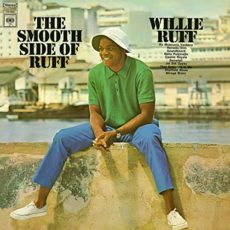
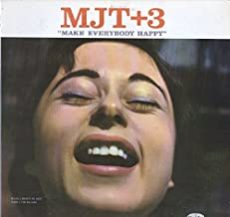
Willie Ruff was born on September 1, 1931 in Sheffield, Alabama and learned to play both the French horn and the double bass. He attended the Yale School of Music graduating with a Bachelor and Master of Music degrees by 1954.
He met pianist Dwike Mitchell in 1947 when they were teenage servicemen stationed at the former Lockbourne Air Force Base in Ohio. They began a professional relationship when Mitchell recruited him to play bass with his unit band for an Air Force radio program. They later played in Lionel Hampton’s band but left in 1955 to form their own group, then together as the Mitchell-Ruff Duo that lasted over fifty years. They also played as the second act to artists such as Louis Armstrong, Count Basie, Duke Ellington, and Dizzy Gillespie.
From 1955 to 2011, the duo regularly performed and lectured in the United States, Asia, Africa, and Europe. In 1950 the Mitchell-Ruff Duo was the first jazz band to play in the Soviet Union and in China in 1981. Ruff was chosen by John Hammond to be the bass player for the recording sessions of Songs of Leonard Cohen, was one of the founders of the W. C. Handy Music Festival in Florence, Alabama in 1982.
As an educator, Willie was a faculty member at the Yale School of Music, teaching music history, ethnomusicology, and arranging. He is founding Director of the Duke Ellington Fellowship Program at Yale, held a visiting appointment at Duke University, where he oversaw the jazz program and directed the Duke Jazz Ensemble, and also has been on faculty at UCLA and Dartmouth.
French hornist, double bassist, music scholar, and educator Willie Ruff, was awarded the Sanford Medal, the Connecticut Governor’s Arts Award, and was an inductee of the Alabama Jazz Hall of Fame, primarily a Yale professor from 1971 to 2017, and continues to reside in Alabama.
More Posts: bass,educator,french horn,history,instrumental,jazz,music
Daily Dose Of Jazz…
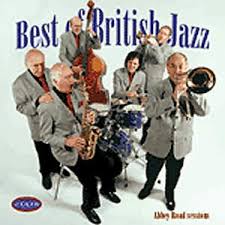
Roy Willox was born August 31, 1929 in Welwyn, Hertfordshire, England into a musical family in 1929. At 16 he initially played with Johnny Claes for a short time in 1945 and then worked in other well-known bands before joining the Ted Heath Orchestra for a five-year stint from 1950 to 1955. During this time he also worked in a band with Keith Christie.
A collaboration with Jack Parnell and other bands led to extensive freelance in television, radio and theater. In the field of jazz, he was part of Harry South’s band in the 1960s and 1970s. This period of performing saw him occasionally returning to the Heath band throughout the 1990s and 2000s, playing the Ted Heath Bands farewell concert at London’s Royal Festival Hall in 2000.
In his later years Roy worked with Kenny Baker, the Robert Farnon Orchestra, and Laurie Johnson’s London Big Band. 2009 with the all-star formation The Allan Ganley Jazz Legacy. He was involved in 156 jazz recording sessions between 1951 and 2016 with Cleo Laine, Larry Page, George Chisholm, Beryl Bryden, Johnny Keating, Tubby Hayes, Kenny Clare, Dudley Moore, Louie Bellson, The London Jazz Chamber Group, Michel Legrand, Phil Woods, and the Len Phillips Big Band.
As a session musician, he is also in pictures of Bert Kaempfert, Tiny Tim ~ Live! At the Royal Albert Hall, and Harry Nilsson ~ A Little Touch of Schmilsson in the Night. Alto saxophonist Roy Willox, who also plays clarinet and flute, passed away on November 25, 2019.

More Posts: clarinet,flute,history,instrumental,jazz,music,saxophone
Daily Dose Of Jazz…
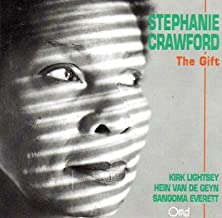
Stephanie Crawford was born on August 30, 1942 in Detroit, Michigan and divided her childhood between living with her mother in Detroit’s Black Bottom, called that due to its dark soil, and with an aunt in Chattanooga, Tennessee. She grew up surrounded by jazz, blues, R&B, and gospel music, from which she draws from.
Although singing was her first love from childhood she did not sing in public until she was 36, after working on a Chrysler assembly line and as a short-order cook, and earning a bachelor’s degree in painting from Wayne State University.
Her first live performance in front of an audience was accidental while taking in a rather bad pianist/vocalist in a local dive. Whe she would forget the words, Stephanie would call out the lyrics. Fed up, the woman challenged her to come up and sing and the rest is history. The invite to come back was given and she found her home.
A move to New York City, while working on her master’s in fine arts, Crawford became so immersed in the Manhattan jazz scene that she dropped out of school in order to devote more time to sitting in at jam sessions. She found herself seeking out and studying with Frank Foster and Barry Harris.
Her next stop was Paris, France where she won the prestigious Django d’Or award for Best International Jazz Vocalist in 1993. Singing did not pay the bills, so to support herself Stephanie taught jazz singing at two music schools. Returning to New York City she found work with a Portuguese wine importer.
Vocalist Stephanie Crawford, is clear that talent and fame are not synonymous, and though she continues to sing, helping to keep the fading local jazz scene alive, and continues with her passion for art. Just prior to the pandemic she performed in New York City at the Laurie Beechman Theater.
More Posts: bandleader,history,instrumental,jazz,music,vocal
Daily Dose Of Jazz…
Red Kelly, born Thomas Raymond Kelly on August 29, 1927 in Shelby, Montana initially took lessons on drums, but he was unable to work the hi-hat because polio had inhibited the use of his feet. Switching to double-bass during his teen years, in 1949 he began playing bass in a big band led by Charlie Jackson.
In the early 1950s he toured with Charlie Barnet, Herbie Fields, Claude Thornhill, and Red Norvo. It was while working with Norvo that led to the moniker Red. Kelly and bassist Red Mitchell were living in the same apartment, and when Norvo called Mitchell to invite him to tour, he got Kelly on the phone instead.
He played with Woody Herman for several years, including on a 1954 tour of Europe, and around this time Red also recorded with Dick Collins and Nat Pierce. Relocated to the West Coast, he started playing briefly in Seattle, Washington and then in Los Angeles, California with Maynard Ferguson, Med Flory, Stan Kenton, and Lennie Niehaus.
He was a member of the Modest Jazz Trio with Red Mitchell and Jim Hall, who recorded an album in 1960, and worked with Harry James for most of the 1960s. Later in his life he moved to Tacoma, Washington where he left the music business and ran his own restaurant, Kelly’s. Double-bassist Red Kelly passed away on June 9, 2004 in Tacoma, Washington.
More Posts: bass,history,instrumental,jazz,music