

Daily Dose Of Jazz…
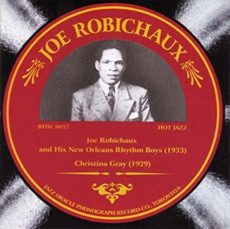
Joseph Robichaux, born March 8, 1900 in New Orleans, Louisiana and played piano from a young age and went on to study at New Orleans University. After working in the O.J. Beatty Carnival, he played with Tig Chambers briefly in 1918 before returning to New Orleans and played with Oscar Celestin, Earl Humphrey, Lee Collins, and The Black Eagles in 1922 and 1923.
He arranged music for and recorded with the Jones-Collins Astoria Hot Eight in 1929 and accompanied Christina Gray on a recording session that same year. In 1931 he formed his own ensemble, featuring Eugene Ware on trumpet, Alfred Guichard on clarinet and alto saxophone, Gene Porter on tenor sax, and Ward Crosby on drums.
They journeyed to New York City to record for Vocalion in August 1933, laying down 22 mostly stomping, uptempo sides and two alternate takes in a marathon 5-day recording schedule. Vocalion issued 10 records over the next year and 2 tracks with vocalist Chick Bullock were issued under his name on Banner, Domino, Oriole, Perfect, and Romeo record labels.
Unfortunately for the musicians and potential audiences problems with the musicians’ union in New York prevented them from being able to play live there, so they returned to New Orleans not long after recording. Robichaux expanded the size of his ensemble over the course of the 1930s and Earl Bostic was among those who joined its ranks.
The band toured Cuba in the mid-1930s and recorded for Decca Records in 1936, recording 4 sides in New Orleans, however, they were all rejected. By 1939 Robichaux’s ensemble disbanded, and he found work performing solo, mostly in New Orleans. He recorded as an accompanist on R&B recordings in the Fifties and played with Lizzie Miles.
Late in his life, he played with George Lewis from 1957 to 1964, Peter Bocage in 1962, and performed at Preservation Hall. Bandleader and pianist Joe Robichaux passed away from a heart attack at the age of 64 in 1965 in his hometown of New Orleans.

More Posts: bandleader,history,instrumental,jazz,music,piano
Daily Dose Of Jazz…
Herb Bushler was born March 7, 1939 in New York City and played piano and tuba in his youth before picking up double bass. Classically trained in bass he has performed with symphony orchestras in this capacity. In 1966 he began a longtime association with ballet and film composer Coleridge-Taylor Perkinson.
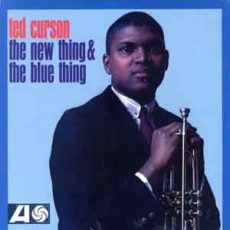
He worked extensively in jazz idioms in the 1960s and 1970s, including David Amram, Ted Curson, Blossom Dearie, Tony Williams, and Paul Winter. He first played with Gil Evans in 1967, an association that would continue on and off until 1981.
Other work during the 1970s included sessions with Enrico Rava, Joe Farrell, Ryo Kawasaki, David Sanborn, and Harold Vick. He played with The Fifth Dimension in the 1960s and has also worked with Dee Dee Bridgewater, Billy Harper, Les McCann, Joe Chambers, and Howard Johnson. Bassist Herb Bushler, never recording as a leader, continues to perform and record utilizing both double bass and electric bass.
More Posts: bandleader,bass,history,instrumental,jazz,music,tuba
Daily Dose Of Jazz…
William “Billy” Root was born March 6, 1934 in Philadelphia, Pennsylvania and was raised in a musical family, his father played drums in Philadelphia ensembles.
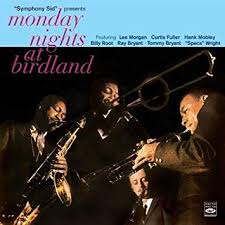
Root began playing professionally in the early 1950s, with Roy Eldridge, Hal McIntyre, Red Rodney, Bennie Green, and Buddy Rich. Later in the decade he worked extensively with Stan Kenton and with Rodney, as well as with Clifford Brown, Dizzy Gillespie, Hank Mobley, Lee Morgan, and Curtis Fuller.
He led his own ensembles from the late 1950s. In the 1960s he performed with Al Grey and Dakota Staton, and in 1968 settled in Las Vegas, Nevada. Saxophonist Billy Root played the casinos for the next two decades before retiring.
More Posts: bandleader,history,instrumental,jazz,music,saxophone
Daily Dose Of Jazz…
Bill Pemberton was born William McLane on March 5, 1918 in New York City and played violin as a child before switching to bass. From 1941 to 1945 he was a member of Frankie Newton’s orchestra and then went on to work with Herman “Ivory” Chittison, Mercer Ellington, Eddie Barefield, and Billy Kyle later in the 1940s.
During the Fifties, he worked with Art Tatum and Rex Stewart, and from 1966 to 1969 was Earl Hines’s bassist, including for international tours and at the 1967 Newport Jazz Festival and Monterey Jazz Festival.
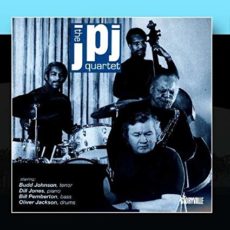
He also worked with Buck Clayton in 1967. In 1969 he joined the JPJ quartet alongside Budd Johnson, Oliver Jackson, and Dill Jones, and remained with the group until 1975. Simultaneously he played with Ruby Braff, Max Kaminsky, and Vic Dickenson. He rejoined Hines in 1977, playing in Europe with him and Benny Carter. Into the Eighties, he played with Panama Francis, Bill Coleman, and Doc Cheatham.
Double-bassist Bill Pemberton passed away on December 13, 1984 in New York City.
More Posts: bass,history,instrumental,jazz,music
Daily Dose Of Jazz…
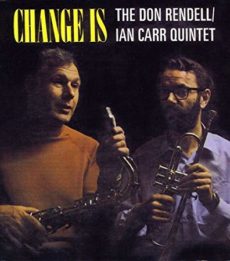
Donald Percy Rendell was born in Plymouth, England on March 4, 1926 and raised in London where his father, Percy, was the musical director of the D’Oyly Carte Opera Company; his mother Vera was also a musician. He attended the City of London School, to which he gained a choral half-scholarship and during school was evacuated during the Second World War to Marlborough College, where he heard jazz for the first time.
Rendell began playing the piano at the age of five but switched to saxophone in his teens. While working for Barclay’s Bank, he left to become a professional musician and began his career on alto saxophone but changed to tenor saxophone in 1943. During the rest of the 1940s, he was in the bands of George Evans and Oscar Rabin. Beginning in 1950, he spent three years in the Johnny Dankworth Septet and performed with Billie Holiday in Manchester, England, before playing in the bands of Tony Crombie and Ted Heath.
After touring in Europe with Stan Kenton, he played in Cyprus with Tony Kinsey, then Don was a member of Woody Herman’s Anglo American Herd in 1959. During the late 1950s and early Sixties, he led bands, including one with Ian Carr that lasted until 1969, one with Barbara Thompson in the 1970s, and as the sole leader in the 1980s and 1990s. In particular, the Rendell-Carr Quintet gained an international reputation, performing in France at the Antibes Festival and was the Band of the Year for three years in succession in the Melody Maker poll. He performed in festivals in England and France as well as working with Michael Garrick and Brian Priestley.
He taught at the Royal Academy of Music for three years in the early 1970s, at the Guildhall School of Music and Drama beginning in 1984 and wrote instruction books on flute and saxophone. Don Rendell, who played soprano saxophone, flute, clarinet and was also an arranger, passed away after a short illness at the age of 89 on October 20, 2015.
More Posts: arranger,author,bandleader,clarinet,educator,flute,history,instrumental,jazz,music,saxophone