

Daily Dose Of Jazz…
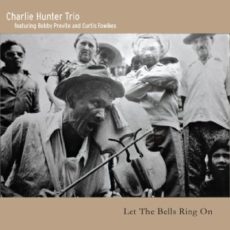
Charlie Hunter was born on May 23, 1967 in Rhode Island but by age four his mom packed him and his younger sister in an old yellow school bus and headed west. After several years living on a commune in Mendocino County they settled in Berkeley, California and graduating from Berkeley High School and taking lessons from guitar teacher Joe Satriani. At eighteen he moved to Paris, becoming a professional busker, working 8 to 12 hours a day to make ends meet.
Returning to the Bay area, he played a seven-string guitar and organ in Michael Franit’s political rap group, The Disposable Heroes of Hiphoprisy. Since the 1993 debut of his self-titled Charlie Hunter Trio with John Ellis on sax and Jay Lane on drums, he has recorded seventeen albums. He co-founded Garage A Trois, a jazz fusion band with Stanton Moore and Sherik, has collaborated with Bobby Previte on the ongoing project Groundtruther, and has recorded and toured with Previte’s The Coalition of the Willing.
Charlie has recorded with Christian McBride, has played in the band T.J. Kirk, that merged the music of Thelonious Monk, James Brown and Rahsaan Roland Kirk. He is an inaugural member of the Independent Music Awards judging panel to support independent artists, and over the years has performed and recorded with Erik Deutch, Tony Mason, Eric Kalb, Ben Goldberg, Ron Miles, Scott Amendola, and Curtis Fowlkes, continuing to perform, compose and tour.

Give The Gift Of Knowledge

More Posts: guitar
Daily Dose Of Jazz…
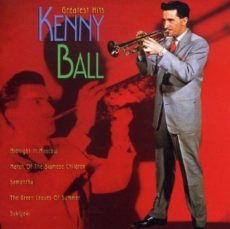
Kenny Ball was born Kenneth Daniel Ball on May 22, 1930 in Ilford, Essex, England. At the age of 14 he left school to work as a clerk in an advertising agency, but also started taking trumpet lessons. He began his career as a semi-professional sideman in bands in addition to being a salesman and continued working at the ad agency.
Turning professional in 1953 Kenny played the trumpet in bands led by Sid Phillips, Eric Delaney, Charlie Galbraith and Terry Lightfoot before forming his own trad jazz band, Kenny Ball and his Jazzmen in 1958. His Dixieland band was at the forefront of the early 1960s UK jazz revival.
Ball’s 1961 recording of Cole Porter’s Samantha became a hit and they reached No. 2 by the end of the year on the UK Singles Chart. The following year they hit the Hot 100 with Midnight In Moscow, selling over a million copies, earning them a gold record. Further hits followed such as March of the Siamese Children from the King and I, however crossing to the U.S. though making the cover of New Musical Express along with Cliff Richards, Brenda Lee, Joe Brown, Craig Douglas and Frank Ifield, they remained a one-hit wonder.
By 1963 Ball became the first British jazzman to become an honorary citizen of New Orleans and appeared in the film Live It Up!, featuring Gene Vincent. In 1968 the band appeared with Louis Armstrong during his last European tour and later appeared on BBC Television’s review of the 1960s music scene Pop Go the Sixties. His continued success was aided by guest appearances on every edition of the first six series of the BBC’s Morecambe and Wise Show and performed at the wedding of Prince Charles and Lady Diana.
Kenny enjoyed one of the longest unbroken spells of success for trad bands and over the course of his career he charted fourteen Top 50 it singles, reached Number 1 collaborating with Acker Bilk and Chris Barber on a joint album, The Best of Ball, Barber and Bilk. In 2001 he recorded on the album British Jazz Legends Together that also featured Bilk, Don Lusher, John Chilton & The Feetwarmers, John Dankworth, Humphrey Littleton and George Melly.
Trumpeter Kenny Ball continued to tour until shortly before his death, performing his last concert with Bilk and Barber at Manchester’s Bridgewater Hall on February 21st, two weeks before he passed away on March 7, 2013 at age 82 in Basildon Hospital in Essex, where he was being treated for pneumonia.
Put A Dose In Your Pocket
More Posts: trumpet
Daily Dose Of Jazz…
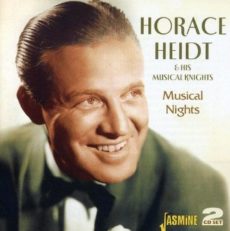
Horace Heidt was born on May 21, 1901 in Alameda, California, He went on to attend the University of California Berkeley as a guard on the football team. But a broken back dashed those dreams and he turned his attention to music, forming The Californians with some classmates.
From 1932 to 1953, he became one of the more popular radio bandleaders beginning on NBC’s Blue Network with Shell Oil’s Ship of Joy and Answers by the Dancers and Horace Heidt’s Alemite Brigadiers. He broadcasted from CBS from 1937-1939.
Horace would employ singer Matt Dennis and singing comedian Art Carney. His recordings were highly successful with Gone With The Wind and Ti-Pi-Tin going to No. 1 and The Man With The Mandolin hitting No. 2 on the charts. His 1941 song, The Hut-Sut Song is heard in the movie A Christmas Story.
He returned to NBC to perform on Pot o’ Gold radio show from 1939-194, portraying himself in the film of the same name starring James Stewart and Paulette Goddard. From 1940 to 1944 he did Tums Treasure Chest, followed by 1943–45 shows on the Blue Network. Lucky Strike sponsored The American Way on CBS in 1953.
On December 7, 1947, NBC launched The Horace Heidt Youth Opportunity Program and accordionist Dick Cortino the first winner of the $5,000 prize, soon had his own show. Heidt’s talent search catapulted a number of performers such as Carney, Frankie Carle, the King Sisters, Alvino Rey, Gordon McRae, Frank DeVol, Johnny Standley and Al Hirt. When the program expanded from radio to television in 1950, it was one of the first talent shows.
Pianist and bandleader Horace Heidt passed away on December 1, 1986 in Los Angeles, California. For his contribution to radio and television he has two stars on the Hollywood Walk of Fame and a Golden Palm Star on the Palm Springs Walk of Stars.
Uplift Someone’s World
More Posts: piano

Daily Dose Of Jazz…
Carmen Souza was born in Lisbon, Spain on May 20, 1981 of Cape Verdean heritage speaking Creole, the Cape Verde dialect and Portuguese. In her teens she sang professionally in a Lusophone Gospel Choir. Musicians like Luis Morais, Ella Fitzgerald, Joe Zawinul, Herbie Hancock, Keith Jarrett and Diana Krall were some of her inspirations. Theo Pas’cal, her producer and mentor and one of the best bass players in Portugal, discovered her talent and introduced her to jazz, fusion and other contemporary sounds that markedly influenced her musical development.
Working with Theo in 2003, two years later Carmen released to critical acclaim her debut album Ess ê nha Cabo Verde that combined Creole, African and Cape Verde rhythms like Batuke, Morna, and Cola djon with her jazz contemporary influences. The album led to her international breakthrough performance at the WOMAD at Reading Festival of the same year.
Her sophomore album Verdade she co-produced and is featured on Wurlitzer and guitar. She returned in 2010 with the impressive Protegid (Protected) that continued to push the limits of what constitutes the Cape Verdean music, world music and jazz. The expressive voice, versatile style of vocalist Carmen Souza continues to perform, record and tour.
Jazz Is Global – Share
More Posts: vocal
Daily Dose Of Jazz…
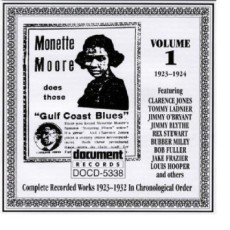
Monette Moore was born May 19, 1902 in Gainesville, Texas but was raised in Kansas City, Missouri. She taught herself piano in her teens and worked as a theater pianist in Kansas City in the early Twenties. In 1923–24 she recorded for Paramount Records in New York City and Chicago, in addition working Dallas and Oklahoma City and eventually settling in New York City.
Monette played with Charlie Johnson’s ensemble at Smalls Paradise and recorded with him in 1927–28. Her output from 1923–27 amounts to 44 tunes, some recorded under the name Susie Smith. Her sidemen included Tommy Ladnier, Jimmy O’Bryan, Jimmy Blythe, Bob Fuller, Rex Stewart, Bubber Miley, Lou Hooper and Elmer Snowden.
In the 1930s, Moore recorded with Fats Waller, filled in for Ethel Waters as an understudy, and in 1937 sang with Zinky Cohn in Chicago. She would perform at her own club, Monette’s Place, in New York City in 1933. Around 1940 she sang in New York with Sidney Bechet and Sammy Price, then moved to Los Angeles in 1942, performing often in nightclubs. She appeared in James P. Johnson’s revue Sugar Hill in 1949 and in numerous films in minor roles.
Monette recorded again from 1945-47, performed with the Young Men of New Orleans at Disneyland in 1961–62. Vocalist and pianist Monette Moore passed away of a heart attack on October 21, 1962 in Garden Grove, California.
More Posts: vocal