

Daily Dose Of Jazz…
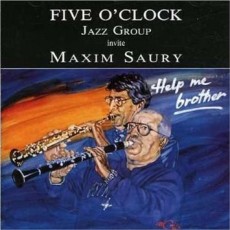
Maxim Saury was born in Enghien-les-Bains, in the Val-d’Oise, France on February 28, 1928. The son of a professional violinist, Andrew “Kiki” Saury, he first took violin lessons between 1940 and 1942, but not suiting him, he turned to the clarinet.
In 1946, he joined the orchestra of Christian Azzi and the following year joined Claude Bolling before leaving in 1949 to mount a trio in 1951. Between 1955 and 1968, Saury played almost exclusively at Caveau de la Huchette in Paris, performed at all the major French jazz festivals including Cannes, Antibes, Nice and Juan-les-Pins.
Maxim represented the middle of French traditional jazz and was invited to perform on television shows and also appear in several films made in the late 1950s and early 1960s, particularly Otto Preminger’s Bonjour Tristesse, The Cheaters by Marcel Carne, My Uncle by Jacque Tati and Jacques Rozier’s Adieu Philippine.
Since the late 1960s, Maxim Saury performed regularly in concert in France and worldwide. In 2007, he was one of few performers selected for the four volume compilation The 100 Greatest Success of Saint-Germain-des-Prés , alongside Yves Montand, Boris Vian, Juliette Greco, Les Freres Jacques, Catherine Sauvage, Sidney Bechet, Marcel Mouloudji and Stephane Grappelli.
Clarinetist, conductor and arranger Maxim Suary, one of the symbols of revival of New Orleans jazz in Saint Germain-des-Pres during the Fifties and Sixties, passed away at the age of eighty-four, on November 15, 2012 at the Ambroise Pare Hospital in Boulogne-Billancourt, following heart problems.

Put A Dose In Your Pocket
More Posts: clarinet
Daily Dose Of Jazz…
William Russell was born Russell William Wagner on February 26, 1905 in Canton, Missouri. He learned to play the violin and throughout his career contributed to many a performance. When he decided to become a classical music composer he changed his name, transposing first and second and dropping his last.
He was a leading figure in percussion music composition, influenced by his acquaintances John Cage and Henry Cowell. In turn, he also influenced Cage, in his emphasis of percussion. During the 1930s, predating Cage’s main work, Russell’s percussion works called for vernacular textures such as Jack Daniels bottles, suitcases, and Haitian drums, and pianos.
One notable performance of his Fugue For Eight Percussion Instruments took place in 1933 at Carnegie Hall, with the ubiquitous and influential critic-writer-performer Nicholas Slonimsky conducting. These performances took place under the auspices of the Pan-American Association of Composers, an organization that was composed of Cowell, Slonimsky Ruth Crawford Seeger, Edgard Varese and other luminaries of American ultra-modernism.
Bill was also one of the leading authorities on early New Orleans jazz, authoring articles and books, including three essays in the milestone book, Jazzmen and the voluminous 720-page Jelly Roll Morton scrapbook, Oh, Mr. Jelly. He made many recordings of historical interest, founded American Music Records, helping bring many forgotten New Orleans performers, including Bunk Johnson back to public attention and became an important force in the New Orleans jazz revival of the early 1940s.
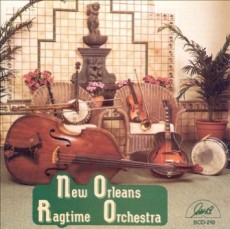
Moving to the French Quarter of New Orleans in 1956, he opened a small record shop from which he also repaired violins. Russell played violin with the New Orleans Ragtime Orchestra, co-founded and became the first curator of The Hogan Jazz Archive at Tulane University in 1958,
Russell collected a large quantity of material related to the history of New Orleans, early jazz, ragtime, blues, and gospel music, all of which he kept in his French Quarter apartment. During his lifetime he always was willing to share access to the material with serious researchers.
At his death on August 9, 1992, Bill Russell, the single most influential figure in the revival of New Orleans jazz that began in the 1940s, bequeathed his collection to the Historic New Orleans Collection, where it continues to be a valuable resource for researchers in the city that became his last home.
Jazz Is Global – Share
Daily Dose Of Jazz…
Edwin Leon Chamblee was born in Atlanta, Georgia on February 24, 1920 and grew up in Chicago, Illinois where he began learning the saxophone at the age of 12. After leaving Wendell Phillips High School he studied law at Chicago State University, playing in clubs in the evenings and on weekends.
Chamblee played in U.S. Army bands between 1941 and 1946 and after leaving the service joined Miracle Records. He played on Sonny Thompson’s hit record Long Gone in 1948, and on its follow-up Late Freight credited to the Sonny Thompson Quintet featuring Eddie Chamblee. Both records reached no. 1 on the national Billboard R&B chart and two following records also charted in 1949.
From 1947, Eddie led his own band in Chicago clubs, as well as continuing to record with Thompson, work on other sessions in Chicago, including The Four Blazes hit Mary Jo in 1952. By 1954 he switched gears joining Lionel Hampton’s band for two years, touring in Europe, before returning to lead his own group again in Chicago. He accompanied Amos Milburn, Lowell Fulson and Dinah Washington during the late 50s to early 60s. The two performed vocal duets in a style similar to that later adopted by Washington with Brook Benton.
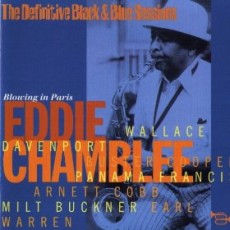
Known also by his nickname Lone Gone, he recorded for the Mercury and EmArcy labels and with his own group in the early 1960s for Roulette and Prestige Records. In the 1970s he rejoined Hampton for tours of Europe, where he also played with Milt Buckner, recorded for the French Black & Blue label, and performed with the Count Basie Orchestra in 1982. From the 1980s until his passing at age 79 on May 1, 1999, tenor and alto saxophonist Eddie Chamblee performed with the Harlem Blues and Jazz Band.
Inspire A Young Mind
More Posts: saxophone
Daily Dose Of Jazz…
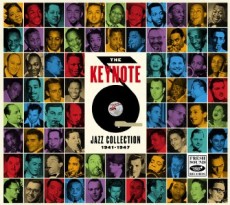
Harry Lim was born on February 23, 1919 in Batavia, Jakarta, Indonesia. He grew up in the Netherlands where he became very fond of jazz, moving to the U.S. in 1939. After working as a freelance record producer, he was the Keystone label’s jazz producer from 1943-46, putting together scores of classic sessions. His emphasis was on small-group jazz that ranged from Dixieland to bop but mostly focused on top swing all-stars.
Although he was a lifelong fan of jazz, he was primarily active in jazz during two different periods. The quality of the music under Harry’s guidance was very high but unfortunately, however, in 1946 John Hammond replaced him and Keynote subsequently declined and became defunct. Lim had his own short-lived HL label in 1949, produced a few obscure sessions for Seeco, and tried reviving Keynote in 1955, but ended up working at Sam Goody’s New York record store from 1956-73.
During his years at Keystone he was able to produce sessions by Count Basie, Roy Eldridge, Cozy Cole, Barney Bigard, George Barnes, Paul Gonsalves, Bud Freeman, Ann Hathaway, Coleman Hawkins, J.C. Heard, Neal Hefti, Earl Hines, Milt Hinton, Chubby Jackson, Ted Nash, Jonah Jones, Paul Robeson, Red Rodney, Charlie Shavers, Wilie Smith, Rex Stewart, Juan Tizol, Dinah Washington, Lennie Tristano, George Wetting, Lester Young, and the list just goes on.
Harry didn’t return to producing until 1972 when he formed the Famous Door label, a top mainstream record company that recorded a variety of valuable and now hard-to-find sessions with Bill Watrous, Red Norvo, Zoot Sims, and others up until his death.
Record producer Harry Lim passed away on July 27, 1990 in New York City. He was most active on the jazz scene between 1940s to through the 1950s, and happily was still living when Polygram reissued all of the Keynote jazz sessions on a huge LP box set in 1986.
Dose A Day – Blues Away
More Posts: record producer
Daily Dose Of Jazz…
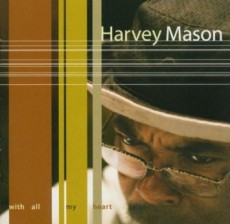
Harvey William Mason was born on February 22, 1947 in Atlantic City, New Jersey. He began taking formal drum lessons at the age of seven, playing in various school bands and ultimately buying his first drum kit at 16. He went on to attend Berklee College of Music then on to and graduate from the New England Conservatory of Music.
While in Boston, Harvey worked at Triple A Studios recording everything from jingles to religious albums, molding him into a versatile first-call session musician. Early gigs included four months with Erroll Garner in 1970 and a year with George Shearing from 1970-1971. Soon after leaving Shearing he moved to Los Angeles, California and quickly became established in the studios and working in films and television.
In addition to his work through the years with Minnie Riperton, The Sylvers, Earth, Wind & Fire and Carlos Santana, Mason has often been part of the jazz world. He played with Herbie Hancock’s Headhunters, co-composing the hit Chameleon in 1973, Gerry Mulligan, Freddie Hubbard, Donald Byrd, Grover Washington, Jr., George Benson, Gary Bartz, Bobbi Humphrey, Ralph MacDonald, Chick Corea, Lee Ritenour, Victor Feldman and Bob James, Gene Harris, Eddie Henderson, Bobby Hitcherson and Joe Henderson, among numerous others.
By 1998, Harvey was paying tribute to Art Blakey’s Jazz Messengers in some local Los Angeles club gigs. By the turn of the millennium he was continuing with his steady session work, releasing two albums with Trios and With All My Heart and has since revisited his ’70s Headhunters roots. He is a mainstay in the fusion genre as a member of the group Fourplay along with Chuck Loeb, Nathan East and Bob James, whose success led their debut album to hit and stay at the top of the charts for 34 weeks.
He has worked with Michael Colombier, Michel Legrand, Miles Davis, Dave Grusin, Thom Newman, John Williams, Lalo Schifrin, Isaac Hayes, Johnny Pate and Alan Silvestri on such films as Purple Rain, Dingo, Three Days of the Condor, The Fabulous Baker Boys, On Golden Pond, The Player, The Lion King, Mission Impossible 1,2 & 3, Ratatouille and Dream Girls. In addition he composed the music for the films The Color Purple, Only The Strong and Deadly Takeover.
Multi-Grammy nominated and winning drummer and composer Harvey Mason continues to stretch his musical diversity across four decades and many jazz genres.
Take A Dose On The Road
More Posts: drums