


Daily Dose Of Jazz…
Ray Wetzel was born on September 22, 1924 and played lead trumpet for Woody Herman from 1943 to 1945 and then with Stan Kenton from 1945 to 1948. In 1947 he recorded with the Metronome All-Stars, Vido Musso and Neal Hefti. The same year he married bass player Bonnie Addleman in 1949.
While with the Charlie Barnet Orchestra he played trumpet alongside Maynard Ferguson, Doc Severinsen and Rolf Ericson. He played with his wife in Tommy Dorsey’s ensemble in 1950 and with Kenton again in 1951. While touring with Dorsey on August 17,1951, he was killed in a car crash at the age of 27.
Ray Wetzel, the greatly admired by his fellow trumpeters, never got the opportunity to record as a leader. He is credited with composing the Stan Kenton tune ‘Intermission Riff’.

Dose A Day – Blues Away
More Posts: trumpet
Daily Dose Of Jazz…
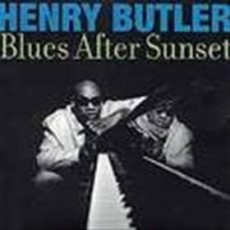
Henry Butler was born September 21, 1949 in New Orleans, Louisiana. Blinded by glaucoma in infancy and his musical training began at the Louisiana State School for the Blind, where he learned to play valve trombone, baritone horn and drums before focusing his talents on singing and piano,
Butler was mentored at Southern University in Baton Rouge by clarinetist and educator Alvin Batiste. He later earned a master’s degree in music at Michigan State University in 1974, receiving the MSU Distinguished Alumni Award in 2009.
Due to the devastation of his home and his vintage 1925 Mason & Hamlin piano by Hurricane Katrina, Henry moved to first Boulder then Denver, Colorado but by 2009 he relocated to New York City. He has pursued photography as a hobby since 1984,and his methods and photos are featured in a 2010 HBO2 documentary, Dark Light: The Art of Blind Photographers, that aired. His photographs also have been shown in galleries in New Orleans.
Pianist Henry Butler has recorded and released nine albums as a leader for Impulse, Windham Hill and Basin Street Records and as a sideman with James Carter and Corey Harris. He joins the lineage of Crescent City pianists like Professor Longhair, James Booker, Tuts Washington and Jelly Roll Morton. He continues to perform and record in a variety of styles of music.
Take A Dose On The Road
Daily Dose Of Jazz…
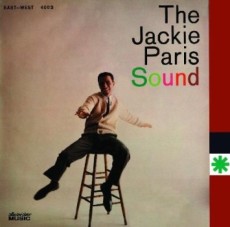
Jackie Paris was born Carlo Jackie Paris on September 20, 1924 in Nutley, New Jersey. His uncle Chick had been a guitarist with Paul Whiteman’s orchestra. A very popular child entertainer in vaudeville, the pint-sized song and dance man shared the stage with Bill “Bojangles” Robinson and the Mills Brothers.
After serving in the Army during World War II, Paris was inspired by his friend Nat King Cole to put together a trio featuring himself on guitar and vocals. The Jackie Paris Trio was a hit at the Onyx Club, playing for an unprecedented 26 weeks, perhaps the longest-running residency in the history of Swing Street.
The first song that Jackie’s trio recorded was Hoagy Carmichael’s Skylark for MGM Records in 1947. In 1949, he was the first white vocalist to tour with the Lionel Hampton for a 78 one-night tour. Coming off the road, he received an offer to join the Duke Ellington Orchestra, but at that time was too exhausted to take it.
Paris was the first singer to record Thelonious Monk’s future jazz anthem Round Midnight, which was produced by Leonard Feather and featured a young Dick Hyman on piano with drummer Roy Haynes and bassist Tommy Potter. He was the only vocalist to ever tour as a regular member of the Charlie Parker Quintet but unfortunately no recordings exist of the Parker-Paris combo.
In 1953, Jackie was named Best New Male Vocalist of the Year in the first ever Down Beat Critics Poll. Ella Fitzgerald won the female category and repeatedly named Paris as one of her favorites as well as Charles Mingus, who enlisted the talented vocalist on several projects and club dates over many decades. He shared the bill with comic Lenny Bruce and recorded with Hank Jones, Charlie Shavers, Joe Wilder, Wynton Kelly, Eddie Costa, Coleman Hawkins, Bobby Scott, Max Roach, Lee Konitz, Donald Byrd, Gigi Gryce, Ralph Burns, Tony Scott, Neal Hefti, Terry Gibbs, Johnny Mandel and Oscar Pettiford and the list continues.
He recorded consistently through the years, from the 1940s and in 2001, he played to a standing room crow and to a standing ovation at Birdland. He was virtually the only performer to have appeared at every incarnation of the famed nightspot, from the 1950s to the present. Jackie Paris passed away on June 17, 2004 in New York City.
Give The Gift Of Knowledge
Daily Dose Of Jazz…
Pete Zimmer was born on September 18, 1977 and raised in Waukesha, Wisconsin. He studied at Northern Illinois University and the New England Conservatory of Music in Boston, Massachusetts. At the Conservatory while earning his bachelor degree he apprenticed under Danilo Perez, Cecil McBee, George Garzone, Bob Moses, Jerry Bergonzi and Bob Brookmeyer.
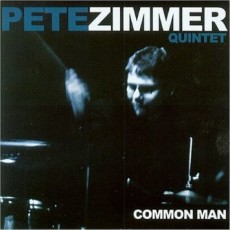
By 2004, Pete launched his record label, Tippin’ Records, and released his first leader album, Common Man, and has since produced and released three more as a bandleader and composer, Burnin’ Live at the Jazz Standard, Judgment, Chillin’ Live @ Jazz Factory and Prime of Life.
Pete has performed and recorded with George Garzone, Joel Frahm, Jeremy Pelt, Peter Bernstein, Michael Rodriguez, Rodney Jones, Jerry Weldon, Dennis Irwin, David Wong, Akiko Tsuruga, Rick Germanson, Anthony Wonsey, Randy Napoleon, Michael Karn, Julius Tolentino, Gene Perla, Tom Kennedy, Wayne Escoffery, Jaleel Shaw, Dan Nimmer, and many others.
Since 2005 Zimmer has led his group at many of the famous venues in New York City as well as touring much of the U.S.A. and also the United Kingdom. A highly regarded educator he conducts clinics at many collegiate jazz study programs and has been a faculty member at the New York Jazz Academy since 2009. Drummer, bandleader, sideman, composer, educator, and record label entrepreneur Pete Zimmer continues to pursue his jazz career.
Jazz Is Global – Share
More Posts: drums
Daily Dose Of Jazz…
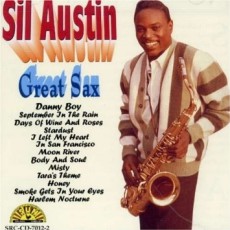
Sil Austin was born September 17, 1929 in Dunnellon, Florida. He taught himself to play saxophone when he was 12, won the Ted Mack Amateur Hour in St. Petersburg, Florida in 1945 playing Danny Boy and his performance got him a contract with Mercury Records. He moved to New York City and studied for a time at the Juilliard School of Music.
Austin briefly played with Roy Eldridge in 1949, with Cootie Williams in 1951-52 and Tiny Bradshaw from 1952-54, before setting up his own successful touring group. He recorded over thirty albums for Mercury, and had a number of Top 40 hits with popular tunes like Danny Boy, that became his signature song, My Mother’s Eyes and Slow Walk, the latter hitting #17 on the charts.
After leaving Mercury in the 1960s, he recorded with a few other labels, including SSS, owned by Shelby Singleton, and recorded a few albums in Japan in the 1970s. Saxophonist Sil Austin, who regarded Coleman Hawkins, Lester Young and Sonny Stitt as his major influences, passed away of prostate cancer on September 1, 2001.
Give A Gift Of Jazz – Share
More Posts: saxophone