


Daily Dose Of Jazz…
Valaida Snow was born on June 2, 1903 in Chattanooga, Tennessee into a family of musicians where her mother taught her and sisters Alvaida and Hattie, and brother Arthur Bush how to play multiple instruments. She was taught to play cello, bass, violin, banjo, mandolin, harp, accordion, clarinet, saxophone and trumpet. By the young age of fifteen she was already a recognized professional singer and trumpeter and while her beauty attracted audiences, it was her incredible talent as a jazz trumpeter which truly captivated them. Obtaining the nickname, “Little Louis” due to her Louis Armstrong-like playing style, hitting those high C’s just like Louis.
Snow toured and recorded frequently in the United States, Europe and the Far East both with her own bands and other leaders’ bands. She took part in a session with Earl Hines in New York in 1933 and also performed with Count Basie, Teddy Weatheford, Willie Lewis and Fletcher Henderson at various places and times.
Not limiting herself to jazz she branch out to the stage and as an actress she debuted on Broadway in 1924 as Mandy in Eubie Blake and Noble Sissles’s musical ‘Chocolate Dandies.’ Later, she appeared on Broadway in Ethel Waters’ show, ‘Rhapsody in Black’ in 1934; she appeared in the London production of ‘Blackbirds’ in 1935 with Johnny Claes and also in its Paris production. She could be seen in ‘Liza’ across Europe and Russia in the 30’s and was also in the Hollywood films ‘Take It from Me’ in 1937, ‘Irresistible You,’ ‘L’Alibi’ and ‘Pieges’ in 1939 with her husband Ananais Berry. Valaida Snow shocked people in the USA, with her eccentric behavior. She traveled in an orchid colored Mercedes, dressed in an orchid suit, her pet monkey rigged out in an orchid jacket and cap, with the chauffeur in orchid as well.
Snow’s incarceration has been written about several times and debunked by a few that while touring through Denmark in 1941, she was arrested by the Nazis during the German occupation and kept at Vestre Faengsel (Western Prison), a Danish prison in Copenhagen that was run by the Nazis. She was released on a prisoner exchange in May 1942. What is know is that Snow stayed in wartime Denmark by choice, that she survived the Nazis and was never shy about using and stretching the truth to suit her purposes.
By the early 1950s Valaida recorded for the Derby label with the Jimmy Mundy Orchestra. The result was “Tell Me How Long The Train’s Been Gone” and “When A Woman Loves A Man”. The record does nicely in certain areas, especially Philadelphia and St. Louis. The Derby release is her first real effort since her tragic imprisonment and it does well. She embarked on a tour of the Northeast and is a particular favorite at the Monte Carlo in Pittsburgh. In the fall she is at the 845 Club in New York and is held over. In a bit of a surprise she leaves Derby Records and signs with Apollo Records late in the year.
In February of 1951 she records “Porgy” and “The More I Know About Love” for Apollo with the Bobby Smith Orchestra. She continues her many in person appearances throughout the country, and in early 1952 embarks on a true R & B tour with Joe Liggins & His Honeydrippers up and down the West coast. Her records are sporadic, and after a well-attended stay at Chicago’s Crown Propeller Lounge in late 1953, Snow signed with that city’s Chess label. “I Ain’t Gonna Tell” and “If You Mean It” are released by Chess. The next two years are spent mostly appearing in the musical revues that have always been her first love.
It is just at this time that the final curtain descends on Valaida Snow, who spoke seven languages, was billed as “Queen Of The Trumpet”, performed in the top theatrical productions of her day, wrote and recorded her theme song, “High Hat, Trumpet and Rhythm” and was the toast of Paris and London, passed away on May 30, 1956 of a cerebral hemorrhage backstage at the Palace Theater in New York. She left this world doing what she loved most, entertaining the public with her great talents.

Give A Gift Of Jazz – Share

Daily Dose Of Jazz…
Elisabetta Serio was born on June 1, 1972 in Italy. Inspired by the music of all genres she heard helped form her artistic personality. As a child, she trained in classical and modern studying at the Conservatorio Nicola Sala in Benevento, Italy. She graduated with a degree in jazz and pursued further studies with Maestro Valerio Silvestro and followed with seminars in Rome with Barry Harris and also the Italian musicians Rita Marctulli and bassist Pippo Matino.
Her musical journey in the strict sense is “the street” with the conventional forms of love and sacrifice make it a viable learning ground. This makes each performance unique and unrepeatable.
Modern jazz pianist Elisabetta Serio continues to collaborate with her countrymen musicians such as Pino Daniele, Rino Zurzolo – double bassist, Matino as well as James Senese, Tullio De Piscopo, Rino Zurrolo, Enzo Gragnianello. She has worked with international pop stars Noa, dipped into the funky blues with British singer Z Star and ventured into world music withSarah Jamne Morris.
She leads her own trio, drummer Leonardo De Lorenzo and bassist Marco de Tilla performing throughout Italy, at festivals around the world and in most jazz clubs. She often invites trumpeter Fulvio Siqurta for her quartet and Morris is a frequent guest. With all this she still finds time to participate on numerous recording and performing projects as a sideman/woman.
Jazz Is Global – Share
More Posts: piano
Daily Dose Of Jazz…
Albert “Tootie” Heath was born May 31, 1935 in Philadelphia, Pennsylvania the brother of tenor saxophonist Jimmy and bassist Percy. He first recorded in 1957 with John Coltrane but the following year started his career as a consummate sideman and for a decade an a half he performed and recorded with J. J. Johnson, Wes Montgomery, Art Farmer, Benny Golson, Cedar Walton, Bobby Timmons, Kenny Drew, Sonny Rollins, Dexter Gordon, Johnny Griffin, Herbie Hancock, Friedrich Guida, Nina Simone, Johnny Lytle, Milt Jackson, Clifford Jordan, The Young Lions and Yusef Lateef among numerous others.
In 1975, he, Jimmy and Percy formed the Heath Brothers and remained with the group until 1978, then left to freelance. Amongst his many workshop and classroom teaching assignments, Tootie Heath is a regular instructor at the Stanford Jazz Workshop.
Tootie Heath is now the producer and leader of The Whole Drum Truth, a jazz drum ensemble featuring Ben Riley, Ed Thigpen, Jackie Williams, Billy Hart, Charlie Persip, Leroy Williams and Louis Hayes. Hard bop drummer Tootie Heath has a small catalogue of four albums as a leader and more than five dozen as a sideman. He continues to perform, tour and record.
Inspire A Young Mind
More Posts: drums
Daily Dose Of Jazz…
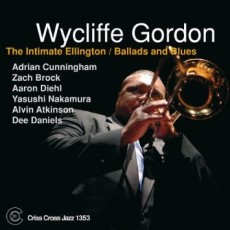
Wycliffe Gordon was born May 29, 1967 in Waynesboro, Georgia and was heavily influenced musically by the church music his organist father played at several churches in Burke County as well as being a classical pianist and teacher.
It wasn’t until 1980 that Gordon became particularly inspired in jazz at age thirteen, listening to jazz recordings inherited from his great aunt. The collection included a five-LP jazz anthology produced by Sony-Columbia and was drawn in particular to Louis Armstrong and the Hot Fives and Hot Sevens.
Wycliffe attended, at that age, Sego High School in Augusta, Georgia and played in the band under direction from Don Milford. He graduated from Butler High in 1985, performed in New York City as part of the McDonald High School All-American Band, went on to study music at Florida A&M where he played in the marching band.
His early works as a professional were with Wynton Marsalis but in recent years he expanded beyond swing and experimented with new instruments, notably the indigenous Australian wind instrument, didgeridoo. In 1995, Gordon arranged and orchestrated the third version of the theme song for NPR’s All Things Considered, the widely recognized melody composed in 1971 by Donald Joseph Voegeli.
In 2006 he founded Blues Back Records, his was an independent jazz label and released his Rhythm On My Mind album, a collaboration with bassist Jay Leonhart. His desire for full artistic control was the impetus for creating Blues Back. Blues Back had produced other artists in Wycliffe’s universe who met Gordon’s criteria for originality, however, since 2011 has been inactive.
Jazz trombonist, arranger, composer, bandleader and music educator at the collegiate-conservatory level, Wycliffe Gordon also plays didgeridoo, trumpet, tuba, piano, and sings. To date he has a catalogue of 19 albums as a leader and another eight as a sideman performing with John Allred, Marcus Roberts, Randy Sandke, Maurice Hines, Ron Westray, and Chip White. He continues to perform, tour, record and educate.
Take A Dose On The Road
;
Daily Dose Of Jazz…
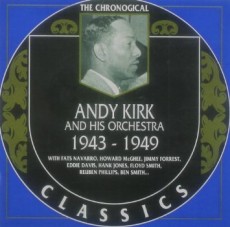
Andrew Dewey Kirk was born on May 28, 1898 in Newport, Kentucky but grew up in Denver, Colorado and was tutored by Paul Whiteman’s father, Wilberforce. He started his musical career playing with George Morrison’s band, but then went on to join Terence Holder’s Dark Clouds of Joy. In 1929 he was elected leader after Holder departed, renamed the band Clouds of Joy and also relocated the band from Dallas, Texas, to Kansas City, Kansas.
Also known as the Twelve Clouds of Joy for the number of musicians, they set up in the Pla-Mor Ballroom on the junction of 32nd and Main. They made their first recording for Brunswick Records that same year. Mary Lou Williams came in as a last moment pianist and so impressed the label’s Dave Kapp that she became a regular member and arranger of the band.
With the move they grew highly popular as they epitomized the Kansas City jazz sound and in mid-1936 Andy signed with Decca and made scores of popular records for the next decade. In 1938, he and band held the top spot of the Billboard chart for 12 weeks with “I Won’t Tell a Soul (I Love You)”, written by Hughie Charles and Ross Parker and featured Pha Terrell on vocals. In 1942 leading His Clouds of Joy, they recorded “Take It and Git”, which on October 24, 1942, became the first single to hit number one on the Harlem Hit Parade, the predecessor to the Billboard R&B chart. In 1943, with June Richmond on vocals, he had a number 4 hit with “Hey Lawdy Mama”.
Over time the band had Buddy Tate, Claude Williams, John Williams, bill coleman, Don Byas, Shorty Baker, Howard McGhee, Jimmy Forrest, Fats Navarro, Charlie Parker, Ben Thigpen,, Hank Jones, Joe Williams and Reuben Phillips among others.
In 1948, Kirk disbanded the Clouds of Joy and continued to work as a musician, but eventually switched to hotel management and real estate, but kept his hand in music serving as an official in the Musicians’ Union.[
Although the leader of the band, saxophonist and tubist Andy Kirk seldom was a soloist, utilizing the talent in his band for the spotlight. His genius lay in realizing how best to make use of his band members’ skills. On December 11, 1992 at the age of 94, he passed away in New York City.
Give A Gift Of Jazz – Share