Daily Dose Of Jazz…
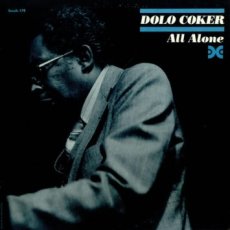
Dolo Coker was born Charles Mitchell Coker on November 16, 1927 in Hartford, Connecticut but was raised in Florence, South Carolina and Philadelphia, Pennsylvania. The first musical instruments Coker played in childhood were the C-melody and alto saxophones, learning them at a school. By age thirteen he was starting to play piano and after moving to Philadelphia he studied piano at the Landis School of Music and at Orenstein’s Conservatory.
During his Philadelphia years Coker played piano with Jimmy Heath, then became a member of Frank Morgan’s quartet, but it wasn’t until 1976 that he recorded as a leader. Signing with Xanadu Records he cut four albums and worked extensively as a sideman for Sonny Stitt, Gene Ammons, Lou Donaldson, Art Pepper, Philly Joe Jones and Dexter Gordon.
For the next several years pianist Dolo Coker continued to work as a sideman until he passed away of cancer at the age of fifty-five on April 13, 1983.

Dose A Day – Blues Away
More Posts: piano
Daily Dose Of Jazz…
Roland Guerin was born on November 15, 1968 into a musical family, first learning music from his bass playing mother. Her sage wisdom taught him that you can’t make it in music without a strong groove and feeling.
While studying marketing at Southern University in Baton Rouge he joined legendary jazz educator Alvin Batiste’s band, The Jazztronauts. Following this stint he toured the world with jazz guitarist Mark Whitfield and during this period he further explored the jazz genre in which he found success.
While exploring his spiritual side, Guerin created a new instrument – a hollow-bodied acoustic six string bass guitar that enabled him to write music for an entire spectrum of genres including pop, rock, R&B, classical, folk, and country.
Roland made his debut as a bandleader in 1998 with his acclaimed “The Winds of the New Land”, and then released four successful albums in the next decade. From 1994 to 2010 Roland was a member of the Marcus Roberts Trio, also regularly enhanced by symphony orchestras.
He would go on to perform with George Benson, Jimmy Scott, Frank Morgan, Vernel Fournier, Gerry Mulligan, Brian Blade, John Scofield, Herlin Riley and Dr. Michael White while recording with Ellis Marsalis, Marcus Roberts, and Allen Toussaint among others.
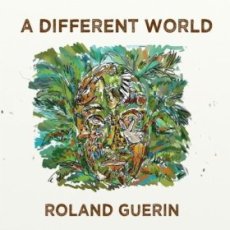
When he is not touring around the world, Roland is very active on the New Orleans music scene, and has released his last album “A Different World” in 2011.
Inspire A Young Mind
More Posts: bass,bass guitar
Daily Dose Of Jazz…
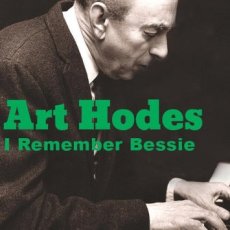
Art Hodes was born Arthur W. Hodes on November 14, 1904 in Ukraine, Russia but his family emigrated to the U.S. and settled in Chicago, Illinois when he was just a few months old. Although he gained wider attention once he moved to New York City in 1938, He began his career as a pianist in Chicago playing with Sidney Bechet, Joe Marsala and Mezz Mezzrow.
In the 1940s Art led his own big band that would be associated with his hometown of Chicago, playing mostly in that area for the next forty years. By the late 1960s he starred in a series of TV shows on Chicago style jazz called “Jazz Alley” appearing with greats like Pee Wee Russell and Jimmy McPartland. During this period he also wrote for jazz magazines like Jazz Record and remained an educator and writer in jazz.
He toured the UK in 1987 recording with drummer John Petters, and then returned the next year to play the Cork Jazz Festival with Petters and Wild Bill Davison, followed by a tour with the Legends of American Dixieland.
Over the course of his career he performed and recorded with Louis Armstrong, Wingy Manone, Gene Krupa, Mugsy Spanier, Alert Nicholas and Vic Dickerson among others. Pianist Art Hodes passed away on March 4, 1993 in Harvey, Illinois and was posthumously inducted into the Big Band and Jazz Hall of Fame in 1998.
Give A Gift Of Jazz – Share
More Posts: piano
Daily Dose Of Jazz…
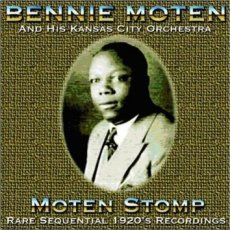
Bennie Moten was born on November 13, 1894 in Kansas City, Missouri. By the time he reached his mid-twenties he was leading the Kansas City Orchestra that was the most important of the itinerant, blues-based orchestras active in the Midwest at the time. The band helped develop the riffing style that would come to define many of the 1930s Big Bands.
Moten first recorded with Okeh Records in 1923 influenced by New Orleans and ragtime. His Victor Records sessions had a more sophisticated sound similar to Fletcher Henderson but featured a hard stomp popular to Kansas City.
By 1928 Bennie’s piano was showing some Boogie Woogie influences, but the real revolution came in 1929 when he recruited Count Basie, Walter Page and Oran “Hot Lips” Page. Walter Page’s walking bass lines gave the music an entirely new feel compared to the 2/4 tuba, colored by Basie’s understated, syncopated piano fills.
Their final session comprised of 10 recordings made in 1932 were made during a time when the band was suffering significant financial hardship but had added Ben Webster and Jimmy Rushing as their primary vocalist. These recordings showed the early stages of what became known as the “Basie Sound” some four years before Basie would record under his own name.
Pianist and bandleader Bennie Moten passed away after an unsuccessful tonsillectomy on April 2, 1935.
Jazz Is Global – Share
More Posts: piano
Daily Dose Of Jazz…
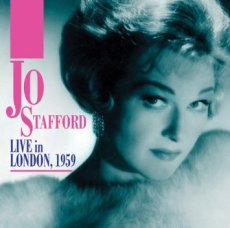
Jo Elizabeth Stafford was born on November 12, 1917 in Coalinga, California. Her mother was an accomplished banjo player who folk songs became of great influence. Her first public singing appearance came in Long Beach when she was 12. She attended Long Beach Polytechnical High School with dreams of a career in opera but with the onset of the Great Depression she joined her sisters and became The Stafford Sisters. Popularity grew and they got their start at KNX Radio when Jo was just 18 and went on to perform at KHJ Radio in Los Angeles
The sisters found work in the film industry as backup vocalists, made their first recording with Louis in 1936 and a year later she created arrangements for Fred Astaire on the soundtrack of “A Damsel In Distress”. Jo went on to join the Pied Pipers, work with Tommy Dorsey in New York, record four sides for RCA Victor and then returned to Los Angeles. After the Dorsey years the group was signed to Johnny Mercer’s new label Capitol Records and started singing on the radio shows of Frank Sinatra, Bob Crosby and Mercer.
In 1944, Stafford left the Pied Pipers going solo, picked up the nickname G.I. Jo for her continuous performance for the US troops, hosted “The Chesterfield Supper Club” and before the decade ended had a couple of million-seller tunes. By the 50s she was doing work for Voice of America, recording at Columbia Records becoming the first artist to sell 25 million records and hosted The Jo Stafford Show on TV. In the Sixties she recorded for Reprise, Warner and Dot record labels in the Sixties, won a Grammy for Best Comedy Album for her performance a part of the comedy duo Jonathan and Darlene Edwards.
Stafford went into semi-retirement in the mid-60s citing the music business as no longer fun and retiring completely in 1975. She devoted her time to charity for those with developmental disabilities. She donated her library to the University of Arizona and was inducted into the Big Band Academy of America’s Golden Bandstand in 2007.
Jo Stafford, singer of jazz standards and tradition pop music whose career spanned thirty years passed away of congestive heart failure on July 16, 2008. Her work in radio, television and music is recognized by three stars on the Hollywood Walk of Fame.
Put A Dose In Your Pocket
More Posts: vocal