

Daily Dose Of Jazz…
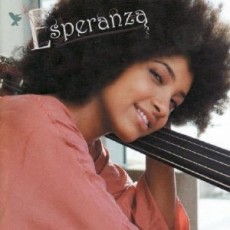
Esperanza Spalding was born October 18, 1984 in Portland, Oregon. Raised in a single parent household she was greatly influenced by her mother who was a singer, though she attributes cellist Yo-Yo Ma as her inspiration to make music her life. By the time Spalding was five, she had taught herself to play the violin and was playing with the Chamber Music Society of Oregon, staying with them until fifteen and left as concertmaster.
While homeschooled through elementary years Esperanza gleaned lessons from her mother’s guitar instructor when she was eight and would return home and play what she learned. She played oboe and clarinet before discovering the bass at 14 while attending The Northwest Academy. Bored with the ease of high school when she was 15 or 16 years old, Spalding dropped out and started writing lyrics for music for the local indie rock/pop group Noise for Pretend, touching on any topic that came to mind.
Spalding had begun performing live in Portland with her first gig at 15 in a blues club, when she could play only one line on bass and was soon learning from seasoned professionals during the band’s rehearsals. She went on to get her GED, enroll in Portland State University, then left with full scholarship to attend Berklee College of Music.
Almost immediately after graduation Esperanza was hired by her alma mater at age 20, becoming one of the youngest instructors in the institution’s history. In 2006 she released her debut album “Junjo” followed by her sophomore project “Esperanza” in which she sings in English, Spanish and Portuguese. These two projects were followed up with “Chamber Music Society” and her fourth album “Radio Music Society”.
She was personally chosen by President Obama to perform at the 2009 Nobel Peace Prize ceremonies and concert, she has won a Grammy for Best New Artist in 2011, Jazz Artist of the Year at the Boston Music Awards, has collaborated with Tineke Postma, Nicholas Payton and Teri Lyne Carrington among others, performed at the 84th Academy Awards and has donated a portion of her 2012 tour proceeds from merchandise sales to the non-profit organization “Free The Slaves” that combats worldwide human trafficking.
She has gone on to record an album in 77 hours while streaming the process live on Facebook, compose and record her 7th album 12 Little Spells, due out this October 2018 and has received an honorary Doctorate of music from Berklee. Bassists and vocalist Esperanza Spalding continues to compose, record, perform and tour.

Daily Dose Of Jazz…
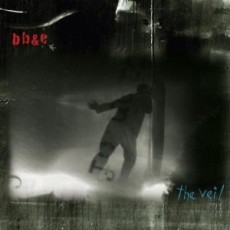
Tim Berne was born on October 16, 1954 in Syracuse, New York. Though a music fan, he had no interest in playing until his matriculation through college, when he bought an alto saxophone. Even then he was more interested in rhythm and blues following Stax Records releases and those of Aretha Franklin until he happened upon Julius Hemphill’s album “Dogon A.D. recorded in 1972.
Berne moved to New York City in 1974 and took lessons from Hemphill who was integrating soul and funk with free jazz, and then later recorded with him. In 1979, he founded Empire Records, released his own recordings, then recorded Fulton Street Maul and Sanctified Dreams for Columbia Records, generating discussion and controversy by straying away from the neo-traditionalist hard-boppers of the 80s into the avant-garde.
By the late Nineties Tim founded Screwgun Records, released his own recordings, as well as others musicians. He has played in the sideman seat with guitarists Bill Frisell and David Torn, composer/saxophonist John Zorn, violinist Mat Maneri, and cellist Hank Roberts, trumpeter Herb Robertson, the ARTE Quartet and has been a member of the group Miniature.
Wearing his composer hat, Berne creates complex, multi-section compositions are often quite lengthy, often twenty to thirty minutes. However, utilizing brilliantly creative and experienced musicians who don’t get lost or make their audiences never grow tired. He has been a part of nine different groups and has recorded forty-one albums. Alto saxophonist and bandleader Tim Berne continues to compose and perform prolifically.

More Posts: saxophone
From Broadway To 52nd Street
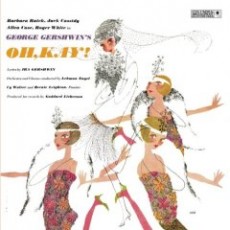
On November 8, 1926 The Imperial hosted the opening night of this new musical “Oh Kay!” starring Gertrude Lawrence, Oscar Shaw and the Fairbanks twins. The show ran for 256 performances and with the assistance of George and Ira Gershwin gave the world a Broadway melody destined to become a jazz standard – Someone To Watch Over Me.
The Story: It is 1926, the Jazz Age and the era of Prohibition. Jimmy Winter is very popular among the young ladies, and in the imaginary town of Beachampton, they are cleaning the living room of his Long Island, New York estate, declaring that “The Woman’s Touch” is exactly what his home needs. Jimmy Winter spends so little time on his Long Island estate, Kay Denham, posing as a cook, helps her rum-running brother, a titled English bootlegger, cache his illegal booze there. When Jimmy returns unexpectedly to get married, he falls in love with Kay. As a result, he helps Kay outmaneuver revenue agents and after renouncing his numerous other promises of marriage, agrees to marry Kay.
Jazz History: West 52nd Street is best known as the “Street of Jazz” or “The Street That Never Sleeps”. It ran east to west from 5th to 6th Avenues and was renowned in its heyday during and after Prohibition from 1925 to 1960. 52nd Street hosted such celebrated establishments as the Hickory House, Jimmy Ryan’s, the Famous Door, the Iron Gate, Leon & Eddie, 21, Tony’s, The Onyx, The Three Deuces, Downbeat, The Yacht Club, The Wing Club and Kelly’s Stable.
From 1935 to 1945 this monochrome of five story brownstone buildings in whose drab and cramped street level interiors – once known as English basements – flourished as speakeasies and jazz clubs and by 1936 it became also known as “Swing Street” and served as the launching pad for more singers, more hit songs and more instrumentalists than Chicago, New Orleans, Memphis or Los Angeles.
Sponsored By

www.whatissuitetabu.com
More Posts: broadway
From Broadway To 52nd Street
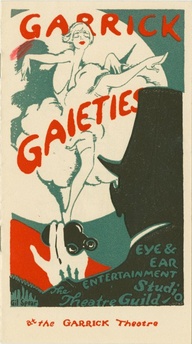
The year was 1926 and much to everyone’s surprise Garrick Gaities was so well received that it was brought back for a regular run. Sterling Holloway appeared in all of the sequels and Edith Meiser appeared in all but the final one. Notable performers included Imogene Coca and Rosalind Russell.
The music and lyrics for this second edition of the Gaieties was written by Rodgers and Hart and introduced their famous song “Mountain Greenery”, which would go on to become a jazz standard.
Jazz History: “The Street”, as it would come to be known, couldn’t have come into existence without the assistance of the New York City Board of Estimate, who on December 10, 1926 passed a resolution lifting residential restrictions on the brownstones between 5th and 6th Avenues. With the new or old owners gaining the ability to command higher rents from the illicit speakeasy owners than ordinary apartment dwellers or even the kept women who occupied many a brownstone apartment, the inevitability of 52nd Street was born.
Sponsored By
www.whatissuitetabu.com
More Posts: broadway
From Broadway To 52nd Street
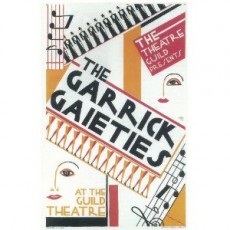
In the same year, on Sunday, May 15, 1925 the Theatre Guild Revue presented the first of three editions of Garrick Gaities that was mounted for only two performances in an effort to raise funds for new tapestries. The song that stood out to become a jazz favorite was Manhattan, composed by Richard Rodgers and Lorenz Hart.
Comprised of a series of sketches, the opening number, “Soliciting Subscriptions” was a spoof of the Theatre Guild’s “serious pretensions”, Ryskind wrote skits including a satire of President and Mrs. Calvin Coolidge, and a parody of the Scopes Trial, which was dropped from the show after William Jennings Bryant died. Sterling Holloway and June Cochrane introduced the song “Manhattan”, as its easygoing strolling melody and ingeniously rhymed lyric related all of the everyday pleasures to be found in New York.
Jazz History: The first two decades of the twentieth century saw 52nd Street as a quiet, expensive residential thoroughfare with its five-story brown stones that served as town houses for the city’s well-to-do families and social elite. Prohibition was slow to affect this area and by 1925, six years after it’s passage, the Street had its first speakeasy established by Jean Billia in a converted millionaire brownstone to a multiple dwelling.
Sponsored By
www.whatissuitetabu.com
More Posts: broadway