

Daily Dose Of Jazz…
Les Fish was born on November 24, 1955 in Boston, Massachusetts. As a teenager in the 1970s he was into rock and played guitar in various bands throughout the greater Boston area. He performed jazz-rock influenced original compositions in shows from the North Shore to Cape Cod.
Enrolling at Berklee College of Music, Fish studied and formed his own jazz fusion group, and made money splitting his time between teaching guitar, nightclub gigs and recording jingles for local television stations. After Berklee and studying with jazz guitar greats Mick Goodrick and Barry Galbraith, he met his future wife Lori Starr and formed the band Amante.
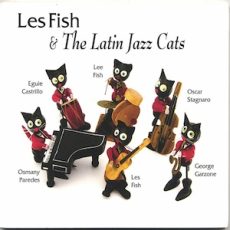
Touring full time for eighteen years with Amante, they worked at top hotels around the world and still performs throughout New England. The inspiration for the recording, Les Fish and The Latin Jazz Cats came three years ago, when he was touring in Cuba.
Returning from Cuba, Les returned home to seek out the best musicians to transfer his vision into reality.. At Berklee he recruited two-time Latin Grammy winning bassist Oscar Stagnaro, saxophonist George Garzone, pianist Osmany Paredes, his son Lee on drums and percussionist and bandleader Eguie Castrillo.
He has performed with many artists including Tito Puente, Arturo Sandoval, Steve Winwood, Danilo Perez, Warren Wolf, Gary Burton, Julian Lage, John Ellis, David Gilmore and Ryan Scott, among others. Guitarist Les Fish continues to perform and record.

More Posts: bandleader,guitar,history,instrumental,jazz,music
Daily Dose Of Jazz…
Jiří Stivín was born November 23, 1942 in Prague, Republic. After graduating from the Film Faculty of the Academy of Performing Arts in Prague, he continued his studies of composition at the Royal Academy of Music as well as at the Prague Academy of Music and the flute under Milan Munclinger.
Stivín performs music from the Middle Ages, the Renaissance, and the Baroque periods. As a sololist, he performed with the Prague Symphony Orchestra, with the Slovak Chamber Orchestra, with Suk Chamber Orchestra, Barocco sempre giovane as well as with several other ensembles.
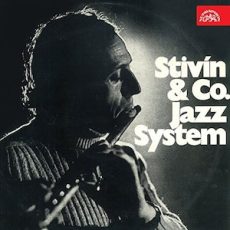
Involved in jazz, both as a composer and a performer, he has been a member of the European Jazz Ensemble, European Jazz Sextet, European Jazz Trio, Interjazz IV, Jazz Q, Jiří Stivín & Co., Prague Big Band and Jazz System.
Flutist, saxophonist, multi-instrumentalist, composer, bandleader Jiří Stivín, who was originally cinematographer, reemains active playing both the flute and saxophone in the Jazz Quartet in the Czech Republic, and gives regular lectures at the Prague Conservatory.
Daily Dose Of Jazz…
Guy Edgar Kelly was born in Scotlandville, Louisiana on November 22, 1906. In his early career he performed in Baton Rouge, Louisiana with a band led by Toots Johnson before going to New Orleans, Louisiana to play in Papa Celestin’s band in 1927-1928. While residing there he would regularly perform in trumpet duels with Red Allen.
In 1929 he went on tour as a member of Kid Howard’s band, and then joined Boyd Atkins’s band in the summer of 1930. By 1931 Kelly had moved to Chicago, Illinois where he was working with Cassino Simpson and Erskine Tate.
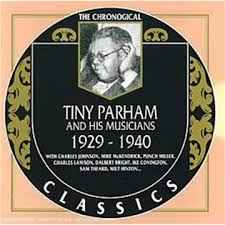
In the 1930s he worked with banjoist Ed Carry, pianists Dave Peyton, Tiny Parham, Albert Ammons, violinist Carroll Dickerson, and clarinetist Jimmie Noone,. Guy appears on the Noone classic composition The Blues Jumped A Rabbit, recorded Chicago on January 15, 1936.
Trumpeter and singer Guy Kelly died February 24, 1940.

Daily Dose Of Jazz…
Francesca Tanksley was born November 21, 1957 in Vincenza, Italy but grew up in Munich, Germany where she studied music from the age of seven. Moving to Boston, Massachusetts at 16, she studied piano and composition at Berklee College Of Music.
Two years later she returned to Munich. In 1980 she moved to New York City where she worked with Melba Liston until 1983, then she joined Billy Harper’s quintet with whom she toured extensively.
She has worked with Clifford Jordan, Cecil Payne, Bill Hardman and Erica Lindsay. She leads her own quintet and co-leads the Erica Lindsay/ Howard Johnson Quintet. As an educator she has been on the faculty of the New School, Berklee College. She has facilitated workshops and masterclasses at University of Southern California at Santa Cruz, Hampton University, Rensselaer Polytechnical Institute, Arizona State University, and Bard College.
Pianist Francesca Tanksley, who is a composer and educator, continues to perform and compose.
More Posts: composer,educator,history,instrumental,jazz,music,piano
Daily Dose Of Jazz…
Scot Albertson was born on November 20, 1957 and raised in Norwalk, Connecticut. Early childhood saw him as a choir member of the Little Singers of Norwalk and would travel, sing and compete internationally with the choir for six years. After graduating college he served for six years as a police officer segueing for a year in Arizona on border patrol. Returning to Connecticut he started a very successful small business which sustained his lifestyle for nineteen years.
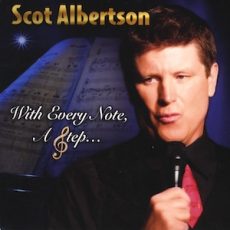
In 2000 he began taking vocal lessons with Richard Lissemore in New York City. Four and one half years later after intensive study, Scot released his debut album titled Got A Date With Fate with bassist Mark Egan, drummer Danny Gottlieb and producer, composer and pianist Jon Werking. Showcasing the music in 2005 at Danny’s Skylight Cabaret Room in New York City began his life as a career performer.
Since his debut performance, vocalist Scot Albertson has gone on to continue to perform around the city and metropolitan area.
More Posts: bandleader,history,instrumental,jazz,music,vocal