

Daily Dose Of Jazz…
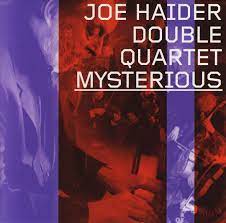
Joe Haider was born January 3, 1936 in Darmstadt, Germany and performed as an amateur musician in the region Stuttgart, Germany between 1954 and 1959. He studied at Richard Strauss Conservatory in Munich, Germany from 1960 to 1965. During this period he also played in the Fritz Münzer Quintet and recorded Live in HR 1962 and Jazz For Young People.
From 1965 to 1968, he worked as a pianist and led a trio in jazz club Domicile in Munich. During his residency Joe performed with many European and American jazz musician such as Benny Bailey, Duško Gojković, Nathan Davis, Booker Ervin, Klaus Doldinger, Hans Koller, Leo Wright, Attila Zoller, George Mraz, Peter Trunk, Philly Joe Jones, Joe Nay, Kurt Bong, Klaus Weiss and Pierre Favre.
After leading the Radio Jazz Ensemble of the Bayerischer Rundfunk, he worked from 1970 with the quartet Four for Jazz with alto saxophonist Heinz Bigler, bassist Isla Eckinger and Peter Giger on percussion. He founded his own trio with Eckinger and Favre and put together a combo with Duško Gojković and led a big band together with Slide Hampton, in which Dexter Gordon also performed.
1979 saw Haider establishing his own label EGO in order to release his own records and those of his German colleagues. He recorded with his orchestra and Mel Lewis, toured with Woody Shaw, and various soloists such as Andy Scherrer, Roman Schwaller, Sandy Patton or Don Menza. From 1984 to 1995, he was the director of the Swiss Jazz School in Bern, Switzerland. In 1994, the Canton of Bern’s government awarded him the Great Cultural Prize for his contribution in the field of music.
The turn of the century had him working for the next eleven years with Brigitte Dietrich and a double quartet with bowed string instruments. In 2016, he published the album Keep It Dark. Pianist Joe Haider, at 87, is not very active in music.

More Posts: bandleader,history,instrumental,jazz,music,piano

Daily Dose Of Jazz…
Cristian Amigo was born on January 2, 1963 in Santiago, Chile and emigrated with his family to the United States as a child. At twelve he began studying music with Joseph Torello in New Haven, Connecticut. Two years later the family moved to Miami, Florida where he began performing professionally with Six Feet Under, a rock band he formed. While attending Hialeah-Miami Lakes Senior High School he taught classes in guitar to his peers and took courses in music theory, classical guitar and jazz at Miami-Dade Community College.
By the time he turned 17 he was in the music program at Florida State University studying classical guitar. With an Associate of Arts diploma he returned to Miami, began actively performing in recording sessions and original and cover bands while attending music classes at University of Miami. His first recording session at 17 was producer Narada Michael Walden’s We Don’t Have To Take Our Clothes Off.
He moved to Los Angeles, California and earned his bachelor and master degrees and studied jazz with Kenny Burrell and Gary Pratt, and the sitar with Harihar Rao. He studied composition with Wadada Leo Smith. While a university student Amigo made a living as an assistant travel agent, a janitor, a session guitarist, band leader, music producer, film composer, jingle producer, concert producer, music teacher and performed in a number of bands.
He worked as a session guitarist with artists including Hans Zimmer, Mark Mancina, Jay Rifkin, Les Hooper, Wadada Leo Smith, David Ornette Cherry, John Van Tongeron, Justo Almario, and others.
His awards include the John Simon Guggenheim Fellowship in music composition, a Senior Fulbright Scholar/Teacher/Artist Award and the Van Leir Fellowship from Meet the Composer. His work has been supported and/or produced by numerous New York organizations, the Danish Arts Council, Smithsonian Institution Center for Folklife and Cultural Heritage and others too numerous to mention.
Guitarist and composer Cristian Amigo continues to compose, perform and record.
More Posts: guitar
Daily Dose Of Jazz…
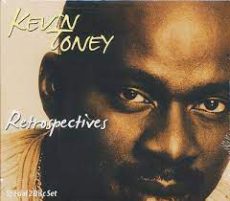
Kevin Kraig Toney was born on January 1, 1953 in Detroit, Michigan. Graduating from Cass Technical High School, in his teens he listened to the music of John Coltrane and Art Tatum He attended Howard University where Donald Byrd, head of the jazz studies department, assembled a group of students which became the fusion band the Blackbyrds, led by Toney. The band played with Chick Corea, The Crusaders, Herbie Hancock, and Grover Washington Jr.
The band released seven albums, three were certified gold and had two hits. Rock Creek Park and Unfinished Business, the latter earned Kevin a Grammy Award nomination. He has recorded several albums as a leader, has worked with Kenny Burrell, Hubert Laws, David “Fathead” Newman, James Newton, Sonny Rollins, Frank Sinatra, Sonny Stitt, Gerald Wilson and Nancy Wilson among numerous others.
As an arranger and conductor with Patti Austin, Babyface, Gloria Gaynor, Edwin Hawkins, James Ingram, Enrique Iglesias, Michael McDonald, Brian McKnight, Freda Payne, Bill Withers, Stevie Wonder, Marilyn McCoo, Billy Davis Jr., and produced his daughter, Dominique Toney’s debut album.
In the same roles he worked in theater for Ain’t Misbehavin’, Five Guys Named Moe, Harlem Suite, The Magic of Motown, Sophisticated Ladies, and Wild Women Blues. He wrote the music for the film Kings of the Evening.
Pianist and composer Kevin Toney, who has recorded eleven albums as a leader, nine as a member of The Blackbyrds and eighteen as a sideman, continues to perform, tour, and record.
More Posts: arranger,bandleader,composer,history,instrumental,jazz,music,piano
Requisites
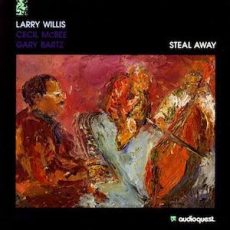
Steal Away ~ Larry Willis | By Eddie Carter
This morning’s album from the library is Steal Away (AudioQuest Music AQ-LP 1009), a little-known release by pianist Larry Willis. It’s the first of two records Willis made for the label and his seventh as a leader. He’s joined on this date by Gary Bartz (tracks: A2, B1) on alto sax and Cecil McBee (A2, B1, B2) on bass. My copy is the 1992 U.S. Stereo audiophile album.
Side One opens with Valdosta Blues by Larry Willis, the first of three solo piano performances. The title comes from the city in Georgia and begins with the pianist’s tranquil introduction that builds to a breezy melody. His ensuing solo is a superb performance that moves easily toward an exquisite ending.
The title tune, Steal Away, is an American Negro spiritual by Wallace Willis. It has been with Larry since age three and was a favorite song of his Mother’s to sing. Willis opens with a delicately gentle introduction to Bartz and McBee’s very pretty melody. Gary’s opening solo is imaginative and confident. Larry follows with sweet notes that shine like the rays of the sun, and Cecil breezes blissfully through the closing statement into a gentle climax. Fallen Hero is Larry’s tribute to his brother Victor. He tells an intimate story that reveals his love and affection for his brother with reflective inspiration and tenderness.
“D” Bass-ic Blues by Cecil McBee starts with the bassist’s bowed introduction, setting up Bartz and Willis to join him in a medium-tempo theme. Larry eases into the first solo with joyful vitality. Gary keeps the ball rolling with a remarkable reading of melodic lines. Cecil lets his bass do the talking in the finale preceding the theme’s reprise and conclusion. Ethiopia is a hauntingly beautiful song by Larry Willis that’s presented as a duet with Cecil McBee. The duo starts with a tender melody, and then Larry’s opening statement is as gentle as a light summer rain. Cecil comes in next with a graceful interpretation ahead of the duo’s delicately pretty ending.
The Meaning of The Blues by Bobby Troup and Leah Worth is given a tasteful treatment by Willis. He makes the song his own in a solo showcase that’s warm and nostalgic, thoughtful and heartfelt into a serene finale of haunting dreaminess. Joe Harley produced Steal Away, Pierre M. Sprey was the recording engineer, and Bernie Grundman mastered the album. It’s a pure analog recording with a stunning soundstage that was pressed on 180 grams of audiophile vinyl and is a perfect demonstration record for any quality audio system. Larry Willis recorded twenty-one albums as a leader and many more as a sideman. If you’re a fan of piano jazz, I invite you to consider Steal Away by Larry Willis on your next record-shopping trip. It’s an excellent place to start your discovery of his music and a welcome addition to any jazz fan’s library!
~ Fallen Hero, Ethiopia, “D” Bass-ic Blues – Source: Album Liner Notes by Bill Kohihasse
~ American Negro Spirituals were songs that contained hidden codes and messages for enslaved people to escape on their own or through the Underground Railroad – Source: Wikipedia.org © 2023 by Edward Thomas Carter

More Posts: choice,classic,collectible,collector,history,instrumental,jazz,music,piano
Daily Dose Of Jazz…
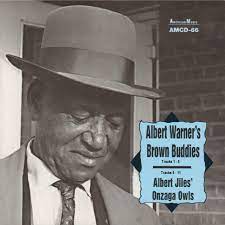
Albert Warner was born on December 31, 1890, in the Tremé neighborhood of New Orleans, Louisiana. Though his father was a string bass player, he didn’t seriously pick up the trombone until he was twenty-two years old. Taking lessons from one of his half-brothers, Ulysses Jackson, as well as Arthur Stevens and Honoré Dutrey. His main influences in his youth came from hearing Freddie Keppard, Vic Gaspard, and Baptiste Delisle.
His first professional jobs were playing for dance bands, including those led by “Big Eye” Louis Nelson, Kid Rena, Wooden Joe Nicholas, Buddy Petit, and Chris Kelly. In 1932 Warner joined the Eureka Brass Band and remained a regular member of this group until his death in 1966. His musical interplay with Charles Sonny Henry in the Eureka band during the late 1940s and 1950s is remembered by many for its intricacy and beauty.
The early Forties saw Albert playing and recording with Bunk Johnson and George Lewis. He would record often throughout the 1950s and in the Sixties he could be found playing frequently at Preservation Hall, accompanying the Preservation Hall band on a number of tours with Kid Sheik and the Eureka Brass Band. He went on one Memphis tour with Billie and DeDe Pierce in 1965.
Warner left behind a number of sessions recorded and released by Commodore, Pax, Folkways, Atlantic, and American. The album Bunk Johnson 1942/1945, Eureka Brass Band and The Eureka Brass Band in Rehearsal, a number of recordings with Charlie Love, Peter Bocage with His Creole Serenaders and the Love-Jiles Ragtime Orchestra, released by American. He also appeared on other American label albums recorded by Punch Miller, John Casimir, Kid Sheik and appeared on Atlantic’s Jazz at Preservation Hall series.
Trombonist Albert Warner, who performed in the traditional and brass band genres, transitioned on September 10, 1966 in New Orleans.

More Posts: bandleader,history,instrumental,jazz,music,trombone