

Daily Dose Of Jazz…
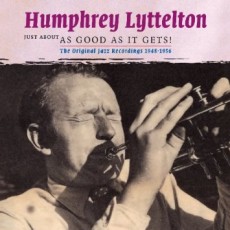
Ian Christie was born on June 24, 1927 in Blackpool, Lancashire, England to a father who was a piano tuner and banjoist. He took lessons from Charlie Farrell but opted to join the Royal Air Force, taking up photography as his primary interest. After his brother Keith joined Humphrey Lyttleton’s band, he soon followed, finishing his photography studies with financial help from Humphrey.
During the 1950s and 1960s Ian worked extensively with Mick Mulligan and George Melly as well as playing in a number of trad jazz ensembles, and forming a group with his brother Keith, Ken Coyle and Dicky Hawdon called the Christie Brothers’ Stompers.
Throughout his career he continued to work in trad jazz ensembles into the 2000s, with the Wyre Levee Stompers, the Merseysippi & Parade Jazz Band, and the Tony Davis Band, among others. In his later years he played with Graham Tayar in his Crouch End All Stars. Aside from playing music clarinetist Ian Christie worked as a film critic for The Daily Express for over 25 years and as a photographer until his passed away on January 19, 2010.

Take A Dose On The Road
More Posts: clarinet
Daily Dose Of Jazz…
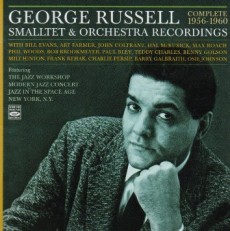
George Allen Russell was born on June 23, 1923 in Cincinnati, Ohio, the adopted only child of a nurse and a chef on the B & O Railroad. He sang in the choir of the African Methodist Episcopal Church and listened to the Kentucky Riverboat music of Fate Marable and made his stage debut at age seven, singing “Moon Over Miami” with Fats Waller.
Surrounded by the music of the black church and the big bands played on the Ohio Riverboats, he started playing drums with the Boy Scouts and Bugle Corps, receiving a scholarship to Wilberforce University. There he joined the Collegians, a band noted as a breeding ground for great jazz musicians including Ben Webster, Coleman Hawkins, Charles Freeman, Frank Foster and Benny Carter. He was a member noted jazz composer, Ernie Wilkins. When called up for the draft at the beginning of WWII he was hospitalized with tuberculosis where he was taught the fundamentals of music theory by a fellow patient.
Following his release from the hospital, he played drums with Benny Carter’s band, but after hearing Max Roach decided to give up drumming as a vocation. Inspired by hearing Thelonious Monk’s Round Midnight, George moved to New York in the early Forties and became a member of a coterie of young innovators who frequented the 55th Street apartment of Gil Evans. This clique included Miles Davis, Charlie Parker, Gerry Mulligan and John Lewis.
Back to the hospital in 1945 for 16 months with another bout of tuberculosis Russell worked out the basic tenets of what was to become his Lydian Chromatic Concept of Tonal Organization. This was his theory encompassing all of equal-tempered music which has been influential well beyond the boundaries of jazz. At that time, Russell’s ideas were a crucial step into the modal music of John Coltrane and Miles Davis on his classic recording, Kind Of Blue, and served as a beacon for other modernists such as Eric Dolphy and Art Farmer.
George would go on to compose Cubano Be,Cubano Bop for the Dizzy Gillespie Orchestra, becoming the pioneering experiment of fusing bebop and Cuban jazz elements. The following year he composed A Bird In Igor’s Yard in tribute to Charlie Parker and Igor Stravinsky and recorded at a session led by Buddy DeFranco. He would start playingpiano and go on to work with Artie Shaw, Bill Evans, Art Farmer, Hal McCusick, Barry Galbraith, Milt Hinton, Paul Motian, Paul Bley, Jon Hendricks, Bob Brookmeyer, Steve Swallow, Dave Baker, Eric Dolphy, Sheila Jordan, Tom Harrell, Ray Anderson and numerous and others.
Russell recorded his debut album as a leader, Jazz Workshop, playing very little but masterminding the events of the session in the same vein as Gil Evans. He was to record a number of impressive albums over the next several years, sometimes as primary pianist.
Over the course of his career he would be commissioned to compose a piece for Brandeis University and Swedish Radio for the Radio Orchestra, tour Europe, live in Scandinavia, assume the presidency of the New England Conservatory of Music and was appointed to teach the Lydian Concept in the newly created jazz studies department. He continued to compose major orchestral and chorus works, earned two Grammy nominations for his 45-minute opus The African Game, and toured with a group of American and British musicians, resulting in The International Living Time Orchestra, a group comprised of Dave Bargeron, Steve Lodder, Tiger Okoshi, Brad Hatfield, and Andy Sheppard, who still tour and perform today.
He received a MacArthur Foundation Genius Grant, NEA American Jazz Master Award, two Guggenheim Fellowships and a British Jazz Award. He taught throughout the world, and was a guest conductor for German, Italian, Danish, Finnish, Norwegian, and Swedish radio groups. Pianist, composer, arranger and theorist George Russell died of complications from Alzheimer Disease in Boston, Massachusetts on July 27, 2009.
Give The Gift Of Knowledge
More Posts: piano
Daily Dose Of Jazz…
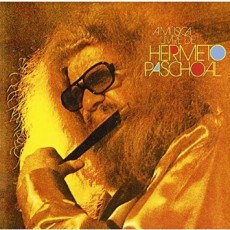
Hermeto Pascoal was born an albino on June 22, 1936 in Lagoa da Canoa, Alagoas, Brazil at a time when there was no electricity. He learned the accordion from his father and practiced for hours as his condition of birth did not allow him to work the fields.
Hermeto’s career began in 1964 with appearances on several Brazilian recordings alongside relatively unknown groups that included Edu Lobo, Elis Regina and Cesar Camargo Mariano, establishing widely influential new directions in post-bossa Brazilian jazz.
By 1966 he was playing in the Sambrasa Trio with Airto Moriera and Humberto Clayber releasing one album Em Som Maior. Then he and Airto joined Trio Novo and in 1967 renamed the group Quarteto Novo and released an album that launched the careers of Pascoal and Moreira. Pascoal would then go on to join the multi-faceted group Brazilian Octopus.
Pascoal initially caught the international public’s attention with an appearance on Miles Davis’s 1971 album Live-Evil, which featured him on three pieces he composed. Later collaborations involved fellow Brazilian musicians Airto and Flora Purim. From the late 1970s onward he has mostly led his own groups, that have included bassist Itibere Zwarg, pianist Jvino Santos-Neto and percussionists Nene, Pernambuco and Zabele.
Known as o Bruxo (the Sorcerer), Hermeto often makes music with unconventional objects such as teapots, children’s toys, and animals, as well as keyboards, button accordion, melodica, saxophone, guitar, flute, voice, various brass and folkloric instruments. Folk music from rural Brazil is another important influence in his work.
Between 1996 and 1997, Pascoal worked on a book project called the Calendário do Som, that contains a song for every day of the year, including 29 February, so that everyone would have a song for his or her birthday. He continues to perform, record and tour.
Jazz Is Global – Share
More Posts: accordion,flute,guitar,keyboard,melodica,saxophone,vocal
Daily Dose Of Jazz…
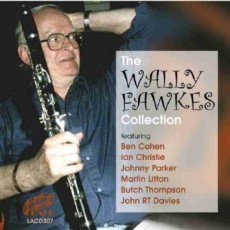
Wally Fawkes was born Walter Ernest Fawkes on June 21, 1924 in Vancouver, Canada. His family moved to Britain in 1931 and enthused by comic books he started out pursuing a career as a cartoonist, first enrolling in Sidcup Art School. Due to financial restraints he left school, took a job painting camouflage onto factory roofs at the onset of WWII but a bout of pleurisy kept him from service.
The Coal Commission employed Fawkes to work on maps and in 1942 he entered an art competition that was adjudicated by the Daily Mail and was found work in the Clement Davies ad agency and later at the Daily Mail drawing column-breaks and decorative illustrations.[1]
It was during the war years that he began playing in jazz bands and because of the amount of time spent in air raid shelters that people living in London were becoming troglodytes and adopted the name for one of his first groups – Wally Fawkes and the Troglodytes. In 1947 he joined the George Webb Dixielanders, a semi-professional revivalist jazz band that featured Humphrey Lyttelton on trumpet. The two would leave and form their own group that evolved into mainstream jazz. He would record with Sidney Bechet in 1949, George Melly and John Chilton in the early Seventies.
Over the years clarinetist Wally Fawkes combined playing jazz with his love of cartooning and had a successful career in both. His political satire in the comic strip he illustrated gained praise from Prime Minister Margaret Thatcher. Poor eyesight retired him from cartooning at the age of 81 and he has concentrated solely on his clarinet playing.
Put A Dose In Your Pocket
More Posts: clarinet
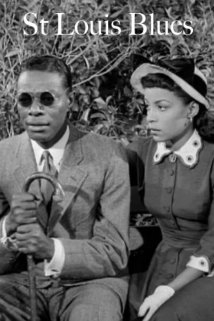
Hollywood On 52nd Street
W.C. Handy composed St. Louis Blues used as the title track for the 1958 film of the same name. The movie had as its stars Nat King Cole portraying W.C. Handy and Ruby Dee as Elizabeth as well as a host of musicians and vocalists not limited to Eartha Kitt, Cab Calloway, Ella Fitzgerald, Mahalia Jackson, Barney Bigard, Red Callender and Pearl Bailey.
The Story: Will Handy grew up in Memphis with his preacher father and his Aunt Hagar. His father intends for him to use his musical gifts only in church, but he can’t stay away from the music of the streets and workers. After he writes a theme song for a local politician, Gogo, a speakeasy singer, convinces Will to be her accompanist. Will is estranged from his father for many years while he writes and publishes many blues songs. At last the family is reunited when Gogo brings them to New York to see Will’s music played by a symphony orchestra.
Sponsored By

www.whatissuitetabu.com