

Daily Dose Of Jazz…
Creed Taylor was born May 13, 1929 in Bedford, Virginia and played trumpet in the high school marching band and symphony orchestra. He grew up surrounded by country music and bluegrass but gravitated more toward the sounds of jazz after listening to Dizzy Gillespie in high school. He spent countless evening listening to Symphony Sid broadcast live from Birdland in New York City. He went on to attend Duke University, perform with the Duke Ambassadors and The Five Dukes.
After graduation, a couple of years in the Marines, and a year of graduate school, he made his way to New York City to pursue becoming a record producer. Convincing the Duke alum running Bethlehem Records to allow him to record vocalist Chris Connor with the Ellis Larkins Trio and the album becoming a success, led Taylor to become head of A&R. He was at Bethlehem during its two most significant years, recording Oscar Pettiford, Ruby Braff, Carmen McRae, Charles Mingus, Herbie Mann, Charlie Shavers and the J.J. Johnson/Kai Winding Quintet.
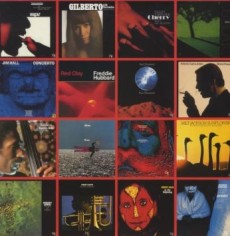
Creed went on to join ABC-Paramount, founded the subsidiary Impulse label four years later dubbing it “The New Wave In Jazz”. He recruited John Coltrane and released gatefold albums by Ray Charles, Gil Evans, Kai Winding, J.J. Johnson and Oliver Nelson. His use of photographers for cover art that blurred the lines of jazz and popular music would set him apart and come in handy in later years.
By 1961 Taylor left and went to Verve Records introducing bossa nova to the US through recordings such as “The Girl From Ipanema” with Antonio Carlos Jobim and Stan Getz. The music was picked up by Dizzy Gillespie, and caught the ear of jazz guitarist Charlie Byrd and the sound exploded through the jazz community. Never leaving jazz, he also produced albums by Wes Montgomery, Jimmy Smith, Bill Evans and many others.
From Verve Creed went to A&M Records in 1967 and formed his own label, CTI (Creed Taylor Inc.), the following year. A&M distributed CTI releases until 1969, when he left to establish CTI as an independent record company. CTI became one of the most popular and successful jazz record companies of the 1970s, achieving fame for his unrivalled ability to balance the artistic with the commercial. He recorded Freddie Hubbard, Stanley Turrentine, George Benson, Chet Baker, Gerry Mulligan, Nina Simone, Paul Desmond, Art Farmer, Herbie Hancock and Ron Carter as well as forming the Kudu label and recording the likes of Hank Crawford, Grover Washington, Jr. and Esther Phillips.
Facing financial problems in 1974 Taylor caused by setting up his own network to distribute CTI labels and made a new distribution deal with Motown. This, however, was the beginning of the end with litigation, losing artists and bankruptcy. Finally Columbia agreed to distribute but he gave up his rights to the masters.
Record producer Creed Taylor has won numerous Grammy Awards for his decades of production work including sessions by Stan Getz’s Focus 1961, Desafinado by Stan Getz/Charlie Byrd, 1962, Bill Evans’ Conversations With Myself 1963, The Girl from Ipanema by Stan Getz and Joao Gilberto 1964, Willow Weep For Me by Wes Montgomery in 1969 and First Light by Freddie Hubbard in 1972. His CTI label changed the way music was produced for the decade of the 70s and forever left an indelible stamp on the genre of jazz.

Get A Dose On The Road
More Posts: record producer,trumpet
Daily Dose Of Jazz…
Alekos Vretos was born on May 11, 1976 in Athens, Greece. He studied oud and piano in his youth. While attending Berklee College of Music he studied composition. Since graduating he has been masterfully merging jazz, Arabic, Greek and Latin music in a blend of sounds from traditional instruments. As a bandleader, he has developed a unique atmosphere for his music by keeping traditional sound in the front line and expanding it through jazz improvisation and exploding rhythmic development.
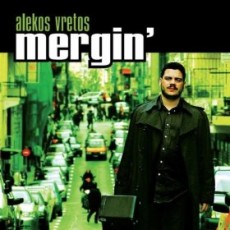
Vretos made his first appearance on a recording titled Yunan with The Meliti Ensemble in 2004 to critical acclaim. As a leader he released his debut album Mergin in 2009, taking the oud into unchartered waters leaning heavily on jazz but with a fine hint of traditional Arabian sound.. That same year he launched his own indie label and management company Jadeo Music, making this the inaugural project.
Alekos features world, jazz and classical music in his playing as well as his fellow artists. He was included in 2013 list of the 100+1 most influential people in the Greek music scene. He has performed in major venues in Grece, the UK, Palestine, Mexico and the United States. He continues to perform, record, tour and collaborate with jazz big bands, orchestras and fellow composers.
Inspire A Young Mind
Daily Dose Of Jazz…
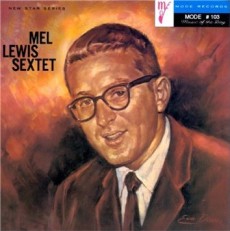
Mel Lewis was born Melvin Sokoloff on May 10, 1929 in Buffalo, New York. He started playing professionally as a teen, eventually joining Stan Kenton’s outfit in 1954. H e moved to Los Angeles to further his career in 1957 and then cross-country to New York City in 1963.
By 1966 in New York, he teamed up with Thad Jones to lead the thad Jones/Mel Lewis Orchestra. The group started as an informal jam session with the top studio and jazz musicians of the city, but eventually began performing regularly on Monday nights at the Village Vanguard. Though it was a sideline gig for the musicians, in 1979 the band won a Grammy for their album Live in Munich. When Jones moved to Denmark it became known as Mel Lewis and the Jazz Orchestra.
Mel recorded and performed in small group configurations occasionally but he led the band until shortly before his death. It has now become known as the Vanguard Jazz Orchestra and has released several CDs. Over his career Lewis recorded with Manny Albam, Chet Baker, Bud Shank, Bob Brookmeyer, Kenny Burrell, Eric Dolphy, Dizzy Gillespie, Joe Lovano, Herbie Mann, Jack McDuff, Gary MacFarland, Jimmy McGriff, James Moody, Chico O’Farrill, Shirley Scott, Sonny Stitt, Thad Jones, Pepper Adams and Jimmy Witherspoon to name a few.
In the late 1980s, Lewis was diagnosed with melanoma in his arm, then surfaced in his lungs and ultimately traveled to his brain. The drummer and bandleader played exclusively on a lighter Turkish made Istanbul cymbals that exuded a dark, overtone-rich sound, as well as his wood-shell drums were considered warm and rich in their sound. Mel Lewis passed away on February 2, 1990 in New York City, just days before his band was to celebrate its 24th anniversary at the Village Vanguard.
Dose A Day – Blues Away
More Posts: drums
Daily Dose Of Jazz…
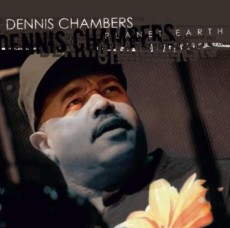
Dennis Chambers was born May 9, 1959 in Baltimore Maryland. He started playing drums at the age of 4 and his ardent interest in drums at that age propelled him to keep playing whenever he got a chance. A child prodigy started performing in clubs at the age of 6, despite his lack of formal training. Within a short time, he had been invited to perform in most nightclubs in Baltimore area.
After graduating from high school in 1978, Chambers, then 18, joined George Clinton and Parliament Funkadelic, a band he played with until 1985. He was recruited in 1981 by the Sugar Hill Label to be their house drummer and played on many Sugar Hill releases including, “Rapper’s Delight”. A sought after first call drummer for his technique and speed, as well as his ability to play “in the pocket”. His session work and performance have included John Scofield, George Duke, The Brecker Brothers, Santana, John McLaughlin, Mike Stern, CAB, Craig Howe, Sugar Hill Gang and his own band Niacin, among others.
Dennis went on to gain membership with Special EFX for two years, then joined David Sanborn, and performed on the critically acclaimed Maceo Parker live album “Roots and Grooves” with the WDR Big Band. He has played with most of the major jazz-fusion musicians.
Drummer Dennis Chambers has appeared as a featured drummer on the late Show with David Letterman’s Drum Solo Week II, alongside other such notable players Tony Royster Jr., Gavin Harris, Neil Peart and Stewart Copeland. He continues to perform, tour and record.
Dose A Day – Blues Away
More Posts: drums,percussion
Daily Dose Of Jazz…
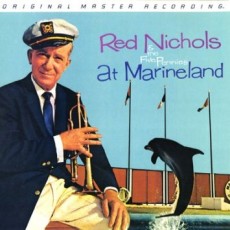
Red Nichols was born Ernest Loring Nichols on May 8, 1905 in Ogden, Utah. A child prodigy, he learned to play the cornet and by the age of twelve he was playing difficult set pieces for his father’s brass band. Hearing the early recordings of the Original Dixieland Jazz Band, and later those of Bix Beiderbecke, they had a strong influence and his style became polished, clean and incisive.
In the early 1920s, Nichols moved to the Midwest and joined a band called The Syncopating Seven, then joined the Johnny Johnson Orchestra and went with it to New York City in 1923. In New York he met and teamed up with trombonist Miff Mole and the two of them were inseparable for the next decade.
Nichols had good technique, could read music, and easily got session and studio work. In 1926 he and Miff Mole began a prodigious stint of recording over 100 sides for the Brunswick label, with a variety of bands, most of them known as “Red Nichols and His Five Pennies”. Very few of these groups were actually quintets; the name was simply a pun on “Nickel”, since there were “five pennies” in a nickel
He also recorded under a number of other names, employing Jimmy Dorsey, Benny Goodman, Glenn Miller, Jack Teagarden, Pee Wee Russell, Joe Venuti, Eddie Lang and Gene Krupa among others. He would go on to record for Edison, Victor, Bluebird, Variety and Okeh record labels.
By the time the Swing Era arrived his recording career stalled even though he formed his own band. The transition from Dixieland to swing was not easy for him and the critics who once lauded him now trashed his output. During the Depression he played in show bands and pit orchestras, moved out to California and led Bob Hopes orchestra and during WWII gave up music for an Army commission. After the war he returned to music playing small clubs, hosting jam sessions and getting better engagements at the top clubs in the city – Zebra room, Tudor room in San Francisco’s palace Hotel and Pasadena’s Sheraton.
He toured Europe as a goodwill ambassador for the State Department, performed in Mickey Rooney film Quicksand, and was the subject of This Is Your Life. By 1965 he was in Las Vegas with his band playing the Mint Hotel. Only a few days into the date, he was sleeping in his suite and was awakened by paralyzing chest pains. He managed to call the front desk and an ambulance was summoned, but it arrived too late.
On June 28, 1965, cornetist, composer, and bandleader Red Nichols, rumored to have appeared on over 4000 recordings during the 1920s alone, passed away. That night the band went on as scheduled, but at the center of the band a spotlight pointed down at an empty chair in Nichols’ customary spot. He has been the subject of a film biography portrayed by Danny Kaye, had a cameo in the biopic the Gene Krupa Story and in 1986 was inducted into the Big Band and Jazz Hall of Fame.
Put A Dose In Your Pocket
More Posts: cornet