


Daily Dose Of Jazz…
Baby Laurence was born Laurence Donald Jackson on Feb 24, 1921 in Baltimore, Maryland. He was a boy soprano at age twelve, singing with McKinney’s Cotton Pickers. When the bandleader Don Redman came to town and heard Jackson, he asked his mother if he could take the boy on the road. She agreed, providing her son traveled with a tutor. Touring on the Loewe’s circuit, his first time in New York City was marked by a visit to the Hoofers Club in Harlem, where he saw the tap dancing of Honi Coles, Raymond Winfield, Roland Holder, and Harold Mablin.
>Returning home sometime later he discovered both his parents had died in a fire. He and his brother formed a vocal group called The Four Buds and tried to establish themselves in New York. He worked in the Harlem nightclub owned by the retired dancer Dickie Wells, who nicknamed him “Baby” and encouraged his dancing. He frequented the Hoofers Club, absorbing ideas and picking up steps from Eddie Rector, Pete Nugent, Toots Davis, Jack Wiggins, and Teddy Hale, who became his chief dancing rival. Baby worked after-hour sessions, danced around Harlem, Washington, D.C., and Cincinnati, and began playing theaters such as Harlem’s Apollo in the late 1930s. He performed with a group called The Six Merry Scotchmen or the Harlem Highlanders, who dressed in kilts, danced, and sang Jimmie Lunceford arrangements in five-part harmony.
By 1940 Baby was focused on tap dancing and became a soloist. Through the decade, he danced with the big bands of Duke Ellington, Count Basie and Woody Herman, and in the Fifties danced in small Harlem jazz clubs. Under the influence of jazz saxophonist Charlie Parker and other bebop musicians, Laurence expanded tap technique into jazz dancing. He performed with Art Tatum, duplicating in his feet what Tatum played with his fingers. Through listening hard to Parker, Dizzy Gillespie, and Bud Powell as well as drummers like Max Roach, he developed a way of improvising solo lines and variations as much as a horn man as a percussionist.
Beset by drugs, alcohol, and financial troubles, Laurence stopped performing in the late fifties. After a long illness, he returned to Harlem in the early sixties to work again in small jazz clubs. Baby began a long time engagement with Charlie Mingus, danced with Max Roach, and would go on to tap dance sessions at the Jazz Museum, dance with Josephine Baker, did some television and gave one of his triumphant performances at the Newport-New York Jazz Festival.
Regarded as an authentic jazz dancer, he further developed the art of tap dancing by treating the body as a percussive instrument. Baby Laurence, an extraordinary jazz tap dancer who had a profound influence on rhythm dancers in the second half of the twentieth century, passed away on Apr 2, 1974.
More Posts: dance,history,instrumental,jazz,music
Daily Dose Of Jazz…
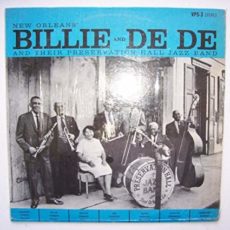
Josiah “Cie” Frazier was born on February 23, 1904 in New Orleans, Louisiana. He studied drums under several New Orleans jazz musicians, including Louis Cottrell, Sr., Red Happy Bolton, and Face-O Woods. He joined the Golden Rule Band with cousin Lawrence Marrero in 1921, and played in Marrero’s Young Tuxedo Orchestra in the 1920s.
He recorded with Papa Celestin’s Tuxedo Brass Band in 1927 and played with A.J. Piron and Sidney Desvigne in the late 1920s and early 1930s. During the Great Depression, Frazier played in WPA bands and in Navy dance bands. In 1945, he recorded with Wooden Joe Nicholas and worked in the 1950s with Celestin, Percy Humphrey, George Williams, and the Eureka Brass Band. He played in the Preservation Hall Jazz Band in the 1960s, working there into the 1980s, and recorded in his last few decades with Kid Howard, De De Burke, George Lewis, Emile Barnes, Captain John Handy, and Don Ewell.
He appeared in the Steve McQueen film The Cincinnati Kid and drummed on a Helen Reddy session. Drummer Cie Frazier passed away on January 10, 1985 in New Orleans.
More Posts: drums,history,instrumental,jazz

Daily Dose Of Jazz…
George Haslam was born February 22, 1939 in Preston, Lancashire, England and performed around the London free improvisational scene from the late 1960s, but did not begin recording until the 1980s. His first recording was issued in 1984, having been recorded while on tour in Hungary. He put together an ensemble called the Siger Band, included Paul Rutherford, Pete McPhail, Tony Moore, and Nigel Morris.
He played in Mexico in 1986 and in Cuba soon after he was the first British jazz ensemble to play in the latter country. He won the same distinction in Argentina before the end of the decade and has returned repeatedly to this country to perform and record. He founded Slam Records in 1989 to issue his own music; the label also releases material by Steve Lacy and Mal Waldron, among others. During this time his collaborations included work with Lol Coxhill, Paul Hession, Laszlo Gardony, Ruben Ferrero, and Evan Parker.
Haslam founded the British Saxophone Quartet in 1992, with Paul Dunmall, Elton Dean, and Simon Picard rounding out the membership. He also founded an ensemble called Meltdown in 1997, which issued its first record in 2001. Baritone saxophonist George Haslam who also plays the tárogató continues to perform in the avant-garde jazz idiom.
More Posts: history,instrumental,jazz,music,saxophone
Daily Dose Of Jazz…
Eddie de Haas was born Edgar O. de Haas of Dutch descent on February 21, 1930 in Bandung, Java. His father was a flutist and played the ukulele and as a teenager, he became enthusiastic about jazz at the age of ten. A move from Java to the Netherlands in 1946 and it was while there he started playing bass in 1951.
He first accompanied Pia Beck, then Don Byas. He was on a European tour with Wally Bishop in 1952/53, accompanied Bill Coleman, 1954/55 Martial Solal, Zoot Sims/Henri Renaud, Dave Amram/Bobby Jaspar and Chet Baker on his European tours. In 1956 he played with Vera Auer and had his own trio. In 1957 he went to the United States.
In the United States, he initially played with Terry Gibbs, Miles Davis, Bernard Peiffer, Sal Salvador, Benny Goodman, Charlie Mariano/ Toshiko Akiyoshi, Blossom Dearie, Charlie Singleton, Chris Connor, Kenny Burrell, Roy Haynes, and Kai Winding, among others.
In 1962 he had his own quartet with Bobby Jaspar. In 1964/65 he was with Gene Krupa and in 1966/67 in Germany. He also spent a long time in France and other European countries, was in the backing band of Johnny Mathis in the early 1960s and accompanied Peter, Paul & Mary in the 1960s. 1964/65 worked in Gene Krupa’s big band and with Al Haig. Afterward, he worked as a freelance musician.
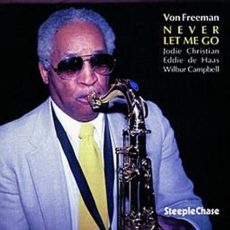
Since the 1960s he has been married to singer Geraldine Bey, who was then a member of the vocal group Andy & the Bey Sisters around her brother Andy Bey. 1968 saw him move to Chicago with his wife and later he regularly accompanied musicians in Chicago in the showcase. While living there he played with Von Freeman, with whom he also recorded, and Jodie Christian. In 1975 he performed at the Chicago Jazz Festival.
He is also on albums by Mezz Mezzrow, Dave Amram, Bob Wilber, Von Freeman, Chet Baker, Roy Haynes, Sonny Stitt, Louis Smith, Sir Charles Thompson and to hear Slide Hampton.
More Posts: bass,history,instrumental,jazz,music

Daily Dose Of Jazz…
Frederick L. Robinson was born in Memphis, Tennessee on February 20, 1901, and learned to play the trombone as a teenager. He studied music in Ohio before moving to Chicago, Illinois where he played in Carroll Dickerson’s orchestra. As a member of Louis Armstrong’s Hot Five, he played on recordings and continued working with both Dickerson and Armstrong until late 1929.
He went on to take a position in Edgar Hayes’s band and in the 1930s he worked extensively as a sideman, with Marion Hardy, Don Redman, Benny Carter, Charlie Turner, Fletcher Henderson, and Fats Waller. From 1939 to 1940 he was in Andy Kirk’s band, and in the later 1940s he worked with George James, Cab Calloway, and Sy Oliver. Early in the 1950s he was performing with Noble Sissle, but sometime after 1954 he became less active as a performer. Trombonist Fred Robinson passed away on April 11, 1984, in New York City.
More Posts: history,instrumental,jazz,music,trombone