Daily Dose Of Jazz…
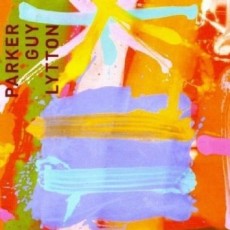
Evan Shaw Parker was born on April 5, 1944 in Bristol, England and his original inspiration was Paul Desmond and the cool jazz saxophone scene with later influences being Warren Marsh and Lee Konitz. Better known for his later work, he rapidly assimilated the American avant-garde of John Coltrane, Pharoah Sander, Albert Ayler and others and forged his own, instantly identifiable style.
Parker’s music of the 1960s and 1970s involves fluttering, swirling lines that have shape rather than tangible melodic content. He began develop methods of rapidly layering harmonics, false notes, circular breathing and rapid tonguing which initially were so intense that he would find blood dripping onto the floor from the saxophone. He also became a member of the important big band, The Brotherhood of Breath.
Evan became interested in electronics and his collaboration electronically processed his playing in real time, creating a musical feedback loop or constantly shifting soundscape. He has recorded a large number of albums both solo or as a group leader, and has recorded or performed with such musicians as Peter Brotzmann, Derek Bailey, Anthony Braxton, Cecil Taylor, George Lewis, Joe McPhee, Mark Dresser and Dave Holland among numerous others.
Parker is one of the few saxophone players for whom unaccompanied solo performance is a major part of his work. Along with Bailey and drummer Tony Oxley founded the Incus record label in 1970. The label continued under Bailey’s sole control, after a falling-out between the two men in the early 1980s and currently Parker curates the Psi record label. He also performs monthly at London’s Vortex Jazz Club.
Though Parker’s central focus is free improvisation, he has also occasionally appeared in more conventional jazz contexts, such as Charlie Watts Big Band, Kenny Werner’s ensembles, and Gavin Bryars’s After the Requiem. He has also performed in pop and rock settings but remains a pivotal figure in the development of European free jazz and free improvisation and has pioneered or substantially expanded an array of extended techniques on the European free jazz scene.

Put A Dose In Your Pocket
More Posts: saxophone
Daily Dose Of Jazz…
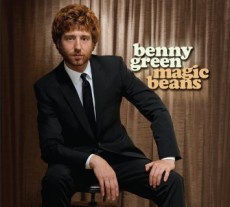
Benny Green was born in New York City on April 4, 1963 and grew up on the West coast in Berkeley, California. From the age of seven he studied classical piano and had an interest in jazz from an early point, as his father played jazz tenor saxophone.
Discovered by Faye Carroll, while still in his teens worked in a quintet led by Eddie Henderson. He attended Berkeley High, participated in the school’s jazz ensemble and in his later school career had a weekly trio gig at Yoshi’s, which marked his entrance to the world of professional jazz.
After graduation he spent time in San Francisco but became more successful on his return to New York. Green joined Betty Carter’s band in 1983 and since 1991 has led his trio, recording for Blue Note, Telarc and Criss Cross.
As an educator Benny frequently teaches in workshops across the United States, such as Jazz Camp West in California, and Centrum/Jazz Port Townsend in Washington. He currently is on faculty at the University of Michigan.
Pianist Benny Green has sixteen albums as a leader, 75 to date as a sideman and has performed and recorded with Art Blakey, Anat Cohen, Ray Brown, Gary Bartz, Bob Belden, Clark Terry, Don Braden, Cecil Brooks III, Arnett Cobb, Mark Elf, Larry Gales, Tim Hagans, Jay Hoggard, Freddie Hubbard and Milt Jackson among many, many others. He continues to perform, record and tour.
Give The Gift Of Knowledge
More Posts: piano
Daily Dose Of Jazz…
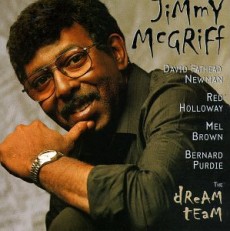
Jimmy McGriff was born James Harrell McGriff on April 3, 1936 in Germantown, Pennsylvania and started playing piano at the age of five. By his teens he learned to play vibes, alto saxophone, drums and upright bass. His first group was as bassist in a piano trio. When he joined the United States Army he served as an MP during the Korean War, later became a police officer in Philadelphia for two years.
Music kept drawing McGriff’s attention away from the police force. His childhood friend, Jimmy Smith began earning a substantial reputation and he became entranced by the organ sound while Richard Groove Holmes played at his sister’s wedding. Holmes went on to become his teacher and friend.
Buying his first Hammond B-3 organ in 1956, spent six months learning the instrument, and then studied at New York’s Juilliard School. Influenced by Count Basie, Howard “The Demon” Whaley, Austin Mitchell and Milt Buckner with whom he studied privately and as well with Jimmy Smith and Sonny Gatewood.
Forming a combo Jimmy played around Philadelphia often featuring tenor saxophonist Charles Earland, who soon switched to the instrument. During this time, McGriff also accompanied such artists as Don Gardner, Arthur Prysock, Candido and Carmen McRae, who came through town for local club dates.
In 1961, McGriff’s trio recorded an instrumental version of Ray Charles’ hit “I Got A Woman” for Jell Records, and after the record received substantial local airplay, Sue Records picked it up and recorded a full album of McGriff’s trio, released in 1962. The album established his credentials as a fiery blues-based organist, well versed in gospel, soul and “fatback groove”.
McGriff would recorded a series of popular albums by the mid Sixties ending with what still stands as one of his finest examples of blues-based jazz, Blues for Mister Jimmy. Over the next decade he went on to continue recording for Solid State, opened his own supper club “The Golden Slipper” in Newark, New Jersey and performed regularly performed with the Buddy Rich Band.
Though he retired from the music industry in 1972 to start a horse farm in Connecticut his records were being issued at three to four a year by Sonny Lester’s Groove Merchant label. By 1973, Jimmy was touring relentlessly and actively recording again and though disco was gaining a hold it did little to stop the organist. He produced some of his best music during this period: Stump Juice, Red Beans and Outside Looking In.
The 1980s saw McGriff working with Rusty Bryant, Al Grey, Red Holloway, David “Fathead” Newman, Frank Wess and Eric Alexander, and started a longtime partnership with Hank Crawford. Into the new millennium he experimented with the Hammond XB-3 and organ synthesizer with Midi enhancements. Along with his soul jazz sound, forming the Dream Team group he recorded and released his last album, McGriff Avenue in 2001.
On May 24, 2008 at the age of 72, hard bop and soul jazz organist and bandleader Jimmy McGriff, who left a catalogue of 57 albums to posterity, passed away in Voorhees Township, New Jersey from complications due to multiple sclerosis.
Take A Dose On The Road
More Posts: organ
Daily Dose Of Jazz…
Jeff Barone was born on April 2, 1970 in Syracuse, New York and after hearing a Joe Pass recording received his first guitar at age eight. By age 16 he was playing in local jazz clubs and invited to play with touring bands coming to his hometown. During this period he also performed with the Syracuse Symphony Orchestra as well as vocalist Al Martino.
Jeff went on to matriculate through Ithaca College studying classical guitar and percussion. His next stop was the Manhattan School of Music leaving with a Masters in jazz performance. While in New York he worked small clubs with Evelyn Blakey, was part of the Harlem organ scene, and did a stint with Reuben Wilson.
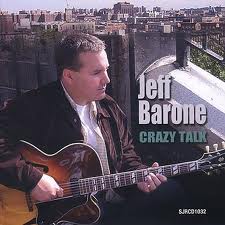
Teaming with guitarist Jack Wilkins, who was instrumental in getting Barone gigs with the Vanguard and the Mingus Epitaph Orchestras, they co-produced Crazy Talk, his first album, with a mix of standards and originals. His next project would be Open Up. He would go on to work with Tom Harrell, Warren Chiasson, Joe Magnarelli, Eddie Montiero and Bobby Caldwell’s Big Band.
He is the guitarist and assistant conductor for the Big Apple Circus in New York City, has subbed on Broadway shows such as Wicked, Seussical and The Dead, and was recently included in Scott Yanow’s book The Great Jazz Guitarists: The Ultimate Guide. Guitarist Jeff Barone continues to perform, record and tour in between his other duties.
Dose A Day – Blues Away
More Posts: guitar
Daily Dose Of Jazz…
Antoine Roney was born on April 1, 1963 in Philadelphia, Pennsylvania and started out musically learning to play the clarinet but soon turned his attention to the saxophone after his older brother Wallace turned him on to John Coltrane’s Live at Birdland album.
Roney graduated from the Duke Ellington School of the Arts in Washington, DC and then went on to attend college at the Hartt School of Music of the University of Hartford, where he studied with alto saxophonist, Jackie McLean.
Throughout the 80s and 90s Antoine worked as a sideman with McLean, Donald Byrd, Clifford Jordan, Ted Curson, John Patton, Rashied Ali, Arthur Taylor, Jesse Davis, Ravi Coltrane, Michael Carvin, Geri Allen, Chick Corea and Elvin Jones.
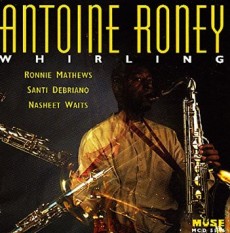
Roney released his first album The Traveler” in 1992 followed with his sophomore project “Whirling” in 1996. To date he has released five albums as a leader, and participated in Miles Davis tribute project Bitches Brew Revisited, with drummer Cindy Blackman. The tenor and soprano saxophonist continues to perform and tour extensively with his trio.
Inspire A Young Mind
More Posts: saxophone