

Daily Dose Of Jazz…
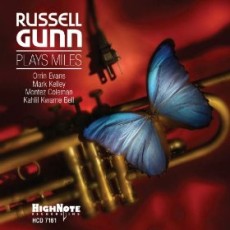
Russell Gunn was born October 20, 1971 in Chicago, Illinois but grew up in East St. Louis when his family moved when he was nine. His interest in music led Russell to the trumpet and at Lincoln high school he joined the band where his cousin Anthony Wiggins, the band’s featured trumpeter, and the band director fueled his musical interest. Gunn spent two years at Jackson State University on a full music scholarship, moved back to East. St. Louis, freelancing and working odd jobs. While performing at Cicero’s in St. Louis in 1993 saxophonist Oliver Lake happened to hear the young trumpeter, and immediately invited him to perform at the Brooklyn Museum in New York.
This was followed by a fortuitous appearance at a 4am jam session at the Blue Note where Denis Jeter, an assistant to Wynton Marsalis at Lincoln Center, heard and recommended him for the third trumpet chair in Marsalis’ Blood on the Fields. Receiving rave notices for his work with the Lincoln Center Jazz Orchestra, Russell started earning recognition as one of the most dynamic and exciting musicians of his generation. Continuing to freelance with Lake and various other top jazz artists, Gunn began leading his own groups and in 1994 and issued his first recording for the legendary Muse record label, “Young Gunn”.
Always fascinated with hip-hop Russell suffered undue criticism from the neo-conservative jazz mainstream for his culture style of dress, however, Russell’s virtuoso abilities and command of all musical styles from funk to the avant-garde evidenced a serious new talent on the scene. His eclectic musical approach had him collaborating with Cee-Lo, Maxwell, D’Angelo, Ne-Yo, Branford Marsalis and Jazz at Lincoln Center.
With a singular style that incorporates the influences of masters like Miles Davis, Lee Morgan, and the underrated Booker Little, Gunn has continued to gain recognition for his own music through touring and well-received albums, including the Grammy-nominated Ethnomusicology, Vol. 1 and Ethnomusicology Vol. 2.
Understanding his range means listening as he interprets the standards on Mood Swings, putting on a twist as he Plays Miles Davis, challenging the parameters of freedom in jazz with his latest Ethnomusicology project “Return Of Gunn Fu” or his requiem with Love Stories. Trumpeter Russell Gunn continues to compose, record, perform, tour worldwide and push the jazz envelope with his groups “Bionic” and “Electrik Butterfly”.

More Posts: trumpet
From Broadway To 52nd Street
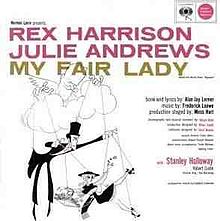
My Fair Lady opened the Mark Hellinger Theatre on March 15, 1956, running for a record 2,717 performances and making it the 7th musical to enter the roster of blockbuster musicals and to date the longest running on Broadway. The musical starred Rex Harrison, Julie Andrews and Robert Coote performing the compositions of Alan Jay Lerner & Frederick Leowe who gave the world I’ve Grown Accustomed To Her Face, Show Me, On The Street Where You Live, I Could Have Danced All Night and Wouldn’t It Be Loverly.
The Story: When Professor Henry Higgins, from perfect British class snobbishness hears the low born waif bray of flower girl Eliza Doolittle, he places a wager with his colleague Colonel Pickering that by giving her lessons in speech and class, he can pass her off to society. Unwittingly, through all their ups and downs in the learning process, the caterpillar evolves into a beautiful butterfly and Henry falls in love. Fighting his heart every step of the way and frustrating a now society lady Eliza, who has also fallen for him. Finally Henry succumbs to his heart and they find peace in their world.
Jazz History: Outside of the United States the beginnings of a distinct European style of jazz emerged in France with the Quintette du Hot Club de France, which began in 1934. Belgian guitar virtuoso Django Reinhardt popularized gypsy jazz, a mix of 1930s American swing, French dance hall “musette” and Eastern European folk with a languid, seductive feel. The main instruments are steel stringed guitar, violin and double bass. Solos pass from one player to another as the guitar and bass play the role of the rhythm section. Some music researchers hold that it was Philadelphia’s Eddie Lang and Joe Venuti who pioneered the guitar-violin partnership typical of the genre,which was brought to France after they had been heard live or on Okeh Records in the late 1920s.
Sponsored By

www.whatissuitetabu.com
Daily Dose Of Jazz…
Eddie Daniels was born on October 19, 1941 in New York City and grew up in the Brighton Beach neighborhood of Brooklyn. He became interested in jazz as a teenager when impressed by listening to the recordings of the musicians accompanying singers, such as Frank Sinatra. Eddie’s first instrument was the alto saxophone, started on clarinet at 13 and later received his Masters in Clarinet from Julliard. By 15 he would add the Newport Jazz Festival Youth Competition to what would become a long list of credits. By the time he entered college, he was playing alto, clarinet and adding tenor saxophone to his arsenal.
Daniels has led a variety of bands from small combos to orchestras and has toured worldwide, recorded and appeared on television. Since the 1980s he has focused mainly on the clarinet and in 1989 he won one of many Grammy awards for playing on the Roger Kellaway arrangement of “Memos From Paradise”.
Over the course of his career he has captured Down Beat Magazine’s International Critics New Star on Clarinet Award, played and recorded with the Thad Jones/Mel Lewis Orchestra at the Village Vanguard, George Benson, Joe Farrell, Johnny Hammond, Richard Davis, Yusef Lateef, Airto Moreira and Don Patterson Gordon Goodwin’s Big Phat Band. Clarinetist Eddie Daniels, who also plays saxophone, flute and piccolo, performs commissioned classical compositions, has revolutionized the blend of classical and jazz and continues to tour and record.
Daily Dose Of Jazz…
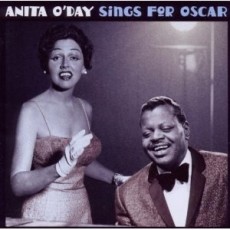
Anita O’Day was born Anita Belle Colton into a broken home in Chicago, Illinois on October 18, 1919. She took the first chance to leave home at age 14, she became a contestant in the popular Walk-a-thons as a dancer. She toured on the Walk-a-thons circuits for two years, occasionally being called upon to sing. In 1934, she began touring the Midwest as a marathon dance contestant and singing “The Lady In Red” for tips.
In 1936, she left the endurance contests, determined to become a professional singer. Anita started out as a chorus girl in such uptown Chicago venues as the Celebrity Club and the Vanity Fair, and then found work as a singer and waitress at the Ball of Fire, the Vialago, and the Planet Mars. It was at the Vialago that O’Day met and later married drummer Don Carter and later married, who introduced her to music theory. Her first big break came in 1938 when Down Beat editor Carl Cons hired her to work at his new club, the “Off-Beat” followed by a stint at The Three Deuces.
She went on to work with Gene Krupa in 1941, recorded her first big hit with him performing a novelty duet with Roy Eldridge titled “Let Me Off Uptown”, was named “New Star of the Year” by Down Beat, appeared in two short musical films, and over the next several years she performed as a solo act, fronted the bands of Woody Herman, Stan Kenton, rejoined Krupa and then became a solo artist again.
During the late forties she would record regularly, attempting to achieve popularity without sacrificing her jazz singer identity. Plagued with long-term problems with heroin addiction and alcoholism, coupled with erratic behavior surfacing earned her the nickname “The Jezebel of Jazz”. During this period she was in and out of jail for various possession charges. However, a date with Count Basie at the Royal Roost resulted in five air checks and her career was back on the upswing. But what secured O’Day’s place in the jazz pantheon are the 17 albums she recorded for Norman Granz’s Norgran and Verve labels between 1952 and 1962, recording her and the label’s inaugural LP “Anita O’Day Sings Jazz” in 1952.
Anita’s backbeat-based singing style was strongly influential on many other female singers of the late swing and bebop eras, including June Christy, Chris Connor and Doris Day. Admired for her sense of rhythm and dynamics, her early big band appearances shattered the traditional image of the “girl singer” by presenting herself as a “hip” jazz musician, wearing a band jacket and skirt. Anita O’Day passed away in her sleep of cardiac arrest on Thanksgiving Day, November 23, 2006, at age 87.
More Posts: vocal
Daily Dose Of Jazz…
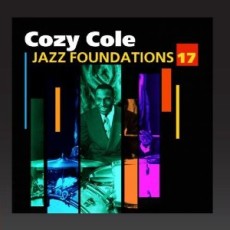
Cozy Cole was born William Randolph Cole on October 17, 1909 in East Orange, New Jersey. His first music job was with Wilbur Sweatman in 1928 and two years later he was playing with Jelly Roll Morton’s Red Hot Peppers. He had his first drum solo on the recording of “Load of Cole”. In 1931 Cozy went on to spend two years with Blanche Calloway, followed by a year with Benny Carter, then a year with Willie Bryant, two with Stuff Smith’s small combo.
For four years from1938-42 he played with Cab Calloway. In 1942, CBS Radio music director Raymond Scott hired Cozy as part of the network radio’s first mixed-race orchestra. After his stint with CBS, he played with Louis Armstrong’s All Stars.
Cole scored a #1 Cashbox magazine hit with the “Topsy Part 2” that also peaked at number three on Billboard’s Hot 100 in 1958and at number one on the R&B chart. It sold over one million copies garnering it a gold disc. The recording contained a lengthy drum solo and was one of the few drum solo recordings that ever made the Billboard Hot 100 chart.
Throughout the 1960s and 1970s Cole continued to perform in a variety of settings. Cole and Gene Krupa often played duets at the Metropole in New York City during the 1950s and 1960s. Cole appeared in music-related films, including a brief cameo in “Don’t Knock The Rock” and has been cited as an influence by many contemporary jazz and rock drummers including Cozy Powell, who took his nickname from Cole.
Cozy Cole passed away from cancer on January 31, 1981 in Columbus, Ohio.
More Posts: drums