

Requisites
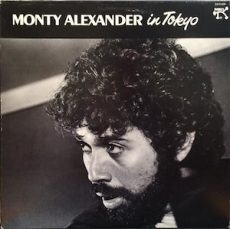
Monty Alexander In Tokyo | By Eddie Carter
I first heard Monty Alexander In Tokyo (Pablo Records 2310-836) in 1985 at the former jazz station, WNOP 740 AM, after my move to Cincinnati from Cleveland, Ohio. It was recorded during the pianist’s first trip to the city and is his nineteenth release as a leader. Here, he is working with two of the best in the business: Andy Simpkins on bass and Frank Gant on drums. My copy is the 1979 U.S. Stereo pressing, and the trio opens this musical adventure with a trip to Broadway by Billy Byrd, Teddy McRae and Henri Woode. They begin this catchy tune with a delightfully crafted melody. Monty cuts loose in a spirited statement that’s sure to have your fingers popping and toes tapping along until the song’s conclusion.
Just In Time by Jule Styne, Betty Comden, and Adolph Green starts with a short introduction by Monty, segueing into the threesome’s pulsating theme, who treats the standard like an old friend. Monty comes alive in the song’s only interpretation ahead of the closing chorus and finish. Sweet Lady is a lovely ballad by Dave Zoob, Frank Crumit, and Howard E. Johnson. It’s a showcase for Monty and Andy, who start the song with a tender introduction that leads to their enchanting melody. The duo sustains the gentle mood in the delicately sensitive statement they share, preceding a polite reprise and climax.
Tricotism by Oscar Pettiford begins with the trio introducing this happy swinger collectively before taking the theme at a fast clip. Monty kicks off the solos with a scintillating opening statement; then Andy takes over for a bit of brisk walking. The pianist has a second interlude before Frank engages in a short workout ahead of the melody’s restatement and ending. Never Let Me Go by Jay Livingston, and Ray opens with the threesome’s slow-tempo introduction. The pace picks up to a medium beat for the opening chorus, ahead of the pianist’s driving solo that has something to say into the closing chorus.
Up next is Montevideo by Richard Evans, which takes off from the opening notes of the trio’s upbeat introduction and melody. The rhythm section spurs Monty to soar into the stratosphere in the song’s only statement until he returns to Earth for the theme’s reprise and abrupt ending. Pawnbroker by Quincy Jones is a very pretty ballad from the 1964 film drama. It’s a solo showcase for Monty Alexander, and the pianist uses the poignant melody effectively to depict the song’s sincerity and melodic beauty in a gorgeous interpretation, preceding the melody restatement and a lovely summation.
See See Rider by Ma Rainey brings the album to a close on an upbeat note. The trio starts expressing their joy and pleasure in the melody. Monty is up first with an especially impressive interpretation; then Andy takes a short walk through the second reading. The pianist puts the finishing touches on the song ahead of the closing chorus and ending. Monty Alexander produced Monty Alexander In Tokyo, and Katsuyuki Handa and Kazutoyo Takeda were the recording engineers. The sound quality is excellent, with a vivid soundstage that transports the trio to your listening room’s sweet spot.
Whether you’re new to Monty Alexander’s music or a seasoned fan, Monty Alexander In Tokyo is a versatile album that’s perfect for any occasion. It’s the perfect soundtrack for a relaxing evening or a lively dinner with friends. I highly recommend adding it to your jazz library. With its diverse range of tracks, it’s a testament to the trio’s musical prowess and a must-have for anyone who loves a piano trio!
~ Just In Time – Source: JazzStandards.com
~ Broadway, See See Rider – Source: Wikipedia.org
© 2024 by Edward Thomas Carter

More Posts: choice,classic,collectible,collector,history,instrumental,jazz,music,piano

Daily Dose Of Jazz…
Jørgen Ryg was born on August 11, 1927 in Copenhagen, Denmark and was the son of the opera singer and barber Evald Asger Ryg Kristiansen and the pianist Ellen Kirstine Ryg.
Over the course of his career Jørgen recorded several jazz albums but is best known for his comical monologues on stage. He appeared in 37 films between 1954 and 1978. He won the Bodil Award for Best Actor in a Supporting Role for his role as adjutant Mühlhauser in Lenin, You Rascal, You.
Ryg was diagnosed with throat cancer in 1979. He was declared healthy the following year, but suffered a severe relapse when he appeared in the Tivoli revue in the summer of 1981. He collapsed with a bleeding stomach ulcer and had to give up work for the rest of the season.
Trumpeter, composer, comedian and actor Jørgen Ryg, was admitted to the Finsensinstituttet in Copenhagen and died on August 28, 1981 at the age of 54.

More Posts: bandleader,history,instrumental,jazz,music,trumpet
Daily Dose Of Jazz…
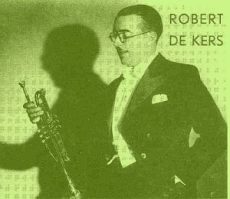
Robert De Kers was born Robert De Keersmaeker on August 10, 1906 in Antwerp, Belgium. He learned to play piano as a child, and began playing jazz with local musicians while in his teens. He was the pianist for the Bing Boys in 1924-1925, then picked up trumpet.
As a trumpeter Robert toured Italy with the Jeff Candrix Band, brother of Fud Candrix, and played there with Carlo Benzi and David Bee’s Red Beans. Later in the 1920s he was associated with Harry Flemming and Josephine Baker.
The 1930s saw him working with Jean Robert and Jean Omer in addition to leading his own ensemble, the Cabaret Kings, which toured Europe. He continued recording into the 1950s, also working as an arranger and composer; he led bands in the United States, and Germany following World War II and was later head of the Wurlitzer Company’s Belgian operations.
Trumpeter and bandleader Robert De Kers died on January 16, 1987 in Brussels, Belgium.
More Posts: bandleader,instrumental,jazz,music,trumpet
Daily Dose Of Jazz…
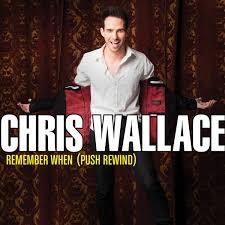
Chris Wallace was born on August 9, 1971 in Regina, Saskatchewan. A self taught drummer he rose to professional status through relentless self study. As he developed as a musician he began to add jazz music to his already large repertoire of pop, rock, r&b and funk. He moved to New York City and studied with drum clinician and educator Dom Famularo.
In the late 90s he relocated to the United Kingdom and became a central figure in the jazz scene in Scotland. He put together two trios, NeWt which was awarded the 2012 Scottish Jazz Ensemble, and Breach, and he formed a quartet named Loose Grip that released the album Looking Glass. Wallace has appeared with countless international jazz musicians as a sideman.
Becoming more active on the jazz scene, he began performing with many of the nation’s top players such as Graeme Stephen, Paul Harrison, Phil Bancroft, Steve Hamilton, Kevin Mackenzie, Mario Caribe and many others. As a sideman he performed with international artists such as Jamie Oehlers, Jim Mullen, Silke Eberhard, Alan Barnes, Louis Durra, Damon Brown, Ulf Wakenius, Anders Bergkrantz and others.
Chris has backed many singers as well including Lady Rizo, Ali McGregor, Julienne Taylor, Lillian Boutee, Niki King and Holly Penfield. Not limiting himself to jazz, the rock field has Chris sharing stages across Europe with bands such as Asia, King Crimson, Uriah Heep, Saga and many others. He has performed with world class cabaret artists in the UK and has toured Australia twice.
As an educator he has a long teaching history as well, with many years of private students of all ages under his belt. More formally, he was head drum tutor at Stevenson College in Edinburgh, Scotland for three years beginning in 2009.
Drummer Chris Wallace, now based in Toronto, Canada, continues to perform and record.
More Posts: bandleader,drums,history,instrumental,jazz,music

Daily Dose Of Jazz…
Peter Packay was born Pierre Paquet on August 8, 1904 in Brussels, Belgium and lived with his family in China for part of his childhood, but returned to Belgium in 1912. As a teenager he was crippled in one arm by an accident, but decided to learn to play trumpet anyway at age 20, joining the Varsity Ramblers.
He co-founded a band called Red Beans with David Bee and served as its principal composer of originals. Bee left the group and was replaced by Robert De Kers, and Packay remained its leader until its dissolution in 1929. In the 1930s he formed another group, Packay’s Swing Academy, which played with Coleman Hawkins among others. He also did arrangements for bandleader Billy Arnold.
As a composer, Packay’s works included Alabama Mamma, The Blue Duke, Dixie Melody, and Lullaby for a Mexican Alligator. Following World War II he gave up performance to concentrate on composition and arrangement for songs like Jazz in the Rain, One Day and Grey Skys.
Trumpeter, arranger, and composer Peter Packay died on December 26, 1965 in Westende, Flanders, Belgium.
More Posts: bandleader,history,instrumental,jazz,music,trumpet