

Daily Dose Of Jazz…
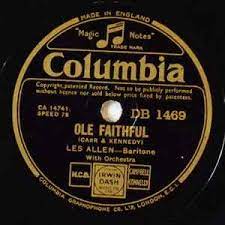
Leslie Allen was born on August 29, 1902 in Ealing, London, England and at the age of 3, he and his family moved to Canada. As a child, he played clarinet alongside his father in the Queen’s Own Rifles Band and later learned to play the saxophone. He performed with the dance bands of Burton Till and Luigi Romanelli and in 1922 worked briefly in New York City before travelling to England in 1924 as part of a band of fellow Canadians recruited by Hal Swain. Intending his band to play at the Rector’s Club in London, once there, he found it closed.
The band found a residency at the New Prince’s restaurant in Piccadilly and became The New Princes Toronto Band. Under this name, they recorded for Columbia Records for eighteen months with Allen serving as alto saxophonist and occasional vocalist. Between 1926 and 1927, Allen joined several of his NPTB colleagues on a European tour where they performed as Dave Caplin’s Toronto Band under the leadership of banjoist Caplin.
After returning to England in 1927, Allen spent the next five years playing and singing with several leading British dance orchestras, including those of Carroll Gibbons, George Melachrino and Geraldo and making a number of freelance recordings, with duets with Al Bowlly.
In 1932, he joined Henry Hall’s BBC Dance Orchestra as a featured vocalist and enjoyed national hits with The Sun Has Got His Hat On and Auf Wiedersehen My Dear. Parting ways with Hall in 1934, he began a solo career, scoring hits with Tell Me Tonight, Love Is The Sweetest and the children’s ballad, Little Man You’ve Had A Busy Day on which his wife Anne and son Norman had speaking parts.
In 1935, he starred in the musical comedy Heat Wave, subsequently formed his own bands, the Les Allen Melody Four and the male voice singing group, Les Allen & His Canadian Bachelors, with fellow countrymen lead singer Jack Curtis, tenor Herbie King, and baritone and arranger Cy Mack.
During World War II, Les travelled and entertained Canadian troops. After the war, he played the juvenile lead in the 1945 revival of Miss Hook of Holland before returning to Toronto, Canada in 1948, where he started a second career in the office supply trade. Retiring in 1971, alto saxophonist and vocalist Les Allen transitioned in Toronto on June 25, 1996.

More Posts: bandleader,history,instrumental,jazz,music,saxophone,vocal
Daily Dose Of Jazz…
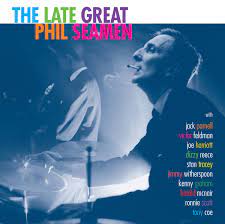
Philip William Seamen was born on August 28, 1926 in Burton upon Trent, Staffordshire, England. He began playing drums at the age of six, turning professional at the age of 18 by joining Nat Gonella and his Georgians in 1944. At 20 he spent a year with Gordon Homer Big Band at the Coronation Ballroom in Ramsgate. He joined the Tommy Sampson Orchestra in 1948 and by 1949, Seamen and tenor saxophonist Danny Moss formed a bebop quintet from within the ranks and was featured on a radio broadcast by the orchestra.
He then went on to play in the Joe Loss Orchestra for about 14 months before taking the top job with Jack Parnell from 1951 until midway 1954. Seamen, being much sought after during the 1950 played in Kenny Graham’s Afro-Cubists projects from 1952 to 1958, from 1954 onwards with the Joe Harriott Quartet, the Ronnie Scott Orchestra and Sextet. He was recruited opn countless sessions as well to perform with Dizzy Reece, Victor Feldman, Jimmy Deuchar, Kenny Baker, Vic Ash, Don Rendell, Stan Tracey, Laurie Johnson, Big Bill Broonzy and Josh White, to name a few.
In 1957 Phil was on his way to America with the Ronnie Scott Sextet as part of a Musicians’ Union exchange tour deal. Unfortunately the Southhampton custom officers found him in possession of drugs, killing his lifelong dream of visiting the States. In 1958, the West End production of West Side Story opened with him after Leonard Bernstein reputedly specifically asked for him, so the producers hired him.
During the first half of the 1960s, he worked often with Tubby Hayes, Joe Harriott, played a couple of nights with Dexter Gordon at Ronnie Scott’s, and recorded with Carmen McRae. In 1964 he played R&B with Alexis Korner and Georgie Fame.
He started teaching in 1962, one of his pupils being Ginger Baker, who went on to influence a whole generation of rock drummers. However, his addiction to alcohol, heroin and other drugs hampered his health and career as many bandleaders refused to hire him with the exception of Freddie Hubbard in 1964 and Roland Kirk in 1967 with a UK tour. On October 13, 1972 drummer Phil Seaman transitioned in his sleep at his home in Old Paradise Street Lambeth, South London, at the age of 46.
Bestow upon an inquiring mind a dose of a Burton upon Trent drummer to motivate the perusal of the genius of jazz musicians worldwide whose gifts contribute to the canon…
Daily Dose Of Jazz…
Meredith Irwin Flory, was born on August 27, 1926 in Logansport, Indiana and was encouraged by his organist mother to learn clarinet as a child. During World War II he was an Army Air Force pilot and after his discharge went on to matriculate through Indiana University, graduating with a degree in philosophy.
Known professionally as Med Flory, in the early 1950s he played in the bands of Claude Thornhill and Woody Herman, before forming his own ensemble in New York City. 1955 saw him relocating to California and starting a new group, which played at the 1958 Monterey Jazz Festival. In the late 1950s, he played with Terry Gibbs, Art Pepper, and Herman again, playing both tenor and baritone saxophone. He was cast in twenty-nine episodes from 1956 to 1957 of the ABC variety show, The Ray Anthony Show.
In the 1960s Med turned his attention away from music and concentrated on acting and screenwriting in television and film. His long list of credits include mostly westerns and crime dramas, which were popular at the time.
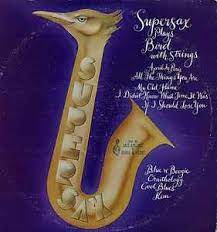
By the mid Sixties Flory returned to music and worked with Art Pepper and Joe Maini on transcriptions and arrangements of Charlie Parker recordings. In 1972, he co-founded Supersax, an ensemble devoted to Parker’s work. Supersax’s debut album, Supersax Plays Bird, won a Grammy Award.
Tenor and baritone saxophonist, bandleader, and actor Med Flory transitioned on March 12, 2014 in North Hollywood, Los Angeles, California.
Bestow upon an inquiring mind a dose of a Logansport saxophonist to motivate the perusal of the genius of jazz musicians worldwide whose gifts contribute to the canon…
More Posts: history,instrumental,jazz,music,saxophone
Daily Dose Of Jazz…
Norman Louis Bates was born on August 26, 1927 in Boise, Idaho. His mother was an organist and he was a younger brother of bassist Bob Bates. He played in Jimmy Dorsey’s band for a year in 1945, then with Raymond Scott and Carmen Cavallaro shortly thereafter.
By 1948 he was part of the Dave Brubeck Trio, and the following year performed with Paul Desmond. Norman recorded with Jack Sheedy’s Dixieland Jazz Band in 1950.
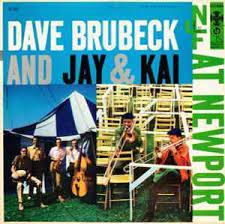
After spending four years in the Air Force, Bates played with Wally Rose’s Dixieland Band in 1955 and then replaced his brother Bob in Brubeck’s quartet, playing on multiple albums from Dave Brubeck and Jay & Kai at Newport (1956) onwards. He also recorded with Desmond’s group again in 1956. In 1957 he left Brubeck, and led a trio in San Francisco, California.
Double bassist Norman Bates transitioned on January 29, 2004.
Bestow upon an inquiring mind a dose of a Boise bassist to motivate the perusal of the genius of jazz musicians worldwide whose gifts contribute to the canon…
More Posts: bass,history,instrumental,jazz,music
Daily Dose Of Jazz…
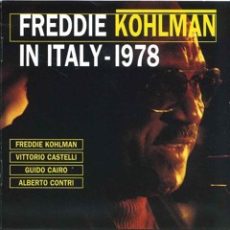
Louis Freddie Kohlman was born on August 25, 1918 in New Orleans, Louisiana and studied under the famed drummer Louis Cottrell, Sr., and Manuel Manetta. He began playing professionally as a teenager, working with A. J. Piron, Joe Robichaux, Papa Celestin, and Sam Morgan.
Moving to Chicago, Illinois in the middle of the 1930s, he played with Albert Ammons, Stuff Smith, Earl Hines, and Lee Collins. After returning to New Orleans in 1941, he led his own band from 1944. Among the musicians in his band was pianist Dave “Fat Man” Williams. In the mid-1950s he played briefly with Louis Armstrong and recorded as a leader with the Jambalaya Four in 1953. He moved back to Chicago and became the house drummer at Jazz, Ltd. There he played with everyone from Billie Holiday to Art Hodes before once again returning to New Orleans in the 1960s.
Back home he played with Louis Cottrell, Jr., the Dukes of Dixieland, and the Onward Brass Band. In 1969 he appeared at the New Orleans Jazz Festival. As a member of the Preservation Hall Jazz Band, he traveled throughout the United States and overseas.[1]
Playing European festivals with his own groups in the 1970s and 1980s, Freddie recorded with Chris Barber and Dr. John in 1980, and also appears on record with Albert Nicholas, Art Hodes, Bob Wilber, Harry Connick, Jr., the Excelsior Brass Band, and the Heritage Hall Jazz Band.
Kohlman appeared in several films, including Pete Kelly’s Blues, Pretty Baby and Angel Heart.
Drummer, vocalist and bandleader Freddie Kohlman transitioned of cancer at his home in New Orleans, aged 72 on September 29, 1990.
More Posts: bandleader,drums,history,instrumental,jazz,music,vocal