
Daily Dose Of Jazz…
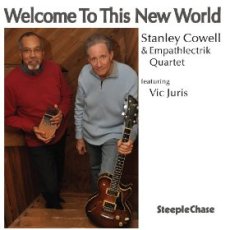
Vic Juris was born Victor E. Jurusz, Jr. on September 26, 1953 in New Jersey and started to play guitar around age 10, inspired by rock and roll legend Chuck Berry. He was self taught and played in many local rock and R&B bands around New Jersey as soon as he could.
Not long after he started playing professionally did he discover jazz and classical music and from then on it was a love affair with jazz. With an impeccable fluid approach to harmony and accompaniment, great writing style, a nice “blend” within the band, phenomenal chops, unique phrasing, advanced rhythmic ideas and concepts for improvisation Juris easily gained the respect of jazz musicians on the circuit and was not at a loss for work.
In the early 70s Vic played with Lyn Christie, made his first recordings with Eric Kloss, then joined Barry Miles working with him well into the Eighties. He recorded with Richie Cole, released his first album as a leader in the late 70s, and played with Don Patterson, Wild Bill Davis, Jimmy Smith, and Mel Torme.
He put together his own quartet in 1981, recorded for Muse and Steeplechase record labels, then became increasingly in demand as a sideman working with Bireli Lagrene, Larry Coryell, Dave Liebman, Jeanie Bryson, Gary Peacock, Judi Silvano, Lee Konitz and the list goes on.
As an educator Juris has held teaching positions at The New School for Jazz and Contemporary Music, Mason Gross School of the Arts, William Patterson and Lehigh Universities. Also a composer, his “Horizon Drive” was sampled in 1994 by Gang Starr on their Mass Appeal song. Guitarist and educator Vic Juris continued to perform, record and teach until his transition on New Year’s Eve, December 31, 2019 in Livingston, New Jersey at the age of 66.

Jazz Is Global – Share
More Posts: guitar,history,instrumental,jazz,music
Hollywood On 52nd Street
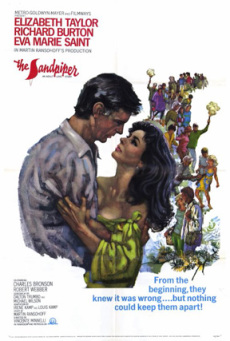
The Shadow Of Your Smile also known as the love theme from the 1965 film The Sandpiper“, is a popular song whose music was written by Johnny Mandel with the lyrics written by Paul Francis Webster.
The song was introduced in the 1965 film The Sandpiper with a trumpet solo by Jack Sheldon and later became a minor hit for Tony Bennett. Johnny Mandel arranged and conducted his version as well). It won the Grammy Award for Song of the Year and the Academy Award for Best Original Song.
The Story: Vincente Minnelli directed the film’s stars Richard Burton and Elizabeth Taylor. Laura Reynolds (Taylor) is a free-spirited, unwed single mother living with her young son Danny (Morgan Mason) in an isolated California beach house. She makes a modest living as an artist and home-schools her son out of concern that he will be compelled to follow stifling conventional social norms in a regular school. Danny has gotten into some trouble with the law through two minor incidents, which are in his mother’s eyes innocent expressions of his natural curiosity and conscience rather than delinquency. Now with a third incident a judge orders her to send the boy to an Episcopal boarding school where Dr. Edward Hewitt (Burton) is headmaster, and his wife Claire (Eva Marie Saint) teaches. Edward and Claire are happily married with two young sons, but their life has become routine and their youthful idealism has been tamed by the need to raise funds for the school and please wealthy benefactors.
Sponsored By

www.whatissuitetabu.com
More Posts: comedy,dance,drama,hollywood,instrumental,jazz,musical,suite ta bu,vocal

The Jazz Voyager
The National Jazz Museum In Harlem: 104 East 126th Street, New York City, NY 10035 / Telephone: 212-348-8300 / Interim Executive Director – Bill Terry / www.jazzmuseuminharlem.org
The museum dedicated to preservation and celebration of Harlem’s jazz history. The idea for the museum was conceived in 1995. It moved to its current location in the Harlem neighborhood in 2001. The museum emphasizes the role Harlem has played in the nurturing and cultivation of jazz as a home to legends such as Duke Ellington, Benny Carter, Thelonious Monk, Charlie Parker, Charles Mingus, Count Basie, John Coltrane and Billie Holiday.
The National Jazz Museum in Harlem’s Visitors Center features exhibits such as “The Ghosts of Harlem” by American music producer, photographer, author, and museum board member Hank O’Neal. The show includes images of Harlem jazz legends that O’Neal had the chance to interview and photograph for his book of the same name. The Visitors Center also houses books, recordings, and documentaries for guests to enjoy as well as photographs of contemporary jazz musicians by Richard Conde. The museum hosts weekly programs such as the Harlem Speakslecture series and Jazz for Curious Listeners sessions in which jazz novices and experts alike listen and learn about rare jazz recordings. The museum hosts events and programs at jazz venues and other museums such as the Rubin Museum of Art for the Harlem in the Himalayas concert series.
In August 2010 The National Jazz Museum in Harlem acquired nearly 1,000 discs of recorded radio broadcasts made by audio engineer William Savory in the midst of the swing era in the 1930s. The collection includes performances by jazz luminaries such as Louis Armstrong, Billie Holiday, and Benny Goodman. Savory had access to bigger, slower playing aluminum and acetate records and he was able to record much longer clips, capturing extended live shows and jam sessions that many thought would be lost forever. The recordings are being digitized by Brooklyn-based recording engineer Doug Pomeroy, a specialist in audio restoration. The transformation involves cleaning, correcting pitch, removing extraneous noise, mixing and mastering. The Savory Collection has yet to be made public for legal reasons but curious listeners can attend listening sessions at the museum or make appointments to hear the recordings.
The museum plans to move into a permanent location on 125th Street, at Mart 125, a Harlem landmark right across from the historic Apollo Theatre.
Sponsored By

Hollywood On 52nd Street
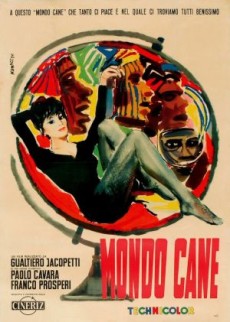
Riz Ortolani and Nino Oliviero composed the theme song More that found its place in the pantheon of jazz classics. It was a part of the score for the 1962 film Mondo Cane. The film title translates to Dog’s World, or as the soundtrack album states, “a world gone to the dogs”.
Some melodies are used repeatedly, in different styles, each named for the part of the movie where the music is used. Of the 15 music tracks on the soundtrack album, one melody is presented 6 times, another melody 2 times. The melody which became known as “More” is presented 4 times, named “Life Savers Girls”, “The Last Fight/L’Ultimo Volo”, “Models In Blue/Modelle in Blu”, “Repabhan Street/Repabhan Strasse”, in styles ranging from lush to march and 3/4 waltz.
Originally composed as an instrumental and titled “Ti guarderò nel cuore”, lyrics were later provided by Marcello Ciorciolini, which were adapted into English by Norman Newell. At that point, “Theme from Mondo Cane” became “More” (not to be confused with an earlier pop song of the same name).
The Story: The movie Mondo Cane is filmed as a documentary and uses a variety of music to accompany various segments. The film uses a series of stories that take place in different cities around the world, i.e. dog pound, Rudolph Valentino statue, bikini-clad girls wooing sailors, pigs being slaughtered, and a manhunt among various others.
More Posts: comedy,dance,drama,hollywood,instrumental,jazz,musical,suite ta bu,vocal

The Jazz Voyager
Drum & Monkey: 91-93 Saint Vincent Street, Glasgow, Scotland / Telephone: (0141) 221 6636 / Contact: Kevin. This has been cited as one of Scotland’s premier jazz residencies with the Chris Clark Band . The venue is within a short stroll of George Square, Central Station and Queen Street Station and features a laid back jazz ambience with such artists as Ronnie Rae, Robert Henderson, Jim Clelland and Chris Clark. Guest performers include Carol Kidd, Jim Mullen, Bruce Adams, Nigel Clark and Warren Vache to name but a few. Step in to discover a traditional pub of unique character, revered for its eclectic range of real ales and its quality pub food, which are served, as they should be, with a generous measure of famous British hospitality.
Sponsored By