

Daily Dose Of Jazz…
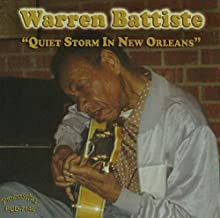
Warren Battiste was born on November 8, 1925 in New Orleans, Louisiana and was taught guitar by his father who played the banjo at Preservation Hall. Completing four year of study at Gruenwald Music School in his hometown, he became proficient not only on that instrument but also bass, banjo, and piano.
He first played with Fats Domino before heading off to New York City for Illinois Jacquet’s band. This gave him a very broad understanding from classic blues to R&B and jazz. Back in New Orleans he played thebest clubs on Bourbon Street, from Preservation Hall and Snug Harbor to the Matador and others.
He appeared in the film Shy People with movie stars Jill Clayburgh and Barbara Hershey. Warren has performed with George Benson, Jimmy McGriff, The Platters and The Inkspots. He went on to teach music at Wequachie High School, Essex County College and the Newark Art Center in New Jersey. He has released three albums as a leader ~ Street Jazz, Just Friends and Quiet Storm In New Orleans, the latter recorded in his 80s.
Guitarist Warren Battiste, who has been recognized with a Lifetime Achievement Award In Jazz from the New Orleans Jazz and Heritage Festival, continues to perform.
More Posts: bandleader,bass,guitar,history,instrumental,jazz,music
Requisites
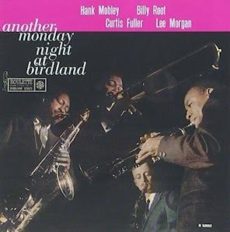
Another Monday Night at Birdland ~ Hank Mobley, Billy Root, Curtis Fuller, Lee Morgan | By Eddie Carter
This morning’s choice from the library brings us back to The Jazz Corner of The World for another live set by Lee Morgan on trumpet, Curtis Fuller (tracks: A2, B1, B2) on trombone, Hank Mobley, Billy Root on tenor sax. Another Monday Night at Birdland (Roulette R 52022/SR 52022) is the companion album to Monday Night at Birdland. Rounding out the septet is Ray Bryant on piano, Tommy Bryant on bass, and “Specs” Wright on drums. “Symphony Syd” Torin is the Master of Ceremonies, and my copy used in this report is the 1988 Spanish Mono reissue (Fresh Sound Records FSR-632).
Side One starts with an exhilarating rendition of It’s You Or No One, written in 1948 by Jule Styne and Sammy Cahn. Lee leads the ensemble on the melody before Hank opens the solos energetically. Lee lays down some spirited energy on the second statement, then Billy states his case with a vigorous finale leading to the climax and Syd’s introduction of the next tune. Jamph was written by Curtis Fuller, and I first heard it on the album, Big Six (1958). The septet begins the theme at mid~tempo collectively, then Mobley soars into the lead solo with some energetic blowing. Fuller greets the next statement enthusiastically, followed by Morgan who wails mightily on a vigorous reading. Root keeps the beat on the fourth interpretation with a scene-stealing performance. Bryant takes care of business on the closer with an aggressive solo into the out chorus.
Side Two starts with Syd’s announcement of the next tune, Nutville by Lee Morgan with inspired playing by the septet on the infectious melody. Hank launches into a swinging improvisation that’s a delight. Lee exhibits his skills on a joyful excursion next. Billy comes after him with a stellar statement that made me sit up and take notice. Curtis wraps up the solos with a delightful interpretation that brings so much pleasure ahead of the ensemble’s exit and group introductions. Wee by Denzil Best is an uptempo cooker that flies out of the gate with a high-voltage melody in unison. Mobley steps into the spotlight first with a heated solo. Morgan uses a mute for the second statement and attacks with the speed of a whirlwind. Root displays some lightning-fast chops on the third presentation, and Bryant covers plenty of ground motoring in rapid-fire fashion on the next reading. Wright gets a concise comment during the theme’s reprise into the septet’s lively finale.
Another Monday Night at Birdland was produced by Rudy Taylor and like the first album, the soundstage is excellent for a live recording. This is a four-star blowing session that I’m sure any fan of Hank Mobley, Billy Root, Lee Morgan, and Curtis Fuller would dig. If you’re a fan of Hard-Bop, this album is a terrific addition to any jazz library and one of the best in the Birdland Series!
~ Big Six (Riverside Records RLP12-273), Monday Night at Birdland (Roulette R-52015/SR-52015) – Source: Discogs.com © 2021 by Edward Thomas Carter

More Posts: choice,classic,collectible,collector,history,instrumental,jazz,music,saxophone,trombone
Daily Dose Of Jazz…
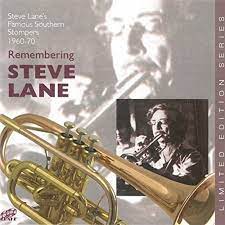
Steve Lane was born on November 7, 1921 in London, England where his father was a concertina player who recorded with the Rio Grande Tango Orchestra in the 1920s. Having heard his first jazz in the Rhythm Clubs of the late 1930s, his first choice of instrument was guitar, but, following wartime service, he switched to the cornet on which he soon developed a jazz style based on the hot trumpeters of the 1920s he so much admired, with particular emphasis on his role leading the collective ensemble.
A gifted composer of vocal and instrumental pieces, he deftly incorporated female vocalists as an integral part of the band, thus presenting a range of songs carefully chosen to showcase the singer, and the supporting musicians strictly trained in the art of accompaniment. A taskmaster offering little compensation and weekly rehearsals, his personnel changed often but allowed him the ability to discover young talent such as pianists Martin Litton and Bruce Boardman and trombonist Bob Hunt.
Steve led his own Southern Stompers jazz band in the early 1950, and also led and recorded with his Red Hot Peppers and the VJM Washboard Band for over 50 years. In 1952 he established the Ealing Jazz Club, and in the Sixties establishe the West End Jazz Club and was a founding partner of VJM Records.
Cornetist, guitarist, composer, arranger and bandleader Steve Lane, who was a traditional jazz player, passed awya on August 22, 2015 at age 93.
More Posts: arranger,bandleader,composer,cornet,guitar,history,instrumental,jazz,music,vocal
Daily Dose Of Jazz…
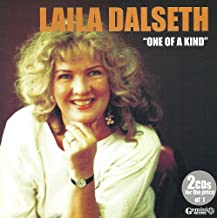
Laila Dalseth was born November 6, 1940 in Bergen, Norway. After an early debut in her hometown she became active on the Oslo, Norway jazz scene, recording with Kjell Karlsen, Egil Kapstad and Helge Hurum’s big band. Her first recording was Metropol Jazz in 1963, then she was a part of Stokstad/Jensen Trad Band from 1973 to 1975. This she followed with a stint in a band with Per Borthen, then at Teatret Vårt in the play Havhesten in 1976.
>With her own band, Laila recorded Listen Here! (1999), 1960’s album One of a Kind (2000) and then Everything I Love (2003), all on the Gemini label. Her L. D. Quintet consisted of her husband Totti Bergh on saxophone, pianist Per Husby, bassist Kåre Garnes and Tom Olstad on drums.
Dalseth was awarded Buddyprisen in 1976, the Spellemannprisen i klassen jazz on three occasions, for Just Friends in 1975, Glad There is You in 1978 and in 1984 for Daydreams. International recognition came in the Eighties with her release of for the record Time for Love with Red Mitchell, Travelling Light with Al Cohn, and into the 1990s with The Judge and I with Milt Hinton, A Woman’s Intuition, her own sextet featuring guitarist Philip Catherine, and into the new century with We Remember You with Al Cohn, and Everything I Love.
At 80, vocalist Laila Dalseth has recorded thirteen albums, received eight awards and remains active on the jazz scene.
More Posts: bandleader,history,instrumental,jazz,music,vocal
Daily Dose Of Jazz…
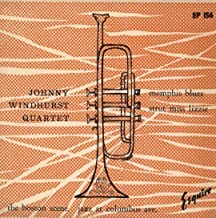
John Henry Windhurst came into this world on November 5, 1926 in New York City, New York and was a self taught trumpeter. At the age of 15 he played his first public performance at Nick’s, and made his professional debut during the spring of 1944 at one of Eddie Condon’s concerts at the Town Hall, both venues in New York City. By eighteen he replaced Bunk Johnson in Sidney Bechet’s band for a Savoy Cafe gig in Boston, Massachusett, which launched his career as a trumpeter.
Going on to play with Art Hodes and James P. Johnson at the Jazz at Town Hall concert in 1946, Johnny then moved to the midwest and after a brief stint in the Chicago, Illinois jazz scene he returned to the Savoy Cafe as a member of Edmond Hall’s band. Eventually he moved west to experience the west coast jazz scene in California. However, his inability to read music forced him to decline gigs with Benny Goodman and Woody Herman, emphasizing his preference for informal jamming.
Over the years, he played with Louis Armstrong, Nappy Lamare, Eddie Condon. Ruby Braff,George Wettling, Jack Teagarden and Barbara Lea. He also led his own band, Riverboat Five, through Columbus, Ohio and Boston for several years, opting to play colleges and small venues instead of the most popular east coast venues and nightclubs.He also did some off-Broadway work with Conrad Janis in the musical Joy Ride.
Windhurst only made one recording with his swing quartet called Jazz at Columbus Avenue, for the Transition label in 1956. On the record label Jazzology, George Buck released The Imaginative Johnny Windhurst which showcased his unique trumpet style. The LP was recorded at a showcase in Massachusetts, where the decision to record it was made on the spot just as the show began. The spontaneous set flaunts his innovative playing on timeless numbers such as Back In Your Own Backyard, Strut Miss Lizzie and Lover Come Back to Me.
He eventually moved upstate to Poughkeepsie, New York with his mother, where he finished his career in a dixieland band at Frivolous Sal’s Last Chance Saloon. Trumpeter Johnny Windhurst passed away from a heart attack at the age of 54 on October 2, 1981 in Dutchess County, New York.
More Posts: bandleader,history,instrumental,jazz,music,trumpet