


Daily Dose Of Jazz…
Rupert Theophilus Nurse was born the only child in Port of Spain, Trinidad on December 26, 1910. He spent some of his childhood in Venezuela before returning to the island to complete his education. He absorbed local calypso music traditions, and started working as a teacher in Tobago.
He taught himself piano, and learned arranging skills from a mail order Glenn Miller book, before returning around 1936 to Trinidad where he worked in an electronics business. He also learned to play the tenor saxophone and with Guyanese saxophonist Wally Stewart, formed the Moderneers or Modernaires, the first American-style big band in Trinidad. During the Second World War he played with visiting Americans on the island, and began writing jazz arrangements of calypsos.
Travelling to London, England in 1945, he began playing double bass with guitarist Fitzroy Coleman and pianist Cyril Jones in the Antilles jazz club near Leicester Square. He joined trumpeter Leslie “Jiver” Hutchinson’s mostly-black band, with whom he played on radio and toured in Europe, before working with entertainer Cab Kaye in the Netherlands. He also increasingly worked with musicians newly arriving in Britain from the West Indies, including popular pianist Winifred Atwell, and Lord Kitchener and his band. He began experimenting with electronic instruments along with Lauderic Caton.
By 1953, Nurse was appointed as musical director of the Melodisc record label, which increasingly sought to release records to appeal to Britain’s growing Afro-Caribbean community. He led the label’s house band, arranged and produced Kitchener’s recordings, and recorded many other musicians of Caribbean origin, including jazz saxophonist Joe Harriott. He continued to perform as a pianist, and became bandleader at the Sunset Club in Carnaby Street and then at the more upscale Sugar Hill club in St James’s, where he met and later recorded with pianist Mary Lou Williams.
He increasingly used an electric piano and organ, and worked widely in clubs and restaurants in London as a solo performer and with other musicians including steel pan player Hugo Gunning, bassist Coleridge Goode, and pianists Iggy Quail and Russ Henderson. He taught, devised arrangements for other musicians, and worked as a library cataloguer in London until 1976.
Retiring to Arima, Trinidad he continued to mentor musicians and write arrangements for them. Pianist, tenor saxophonist and double bassist Rupert Nurse, who was influential in developing jazz and Caribbean music in Britain, particularly in the 1950s, transitioned there on March 18, 2001 at the age of 90.
More Posts: bandleader,bass,history,instrumental,jazz,music,piano,saxophone
Daily Dose Of Jazz…
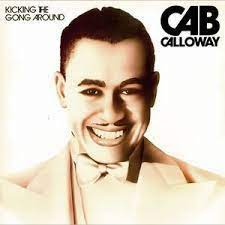
Cabell Calloway III was born on December 25, 1907 in Rochester, New York, on December 25, 1907 to two college graduates, his mother a teacher and church organist, and his father who worked as a lawyer and in real estate. The family moved to Baltimore, Maryland, in 1919 but soon after, his father died and his mother remarried.
Growing up in West Baltimore’s Druid Hill neighborhood Cab often skipped school to earn money by selling newspapers, shining shoes, and cooling down horses at the Pimlico racetrack where he developed an interest in racing and gambling on horse races. He ended up in Downingtown Industrial and Agricultural School, a Pennsylvania reform school run by his mother’s uncle.
Returning to Baltimore he resumed hustling, worked as a caterer while he improved his studies in school, and his mentors included drummer Chick Webb and pianist Johnny Jones. After graduating high school Calloway joined his older sister Blanche on tour for the popular black musical revue Plantation Days. He spent most of his nights in Chicago, Illinois clubs performing as a singer, drummer, master of ceremonies and as an understudy for singer Adelaide Hall. There he met and performed with Louis Armstrong, who taught him to sing in the scat style.
He established himself as a vocalist singing Ain’t Misbehavin’ by Fats Waller. The Thirties saw Cab’s orchestra permanently at the Cotton Club in Harlem, performed twice a week for radio broadcasts on NBC, and appeared on radio programs with Walter Winchell and Bing Crosby. He was the first Black American to have a nationally syndicated radio show and during the depths of the Great Depression he was earning $50,000 a year at 23 years old.
During the decade he recorded his most famous song, Minnie the Moocher, and became the first single record by a Black American to sell a million copies. He performed the song along with St. James Infirmary Blues and The Old Man of the Mountain, in Betty Boop cartoons of the same name.
His success with Minnie the Moocher and his relationship to the chorus earned him the nickname, The Hi De Ho Man. He performed a gliding backstep dance move called The Buzz, which some observers have described as the precursor to Michael Jackson’s moonwalk. He would go on to be featured in several films, and made his first Hollywood feature film appearance opposite Al Jolson in The Singing Kid in 1936.
His band included Ben Webster, Illinois Jacquet, Milt Hinton, Danny Barker, Doc Cheatham, Ed Swayze, Cozy Cole, Eddie Barefield, and Dizzy Gillespie. He entertained troops during World War II, hosted a weekly radio quiz show called The Cab Calloway Quizzicale and recorded songs full of social commentary. He appeared in the film Stormy Weather, one of the first mainstream Hollywood films with a black cast. Then he played the prominent role of Sportin’ Life in a stage production of Porgy and Bess. He continued to perform in movies and on stage throughout his career.
He published an autobiography and Cab Calloway’s Cat-ologue: A “Hepster’s” Dictionary, the first dictionary published by a Black American. It became the official jive language reference book of the New York Public Library.
Suffering a stroke at his home, vocalist, bandleader and actor Cab Calloway transitioned from pneumonia on November 18, 1994, at the age of 86, at a nursing home in Hockessin, Delaware.
More Posts: actor,bandleader,history,instrumental,jazz,music,vocal
BETH LEDERMAN
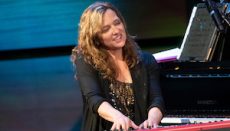
Beth’s group Jazz Con Alma feature jazz that grooves. Drawing especially from latin rhythms, they love taking standards and pop music and adding their own special twists. From Coltrane and Gershwin to the Beatles and Stevie Wonder anything that embraces the creativity which embodies jazz is fair game. With Mary Petrich on sax, Jon Murray on bass, Adam Clark on drums and Frank Valdes on percussion.
Her music is melodic, fun, fluid, passionate, innovative, heartfelt, rhythmic, eclectic, honest, artistic, humorous, spontaneous…and great!
More Posts: adventure,club,genius,jazz,music,piano,preserving,travel
CARMEN LUNDY
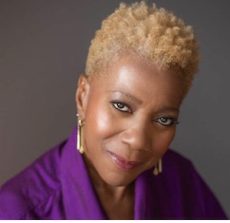
Carmen Lundy’s work as a vocalist and composer has been critically acclaimed by Jazz Times, Downbeat, Jazziz, The New York Times, The Wall Street Journal, The Los Angeles Times, Variety, The Washington Post, and Vanity Fair among numerous other foreign publications. Lundy acted as Resident Clinician at Betty Carter’s Jazz Ahead at The Kennedy Center in Washington, D.C. for 20 years. She has conducted Master Classes around the world, among them the Thelonious Monk Institute of Jazz and The Sibelius Academy in Helsinki.
As a composer, Ms. Lundy’s catalogue numbers over 150 published songs, one of the few jazz vocalists in history to accomplish such a distinction. Her compositions have been recorded by such artists as Kenny Barron, Ernie Watts, Terri Lyne Carrington, Straight Ahead and Regina Carter. Carmen’s far-reaching discography also includes performances and recordings with such musicians as brother and bassist Curtis Lundy, Ray Barretto, Bruce Hornsby, Mulgrew Miller, Kip Hanrahan, Courtney Pine, Roy Hargrove, Jimmy Cobb, Ron Carter, Randy Brecker, Oscar Castro-Neves, Robert Glasper, Jamison Ross, Patrice Rushen, and the late Kenny Kirkland and Geri Allen among others.
More Posts: adventure,club,genius,jazz,music,piano,preserving,travel,vocal

MICHELA MARINO LERMAN & RUSSELL HALL QUARTET
Michela Marino Lerman, recipient of the Hoofer Award and Flo-Bert Award, is a world-renowned tap dance artist, performer, choreographer, band leader, educator and all-around creative spirit dedicated to the bridging the gap between tap dance and jazz music and the inclusivity of tap being recognized as music. The Huffington Post has called her a “hurricane of rhythm” and the NY Times has called her both a “prodigy” and has described her dancing as “flashes of brilliance.” Quincy Jones has said she is an “absolute tap dancing star who knows her roots.” She very proudly, was mentored by some of the innovators of tap dance including Gregory Hines, Buster Brown, Leroy Myers, Peg Leg Bates, Marion Coles, Jeni LeGon and Mable Lee. Most recently Michela can be seen featured in the new US Postage Stamp series dedicated to the art form of Tap Dance. Michela has had the honor of working with and collaborating many master artists throughout her career some of whom include Wynton Marsalis, Anna Deavere Smith, Roy Hargrove, Jon Batiste, Quincy Jones, Steve McQueen and many more. www.michelataps.com @michelataps
Whether it’s a swanky, sophisticated jazz club or a boozy, bombastic rock joint, one thing is for certain, Russell Hall is bringing the party with him wherever he goes. Born in Kingston, Jamaica and raised in Miami, Florida, Russell has been playing and recording music since the tender age of 13. He furthered his study of music at the most prestigious conservatory in the world, The Juilliard School under the tutelage of Ben Wolfe, Ron Carter and Wynton Marsalis. He is currently a preeminent bassist in New York City where his session and freelance work has allowed him to work in virtually every facet of the New York music scene.
More Posts: adventure,bass,club,genius,jazz,music,preserving,tap dance,travel