The Jazz Voyager
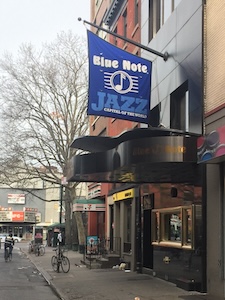
From the City by the Bay to the Big Apple to Greenwich Village that is home to some of the best jazz clubs in the city. And this week the Jazz Voyager is heading to this part of the city that never sleeps to catch a set at the Blue Note. The intimate 250 seat venue has been hosting the biggest names in jazz since its humble beginnings in 1981.
Alto saxophonist Gary Bartz, NEA Jazz Master and professor of saxophone and jazz performance at Oberlin Conservatory takes off a few days from teaching to hit the stage this week for four nights, Thursday through Sunday. Since the 1960s he has held tenure with Max Roach, Charles Mingus, Art Blakey, and Miles Davis. What he will bring to this engagement is something this Jazz Voyager is anticipating.
The venue is located at 131 W 3rd St, New York, NY 10012. For more information visit https://www.bluenotejazz.com/nyc.
More Posts: adventure,club,flute,genius,jazz,music,preserving,saxophone,travel
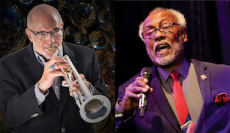
MIKE VAX QUINTET FEATURING DENNIS ROWLAND
Mike Vax played with Art Pepper, Freddie Hubbard, Clark Terry, and the Glen Miller and Jimmy Dorsey Orchestras. But he is acclaimed as the first trumpet and co-leader of the historic “ahead of its time” Stan Kenton Orchestra and the ongoing Stan Kenton Alumni Band.
Dennis Rowland was the vocalist with the original Count Basie Orchestra for the from 1977 to until the Count’s passing in 1983, after which Dennis has had an illustrious solo career that included tours in Russia and several albums as a Concord Jazz Recording Artist.
Mike Vax-trumpet, Tony Vacca-sax/flute, Joel Robin-piano, Howard Alden-guitar, Selwyn Reams-bass, Van Katz-drums, with Dennis Rowland-vocals
More Posts: adventure,bandleader,club,genius,jazz,music,preserving,travel,trumpet,vocal
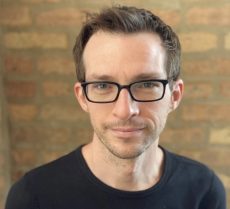
PAUL MUTZABAUGH
Paul Mutzabaugh is a multi-instrumentalist and composer from Chicago. Over the past 20 years, he has worked consistently in a wide range of musical styles with a variety of notable artists and ensembles, including: Chicago Symphony Orchestra, Heather Headley, Jason Robert Brown, Rufus Wainwright, Mannheim Steamroller, Robbie Fulks, Miguel Zenón, Spektral Quartet, John Elmquist’s HardArt Groop, and the Charles Heath Quartet.
Paul also leads his own ensemble, The Unknown New – equal parts instrumental folk and chamber jazz – for which he composes all of the material. Additionally, he has earned Grammy and Emmy nominations as an audio engineer and producer.
More Posts: adventure,bandleader,bass,club,composer,genius,jazz,music,preserving,travel
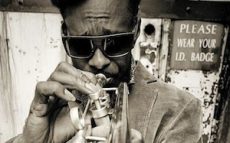
THE ABNEY EFFECT
Chicago born and raised jazz trumpeter Mario Abney now of New Orleans fuses traditional and extended trumpet techniques in a most inventive way; his strikingly personal instrumental vision endows the music with an infinite array of tonal color. Recognized for his ability to create pure musical dialog, and hear music in a universally spiritual way, he is definitely one of New Orleans most pioneering young jazz musicians.
Marioʼs first experience hearing jazz was the music of trumpeter Wynton Marsalis. After jazz trumpet peaked his interest in music Mario began to absorb the music of Louis Armstrong, Dizzy Gillespie, Miles Davis, and all the great trumpeters who pioneered the music.
With a band scholarship in hand, Mario attended Central State University, Ohio, majoring in Music Education with a minor in jazz studies. “During my college years I became involved in the jazz scene in Dayton playing trumpet in several professional ensembles such as the Afro-Cuban Jazz ensemble, Babalu, the Chicago based House of Twang, The Afro-Rican Ensemble, SYM, and several other ensembles. I
n 2001, after several years of playing as a side man Abney was inspired to lead his own Quintet. During a performance at the Dayton RiverWalk festival in 2007 Mario became interested in going to New Orleans after hearing the Hot 8 Brass Band perform. By spring of 2008 Abney and two members from his quintet moved to New Orleans to absorb its rich musical culture and become part of the music scene.
More Posts: adventure,bandleader,club,genius,preserving,travel,trumpet

GARY BARTZ
NEA Jazz Master Gary Bartz has been one of the best purveyors of what he calls “informal composition” (as opposed to improvisation) on alto saxophone since the 1960s, working with such luminaries as Max Roach, Charles Mingus, Art Blakey, and Miles Davis. He has released more than 45 solo albums and appears on more than 200 as a guest artist, as well as working with some of the up-and-coming artists in jazz today, such as Ali Shaheed Muhammad and Adrian Younge for their Jazz Is Dead series and the jazz-funk band Maisha.
Bartz was born in Baltimore, Maryland, to nightclub-owning parents and was exposed to many great jazz artists who played at their club. He was 6 when he was inspired by the sound of Charlie Parker, and received his first alto saxophone at the age of 11. He attended the Juilliard School in New York City in 1958. He joined the Charles Mingus Jazz Workshop from 1962 to 1964, meeting jazz giants Eric Dolphy and Rahsaan Roland Kirk. He also began working with the Max Roach/Abbey Lincoln group in 1964. In 1965, Bartz was recruited into Art Blakey’s Jazz Messengers while they played at his parents’ club, taking John Gilmore’s position in the band. He made his recording debut with Blakey on Soulfingerthat same year.
In 1970, Miles Davis asked Bartz to join his band and perform at the historic Isle of Wight Festival and his subsequent tour. Bartz is featured on Davis’ Live/Evil recording. Bartz also formed his own group, NTU Troop, named for the Bantu word for “essence.” The group blended soul, funk, African folk music, hard bop, and avant-garde jazz and recorded one of Bartz’s first classics, I’ve Known Rivers and Other Bodies, based on the poetry of Langston Hughes. His NTU Troop recordings are often sampled by hip-hop artists.
In 1997, he was awarded a Grammy Award for Best Latin Jazz Performance for his work on Roy Hargrove’s Habana album, and, in 2005, he received a Grammy Award for his work as a sideman on McCoy Tyner’s recording Illuminations. In 2015, Bartz received the BNY Mellon Jazz Living Legacy Award that honors jazz musicians from the mid-Atlantic region who have achieved distinction in performance and education.
Since 2001, Bartz has been a professor of saxophone and jazz performance at Oberlin Conservatory in Ohio. Bartz focuses his teaching on finding new ways for his students to “open their ears” and presses his Oberlin students to truly hear the music they think they know so well.
More Posts: adventure,bandleader,club,genius,jazz,music,saxophone,travel