

Daily Dose Of Jazz…
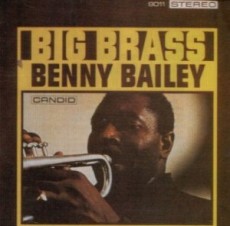
Benny Bailey was born Ernest Harold Bailey on August 13, 1925 in Cleveland, Ohio. Having some training in piano and flute in his youth, he switched to trumpet, concentrating on the instrument while at the Cleveland Institute of Music. He was influenced by his hometown colleague, Tadd Dameron, seven years his elder, and subsequently had a significant influence on other prominent Cleveland musicians including Bill Hardman, Bobby Few, Albert Ayler, Frank Wright and Bob Cunningham.
In the early 1940s he worked with Bull Moose Jackson and Scatman Crothers. He later worked with Dizzy Gillespie, toured with Lionel Hampton and while on the European tour with Hampton, decided to stay and spend time in Sweden. This Swedish period saw him working with Harry Arnold’s big band. His preference for big bands over small groups associated him with several European big bands including the Kenny Clarke/Francy Boland Big Band.
For a while her worked with Quincy Jones returning to the States briefly in 1960. During this time, he worked with Tony “Big T” Lovano and recorded with Freddie Redd’s sextet invited to the studio as part of Freddie Redd’s sextet on the Blue Note Records album Redd’s Blues. Shortly thereafter, he returned to Europe first to Germany, and later to the Netherlands where he would settle permanently.
In 1969 he played on the Eddie Harris/Les McCann project Swiss Movement, recorded live at the Montreux Jazz Festival that included a memorable unrehearsed solo on “Compared To What”. Then in 1988 he worked with British clarinetist Tony Coe and kept producing albums until 2000 when he was in his mid-70s. He recorded 18 albums as a leader and another half-dozen as a sideman working with such luminaries as Eric Dolphy, Benny Golson, Randy Weston and Jimmy Witherspoon. Bebop and hard bop trumpeter Benny Bailey died at home in Amsterdam on April 14, 2005.

Give The Gift Of Knowledge
More Posts: trumpet
Daily Dose Of Jazz…
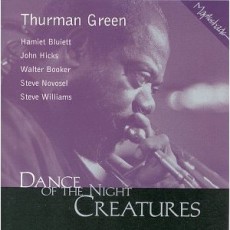
Thurman Green was born on August 12, 1940 in Texas. A jazz trombonist, who primary performed in the bebop orientation, spent time playing in Los Angeles with swinging big bands, such as, the Clayton-Hamilton Jazz Orchestra. He an occasional member of the Horace Tapscott Quintet, one of many groups headed by the late pianist that no one bothered to record. Thurman was open-eared enough to play quite credibly in free settings now and then.
Thurman recorded as a sideman with Willie Bobo, Donald Byrd and Bobby Hutcherson on the Blue Note label. In 1962, Green and baritone saxophonist Hamiet Bluiett were jamming buddies at the Navy School of Music in Washington D.C. They soon went their separate ways but hoped to team up again some day.
It was thirty-two years later, in 1994, that Bluiett was able to give his old friend his first opportunity to lead his own record date with Dance of the Night Creatures that had pianist John Hicks, bassist Walter Booker or Steve Novosel and drummer Steve Williams. It is a shame that it took over four years for the music to finally come out because Green suddenly died at age 57 on June 19, 1997.
More Posts: trombone

Daily Dose Of Jazz…
Russell Procope was born on August 11, 1908 in New York City and grew up in San Juan Hill, attending school with Benny Carter. His first instrument was the violin, but he switched to clarinet and alto saxophone. He began his professional career in 1926 as a member of Billy Freeman’s orchestra. At the age of twenty he recorded with Jelly Roll Morton and went on to play with bands led by Benny Carter, Chick Webb, Fletcher Henderson, Tiny Bradshaw, Teddy Hill, King Oliver and Willie Bryant by the mid-Thirties.
Procope would play with Roy Eldridge, Bill Coleman, Frank Newton, Dizzy Gillespie, Dickie Wells and Chu Berry. He made his first trip to Europe in 1937 as part of Teddy Hill’s band with “The Cotton Club Revue,” an all-Black show, which during its European tour appeared at the London Palladium.
In 1938 Russell replaced Pete Brown in John Kirby’s sextet and made a name for himself until 1945 with a three-year interruption in the Armed Services during World War II. He joined the reed section of the Ellington orchestra in ’46 as an alto saxophonist but made his name and reputation as a clarinetist. During the summer of 1950 the band returned to Europe bringing him back once again as a member and he stayed until the bandleader’s death in 1974,
Playing alto saxophone he recorded the 1956 album “The Persuasive Sax of Russ Procope” under the London Records label. Although his early playing reflected the influence of Benny Carter, alto saxophonist and clarinetist Russell Procope, most highly regarded for his woody, understated clarinet solos, lyrical approach and forceful swinging attack, passed away on January 21, 1981.
More Posts: saxophone
Daily Dose Of Jazz…
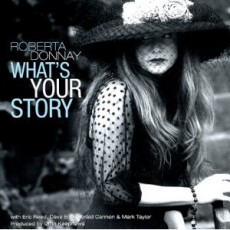
Roberta Donnay was born on August 10, 1966 in Washington, DC and began singing professionally at sixteen, knapsack wandering through Europe and borrowing guitars. Moving to San Francisco and sang with different bands, studied Latin and vocal jazz along with guitar and released her first indie album Catch The Wave in the Bay area.
She sat on the Board of Governors of the San Francisco chapter of the National Academy of Recording Arts and Sciences alongside Orrin Keepnews, produced the temp track for the documentary Journey of the Universe, and her songs have been featured on such television shows as The Unit, Nash Bridges, The Young and the Restless, One Life To live, All My Children and That’s Life.
She has appeared with Ernestine Anderson, Booker T, Peter Coyote, Johnny Lange, Tommy Castro, Eddie Money, Neil Young and Huey Lewis among others. Her song “One World” was selected as the theme for the 2003 World Aids Day in South Africa. An avid activist she composes about the human condition, not limited to women’s issues, racial injustice, government and environmental destruction. With seven albums as a leader or collaborator, vocalist Roberta Donnay continues to perform, record and tour.
More Posts: vocal
Requisites
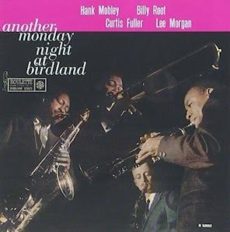
Another Monday Night at Birdland ~ Hank Mobley, Billy Root, Curtis Fuller, Lee Morgan | By Eddie Carter
This morning’s choice from the library brings us back to The Jazz Corner of The World for another live set by Lee Morgan on trumpet, Curtis Fuller (tracks: A2, B1, B2) on trombone, Hank Mobley, Billy Root on tenor sax. Another Monday Night at Birdland (Roulette R 52022/SR 52022) is the companion album to Monday Night at Birdland. Rounding out the septet is Ray Bryant on piano, Tommy Bryant on bass, and “Specs” Wright on drums. “Symphony Syd” Torin is the Master of Ceremonies, and my copy used in this report is the 1988 Spanish Mono reissue (Fresh Sound Records FSR-632).
Side One starts with an exhilarating rendition of It’s You Or No One, written in 1948 by Jule Styne and Sammy Cahn. Lee leads the ensemble on the melody before Hank opens the solos energetically. Lee lays down some spirited energy on the second statement, then Billy states his case with a vigorous finale leading to the climax and Syd’s introduction of the next tune. Jamph was written by Curtis Fuller, and I first heard it on the album, Big Six (1958). The septet begins the theme at mid~tempo collectively, then Mobley soars into the lead solo with some energetic blowing. Fuller greets the next statement enthusiastically, followed by Morgan who wails mightily on a vigorous reading. Root keeps the beat on the fourth interpretation with a scene-stealing performance. Bryant takes care of business on the closer with an aggressive solo into the out chorus.
Side Two starts with Syd’s announcement of the next tune, Nutville by Lee Morgan with inspired playing by the septet on the infectious melody. Hank launches into a swinging improvisation that’s a delight. Lee exhibits his skills on a joyful excursion next. Billy comes after him with a stellar statement that made me sit up and take notice. Curtis wraps up the solos with a delightful interpretation that brings so much pleasure ahead of the ensemble’s exit and group introductions. Wee by Denzil Best is an uptempo cooker that flies out of the gate with a high-voltage melody in unison. Mobley steps into the spotlight first with a heated solo. Morgan uses a mute for the second statement and attacks with the speed of a whirlwind. Root displays some lightning-fast chops on the third presentation, and Bryant covers plenty of ground motoring in rapid-fire fashion on the next reading. Wright gets a concise comment during the theme’s reprise into the septet’s lively finale.
Another Monday Night at Birdland was produced by Rudy Taylor and like the first album, the soundstage is excellent for a live recording. This is a four-star blowing session that I’m sure any fan of Hank Mobley, Billy Root, Lee Morgan, and Curtis Fuller would dig. If you’re a fan of Hard-Bop, this album is a terrific addition to any jazz library and one of the best in the Birdland Series!
~ Big Six (Riverside Records RLP12-273), Monday Night at Birdland (Roulette R-52015/SR-52015) – Source: Discogs.com © 2021 by Edward Thomas Carter

More Posts: choice,classic,collectible,collector,history,instrumental,jazz,music,saxophone,trombone