Requisites
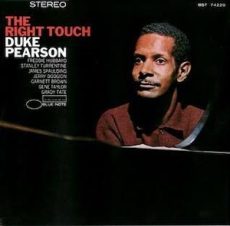
The Right Touch ~ Duke Pearson | By Eddie Carter
Submitted for your approval this morning is The Right Touch (Blue Note BLP 4267/BST 84267), an exceptional 1967 album by Duke Pearson. It was the arranger, composer, and pianist’s fifth release for Alfred Lion’s label and his tenth as a leader. Here he’s arranged and composed all the tunes and is leading an all-star ensemble: Freddie Hubbard on trumpet; Garnett Brown on trombone; James Spaulding on alto saxophone; Jerry Dodigon on alto saxophone (tracks: A2, A3, B1 to B3) and flute (A1); Stanley Turrentine on tenor saxophone; Gene Taylor on bass and Grady Tate on drums. I own the 1994 U.S. Stereo reissue (Blue Note B1 7243 8 28269 1 0).
Chili Peppers kicks off the first side with lively energy and a bright, confident ensemble theme. Stanley gets into a cheerful groove on the opening solo. Duke follows with a rousing interpretation, paced beautifully ahead of the octet’s closing chorus and fade-out. Jerry’s flute adds a gentle touch to the opening and closing melodies, making the tune even more inviting. Make It Good begins with a lengthy, relaxed introduction that segues into the octet’s soulful opening melody while Gene and Grady provide a firm foundation. Duke takes the first spot again and lays down a bouncy rhythm. Freddie is up next with a good-natured performance that swings smoothly into the theme’s reprise and slow dissolve.
My Love Waits (O Meu Amor Espera) slows things down as Freddie leads the ensemble’s gorgeous bossa nova theme. Freddie and Duke are the featured performers, and the trumpeter’s opening statement is graceful. Duke speaks next with delicacy and tenderness before the group returns to the sentimental ending theme and a gentle fadeout. Los Malos Hombres picks up the pace to begin the second side, with Grady introduction to the group’s brisk melody. Stanley ignites the first solo and burns brightly. Freddie breathes fire into the second solo, then James keeps things cooking next. Duke follows with a spirited reading, and Grady doesn’t pull any punches, leading to the theme’s restatement and dead stop.
Scrap Iron opens with the ensemble’s mournful, harmonically rich blues melody, reflecting the song’s hard-edged rhythmic character. Stanley begins the opening statement, delivering his signature robust, earthy, gospel-drenched sound. Duke follows, creating an easy, conversational groove that reflects the blues’ lingering, smoky atmosphere before the octet reenters and ends with an evocative climax. Rotary draws the curtain down in a Monkish vein for the group’s theme. Freddie takes the lead, followed by James, Garnett, Stanley, and Duke, who take the listener on a leisurely ride, preceding the theme’s restatement and a satisfying conclusion.
Francis Wolff produced The Right Touch, and Rudy Van Gelder was behind the recording console. Kevin Reeves cut the lacquer, and Capitol Mastering gave the final mastering touch. This reissue's sound quality is excellent, with a superb soundstage that makes you feel as if the musicians are right in your listening room, delivered with remarkable clarity. If you’re a jazz piano enthusiast like me and looking for a wonderful album to relax to after a busy day or week, I invite you to check out The Right Touch by Duke Pearson on your next record-shopping trip. It’s an underrated gem with an incredible lineup of musicians that will surely bring you hours of joy and musical delight!
© 2026 by Edward Thomas Carter
Daily Dose Of Jazz…
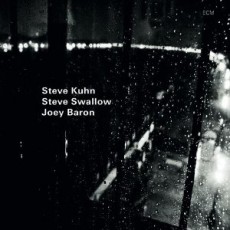
Steve Swallow was born on October 4, 1940 in Fair Lawn, New Jersey. As a child he studied piano and trumpet before turning to the double bass at age 14. While attending a prep school, he began trying his hand in jazz improvisation. In 1960 he left Yale, settled in New York City and played with Jimmy Giuffres trio with Paul Bley.
After joining Art Farmer‘s quartet in 1964, Swallow began to write. It is in the 1960s that his long-term association with Gary Burton’s various bands began. The early 1970s saw him switch exclusively to electric bass guitar, preferring the 5-string.
Steve became an educator in 1974 for two years teaching at the Berklee School of Music. In ‘78 he became an essential and constant member of Carla Bley‘s band, toured extensively with John Scofield in the early 1980s, has returned to this collaboration several times over the years.
Bassist Steve Swallow has consistently won the electric bass category in Down Beat magazine’s Critics and Readers yearly polls since the mid-80s. Having grown a catalogue of some five-dozen albums as a leader and sideman, he continues to compose, perform and record.
More Posts: bass
Daily Dose Of Jazz…
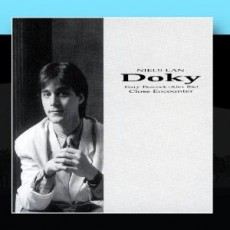
Niels Lan Doky was born in Copenhagen, Denmark on October 3, 1963 and first learned to play guitar before switching to piano at age 11. At the age of 15, he began working with Thad Jones, Ernie Wilkins, Kenny Drew, Ed Thigpen and others living and playing around his hometown. Shortly after finishing high school in 1981, following the advice of Thad Jones, he moved to the U.S. and studied at Berklee College of Music in Boston before establishing himself in New York City’s jazz scene.
Bassist Niels-Henning Ørsted Pedersen helped Doky land his first recording contract with Storyville records in 1986 and toured and recorded with him across Europe and in the USA during the rest the decade and well into the 1990s. During that period Pederson became a mentor and played a crucial role in helping him find his own musical voice and develop his own personal style.
Over the course of his career pianist Niels Lan Doky has recorded thirty-three albums, played for Pope Paul II, received an award from Denmark’s royal family, was appointed Member of the Music Committee under the Danish Arts Council, and made his film directing debut with the acclaimed feature film “Between a Smile and a Tear”.
He has performed with Joe Henderson, Gary Peacock, Jack DeJohnette, Ray Brown, Michael Brecker, David Sanborn, Pat Metheny, Alvin Queen, John Scofield, John Abercrombie, Woody Shaw, Bob Berg, Dianne Reeves, Al Jarreau, Charlie Haden, Gino Vannelli, and John McLaughli among numerous others, in addition to leading The Doky Brothers and groups under his own name currently today.
More Posts: piano
Daily Dose Of Jazz…
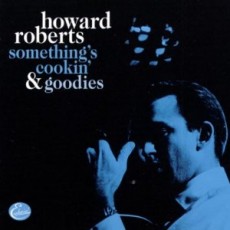
Howard Roberts was born on October 2, 1929 in Phoenix, Arizona and began playing guitar at age 8. By age15 he was playing professionally locally. 1950 saw him moving to Los Angeles, California where he began jamming with Sonny Stitt, Dexter Gordon and Buddy DeFranco and working with musicians, arrangers and songwriters including Neal Hefti, Henry Mancini, Bobby Troup, Chico Hamilton, George Van Eps and Barney Kessel. 1952 was the year Roberts played on his first record date, Jam Session No. 10 with Gerry Mulligan and Jimmy Rowles. Around 1956, Bobby Troup signed him to Verve Records and he decided to concentrate on recording, both as a solo artist and session musician.
Roberts played rhythm guitar, lead guitar, bass and mandolin in the studio, for television and movie projects on such projects as The Twilight Zone, The Munsters, I Dream of Jeannie. He would work on Julie London’s Blue Moon recording, with Peggy Lee, George Auld, Shelley Fabares, Chet Atkins, Dean Martin, The Monkees, Roy Clark and many others. As a member of The Wrecking Crew,and part of Phil Spector‘s Wall of Sound, in 2007 he was inducted into the Musicians Hall of Fame and Museum in Nashville, Tennessee.
In 1961, Howard designed a signature guitar with a round sound hole and single pickup that was originally produced by Gibson’s Epiphone division. Two years later he recorded his first two albums of nine with Capitol, before signing with ABC/Impulse Records. From the late 1960s, Roberts began to focus on teaching, traveling around the country giving guitar seminars, and writing several instructional books.
For some years he also wrote an acclaimed column “Jazz Improvisation” for Guitar Player magazine and founded the Guitar Institute of Technology and Playback Publishing. Guitarist Howard Roberts died of prostate cancer in Seattle, Washington on June 28, 1992, leaving a jazz catalogue of more than two-dozen albums as a leader and sideman.
More Posts: guitar
Daily Dose Of Jazz…
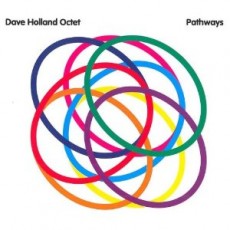
Dave Holland was born on October 1, 1946 in Wolverhampton, England and taught himself how to play stringed instruments, beginning at four on the ukulele, graduating to guitar and later bass guitar. Quitting school at age 15 to pursue a profession in a top 40 band, but gravitated to jazz buying albums of Ray Brown, Leroy Vinnegar, Charles Mingus and Jimmy Garrison and trading his electric bass in for an acoustic.
After moving to London in 1964, Holland began playing acoustic bass in small venues and studied with James Edward Merrett, learning to sight read, and enrolling in a three-year scholarship program at the Guildhall School of Music and Drama.
At 20, Holland was keeping a busy schedule in school, studios and Ronnie Scott’s Jazz Club playing behind American musicians like Coleman Hawkins, Ben Webster and Joe Henderson and British musicians such as John McLaughlin, Evan Parker and began a working collaboration with Kenny Wheeler that has continued to today.
In 1968 he joined Miles Davis’ group, recorded on Files de Kilimanjaro, In A Silent Way and Bitches Brew and Live at the Fillmore East, March 7, 1970: It’s About Time. Leaving Miles he joined the group Circle with Chick Corea that started a 34-year association with ECM record label. During the Seventies and 80s he worked as a leader and a sideman with Anthony Braxton, Stan Getz, John Abercrombie, Jack DeJohnette, Bonnie Raitt, Steve Coleman, Kevin Eubanks, Billy Higgins, Roy Haynes, Hank Jones, Billy Higgins, Pat Metheny and Marvin “Smitty” Smith.
Dave would go on to tour with Herbie Hancock, renew his affiliation with Joe Henderson and Betty Carter, formed his third quartet introducing Steve Nelson to the world, record dozens of albums as a leader and sideman, form his current quintet, win his first Grammy for big band album “What Goes Around”, win numerous other recognitions and he continues to compose, record, perform and tour.
More Posts: bass