


From Broadway To 52nd Street
Our journey from Broadway to 52nd Street continues with Kismet that opened as a play on December 25, 1911 at the Knickerbocker Theatre and ran for 184 performances. However, it wasn’t until almost 42 years later to the day that it opened on Broadway as a musical on December 3, 1953. Two songs, Stranger In Paradise and Baubles, Bangles & Beads came from the musical composed by Robert Wright and George Forrest to become jazz standards. The musical ran for 583 performances with Ronald Coleman, Marlene Dietrich and Edward Arnold playing the musicals starring roles.
The Story: Haji, a wily beggar and poet is arrested on a minor infraction by the Wazir, who agrees to release him if he kills the Caliph. Hajj’s attempts fail and he is thrown in jail with his old enemy the sheik. He kills the sheik and escapes in his clothing. Learning his daughter is a concubine in the Wazir’s harem, Hajj drowns the Wazir and frees his daughter. The Caliph marries the daughter but by law must banish Hajj. When Hajj returns, the Caliph looks the other way and allows him to beg and recite poetry.
Broadway History: In the 1950s, Broadway musicals were a major part of American popular culture. Every season saw new stage musicals send songs to the top of the charts. Public demand, a booming economy and abundant creative talent kept Broadway hopping. To this day, the shows of the 1950s form the core of the musical theatre repertory. The best of these musicals integrated every element, offering recognizable characters singing in stories told with wit and genuine heart – in short, they applied the Rodgers & Hammerstein formula. The two songwriters were international celebrities, so the media treated each new Rodgers & Hammerstein stage show as a major event.
Oscar Hammerstein II died due to stomach cancer a few months after The Sound of Music opened, ending a career that spanned the golden age of musical theatre and film. After working with the innovative Jerome Kern Jerome and operetta master Sigmund Romberg, he did his finest work with Rodgers, and later coached young Stephen Sondheim. More than any other individual, Hammerstein had turned the once-innocuous Broadway musical into a potent dramatic form, and had turned lyrics into essential dramatic tools. He did it by being a superb storyteller and a dedicated craftsman. Even when dealing with serious issues, he always kept his focus on intriguing characters caught in remarkable situations.
Sponsored By

www.whatissuitetabu.com
Daily Dose Of Jazz…
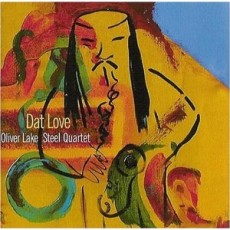
Oliver Lake was born in Marianna, Arkansas on September 14,1942 and his family moved to St. Louis when he was two. He began drawing at the age of thirteen and soon after began playing cymbals and the bass drum in a variety of drum and bugle corps. At 17, he began to take a serious interest in jazz and started playing percussion followed by alto saxophone. His piercing, bluesy, biting sound is his trademark and his explosive unpredictable solos are akin to Eric Dolphy.
During the 1960s Oliver taught school, worked in several contexts around St. Louis and led along with Julius Hemphill and Charles “Bobo” Shaw, BAG, the Black Artists Group. In 1972 Lake moved to Paris for two years working with his colleagues from BAG, returned to New York and immersed himself into the then burgeoning jazz loft scene. Like many other members of BAG, (Black Artists Group) and its Chicago-based sister organization, the Association for the Advancement of Creative Musicians (AACM), he moved to New York in the mid-’70s, working the fertile ground of the downtown loft scene and quickly establishing himself as one of its most adventurous and multi-faceted musician.
Oliver is co-founder of the internationally acclaimed World Saxophone Quartet with Julius Hemphill, Hamiet Bluiett and David Murray in 1977. Over the next two decades the group crossed over to new audiences, in part, due to their late 80s albums of Ellington and popular R&B tunes. He leads his own Steel Quartet and Big Band; has worked with hip hop artists Mos Def and A Tribe Called Quest and Me’shell Ndegeocello; has created a groundbreaking roots/reggae ensemble “Jump Up”; founded Passin’ Thru, Inc. – a non-profit dedicated to fostering, promoting and advancing the knowledge, understanding and appreciation of jazz, new music and other disciplines related to music.
Oliver Lake, the alto saxophonist, flautist, composer, poet and painter has collaborated with numerous notable choreographers, poets and a veritable Who’s Who of the progressive jazz scene of the late 20th century. He has recorded as a leader for Freedom, Black Saint, and Black Lion, Novus, Gramavision, Blue Heron Gazell, Soul Note and other record labels. The mainstay of the avant-garde and free jazz realms continually performs all over the U.S. as well as in Europe, Japan, the Middle East, Africa and Australia. He paints daily, using oil, acrylics, wood, canvas, and mixed media.
Daily Dose Of Jazz…
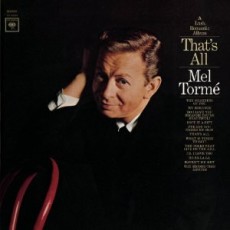
Melvin Howard Tormé was born on September 13, 1925 in Chicago, Illinois to Russian-Jewish parents whose surname was Torma but was changed to Torme as they came through Ellis Island. A child prodigy, his first professional engagement was singing “You’re Driving Me Crazy” with the Coon-Sanders Orchestra at the Blackhawk at age 4. Between 1933 and 1941, he acted in the network radio serials “The Romance of Helen Trent” and “Jack Armstrong, the All-American Boy”.
Mel wrote his first song at 13, and three years later, his first published song, “Lament to Love,” became a hit recording for Harry James. He played drums in Chicago’s Shakespeare Elementary School drum and bugle corps in his early teens. While a teenager, he sang, arranged, and played drums in a band led by Chico Marx of the Marx Brothers. His formal education ended in 1944 with his graduation from Chicago’s Hyde Park High School.
In 1943, Tormé made his movie debut in Sinatra’s first film, the musical “Higher and Higher” and an appearance in the 1947 film musical “Good News” made him a teen idol for a few years. He went on to sing and act in many films and television episodes throughout his career, even hosting his own television show in 1951–52.
In 1944 he formed one of the first jazz-influenced vocal groups, a quintet called “Mel Tormé and His Mel-Tones.” They had several hits on his own and fronting Artie Shaw’s band and blazed a path that was later followed by the Hi-Lo’s, The Four Freshman and The Manhattan Transfer. A solo act by 1947, Mel hit New York’s Copacabana and a local disc jockey in the audience, Fred Robbins, gave him the nickname “The Velvet Fog” for his smooth vocals and high tenor, a name detested by Tormé.
Mel went on to have a long and prosperous career recording for Decca, Musicraft, Capitol and Bethlehem; worked with Marty Paich in the fifties; “Blue Moon” became his signature tune; helped pioneer cool jazz; in the 60s wrote songs and musical arrangements for Judy Garland; co-wrote “The Christmas Song” with Bob Wells; and weathered the drought of vocal jazz until fertile ground reappeared in the 70s, a period that for him, lasted nearly to the end of his life.
Mel Tormé, vocalist, drummer, actor, author, composer and arranger passed away after suffering a stroke on June 5, 1999.
Daily Dose Of Jazz…
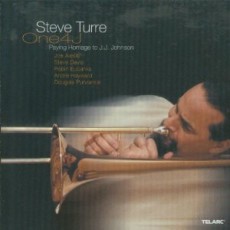
Steve Turre was born September 12, 1948 in Omaha, Nebraska but was raised in San Francisco, California to Mexican American parents. He began studying the violin but switched to trombone by age ten, later studying at the University of North Texas. By 1968 he was playing with Rahsaan Roland Kirk, went on to gig with Carlos Santana and toured with Ray Charles in 1972.
In 1970, encouraged by Kirk, Turre started playing conch and other seashells as musical lip-reed instrument. He has a collection of shells of various sizes, which he has picked up during his travels around the world. Turre leads “Sanctified Shells,” which is a “shell choir” made up of brass players who double on seashell releasing their first album in 1993.
Steve has had a long experience with Latin jazz he has become a skilled cowbell and Venezuelan maracas player. The internationally renowned trombonist, recording artist, arranger, and educator has won the Down Beat Reader’s poll for best trombonist in 1998, 1999, 2001, 2002 and 2006. He has been the trombonist for the Saturday Night Live band since 1985 and has taught jazz trombone at the Manhattan School of Music since 1988.
Turre has recorded 18 albums as a leader and has worked as a sideman on another 206 sessions with such luminaries as Monty Alexander, Carl Allen, Art Ensemble of Chicago, Frank Wess, Ray Barretto, Andy Bey, Art Blakey, Lester Bowie, Don Braden, Cecil Bridgewater, McCoy Tyner and Kenny Burrell among others. He continues to perform, record and tour.
Daily Dose Of Jazz…
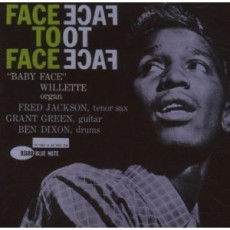
Roosevelt “Baby Face” Willette was born on September 11, 1933 in New Orleans, Louisiana. His mother was a missionary who played the piano in the church where his father was a minister. His musical roots are therefore in gospel and Baby Face taught himself the piano and started out playing the piano for various gospel groups, and spent his early career touring across the United States, Canada and Cuba.
It was in Chicago that Willette decided to switch from gospel and rhythm & blues to playing jazz. He played piano with the bands of King Kolax, Joe Houston, Johnny Otis and Big Jay McNeely before switching to organ. He was inspired by Jimmy Smith’s work, however, his playing style remained heavily influenced by gospel and soul jazz. Based in Milwaukee he performed with his vocalist wife Jo Gibson at such clubs as The Flame Club, The Pelican, The Moonglow and Max’s among others.
In 1960 he moved to New York City where he met Lou Donaldson and Grant Green, and played on a few Blue Note sessions with them. This led to Willette being signed to the label, which recorded his debut album Face To Face. After stints in New York City, and then California, failing health forced a return to Chicago, where his family resided. This would eventually become his final resting place as he passed away on April 1,1971.