

Daily Dose Of Jazz…
Chuck Rainey was born Charles Walter Rainey III on June 17, 1940 in Cleveland, Ohio. His youthful pursuits included violin, piano and trumpet but switched to baritone horn in order to join the Lane College traveling ensemble while matriculating. But it was while on active military duty that he learned the rhythm guitar, however, his lack of improvisational skills led him to pick up the bass. He soon found steady work as a studio bassist in New York, recording and touring with many of the greats of the time.
Through the 1970s he played with Jerome Richardson, Grady Tate, Mose Allison, Gato Barbieri, Gene Ammons and Eddie Vinson. He was a member of the King Curtis All Stars, toured with the Beatles second U.S. run and had firmly established himself as New York City’s “first call” session bass guitarist.
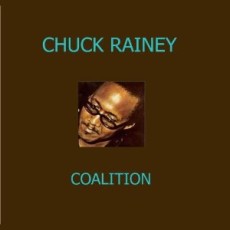
In 1972, he released his first solo album “The Chuck Rainey Coalition” consisting of notable session musicians Richard Tee, Warren Smith, Specs Powell, Eric Gale, Bernard Purdie, Herb Lovelle, Cornell Dupree and Billy Butler. He moved to Los Angeles that same year working with Quincy Jones and his big band but continued as a studio musician playing for Betty Davis, Steely Dan and Aretha Franklin.
Rainey’s style has always been to provide a rhythmic and melodic bottom that works with the drummer for the benefit of the song. His books on bass study refer to ”sensitivity to music” and a dedication to studying the fundamentals of music theory. While his “sideman” philosophy of bass has not brought him the level of recognition of star players such as Jaco Pastorious, Rainey is by far more recorded than his more famous contemporaries.
More Posts: bass
Daily Dose Of Jazz…
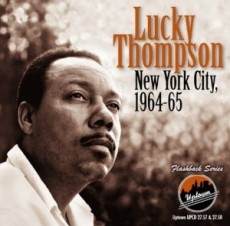
Lucky Thompson was born Eli Thompson on June 16, 1924 in Columbia, South Carolina but the family moved to Detroit, Michigan during his childhood. Raising his siblings after his mother died, he practiced his saxophone fingerings daily on a broomstick prior to acquiring his first instrument. After graduating from high school in 1942 he joined the Erskine Hawkins band.
Lucky went on to play with the swing orchestras of Lionel Hampton, Don Redman, Billy Eckstine, Lucky Millinder and Count Basie, he worked in rhythm and blues, later establishing a career in bop and hard bop working with Kenny Clarke, Miles Davis, Dizzy Gillespie and Milt Jackson.
An inspired soloist playing in a more advanced bebop format in the early 60s and capable of a very personal style in which the tradition of Coleman Hawkins, Ben Webster and Don Byas was intelligently mixed with a modern grasp of harmony. He showed these capabilities as sideman on many albums recorded during the mid-1950s, such as Stan Kenton’s Cuban Fire and those under his own name.
He appeared on Charlie Parker’s Los Angeles Dial Records sessions and on Miles Davis’s hard bop Walkin’ session. Thompson recorded albums as a leader for ABC Paramount, Prestige and as a sideman on records for Savoy with Milt Jackson as leader.
In the late 60’s Thompson lived in Lausanne, Switzerland and recorded several albums there including A Lucky Songbook in Europe. He taught at Dartmouth College in 1973 and 1974, and then left the music business completely, because of the racist treatment he received from record companies and clubs.
In his last years he lived in the Pacific Northwest suffering from Alzheimer’s disease and on July 30, 2005, hard bop saxophonist Lucky Thompson passed away in Seattle, Washington.

More Posts: saxophone
From Broadway To 52nd Street
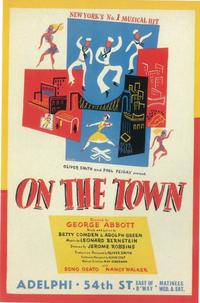
On The Town opened at the Adelphi Theatre on December 28, 1944 and ran for 463 performances. Leonard Bernstein composed the music and Betty Comden and Adolph Green wrote the lyrics. The musical starred Betty Comden, Nancy Walker, Adolph Green, John Battles, S. Ono Osata and Chris Alexander.
The Story: Three sailors – romantic Gaby, down-to-earth Chip and clownish Ozzie are on shore leave in New York City. During a subway ride, Gaby falls in love with a picture of Miss Turnstiles. This event leads the guys on an adventure to find her. Roaming around the city as far as the museum of Natural History and Coney Island, the other two also find love. Nancy Walker plays the cab driver. From this play New York, New York and Some Other Time became jazz standards.
Jazz History: American involvement in World War II, which began on December 11th, 1941 marked a decline in the importance of big bands in popular music. Many musicians were sent to fight in the war, and those who remained were restricted by high taxes on gasoline. By the time the ban on recording was lifted, big bands had practically been forgotten, or had begun to be thought of as peripheral in relation to vocal stars such as Frank Sinatra.
The fall of the Big Band began on August 1, 1942 when the American Federation of Musicians initiated a strike against all major recording companies because of a disagreement over royalty payments. No union musician could record. The effects of the strike include the shrouding of the developments of bebop in mystery. There are few documents that can provide evidence of what the early forms of the music sounded like.
Sponsored By

www.whatissuitetabu.com

Daily Dose Of Jazz…
Jaki (John) Byard was born on June 15, 1922 in Worcester, Massachusetts and began playing professionally at age 15. Adept not only on the piano, he played trumpet and saxophone among other instruments. After serving in WWII he toured with Earl Bostic in the late 40s, based himself in Boston and had his recording debut with Charlie Mariano in 1951.
Known for his eclectic style, Byard added everything from ragtime to free jazz in his delivery. Through the fifties and into the sixties he was a member of Herb Pomeroy’s band followed by a stint with Maynard Ferguson.
Moving to New York, Byard recorded extensively with Charles Mingus from 1962 to 1964 and in 1970, touring Europe with him in 1964. He also made important recordings as a sideman with Eric Dolphy, Booker Ervin and Sam Rivers.
As a leader, he recorded a string of albums for the Prestige label during the 1960s and fronted an occasional big band, the Apollo Stompers. He taught at the New England Conservatory, Manhattan School of Music, Hartt School of Music, and the New School for Social Research.
Jaki Byard was shot dead on February 11, 1999 in New York City. The circumstances surrounding his death have not been determined. Phil Woods described him as “one of the most compelling and versatile pianists in jazz”.

Daily Dose Of Jazz…
Kenny Drew, Jr. was born on June 14, 1958 in New York City is the son of jazz pianist Kenny Drew. His initial study was in classical music with his mother and grandmother. In his teens he gigged in clubs became interested in jazz and pop, but initially worked in funk bands. Kenny attended Iona College in New Rochelle, NY for a spell from 1977 to 1978. There, he became pianist for the Iona College Singers, an entertainment troop promoting the College’s name and goodwill among local high schools, retirement homes and the like in the Northeast region of the USA.
Later he went into jazz piano and in 1990 Kenny won the Great American Jazz Piano competition at the Jacksonville Jazz Festival in Florida. He has continued to perform jazz, but has also performed some chamber music. He made his recording debut with Charnett Moffet, worked with Stanley Jordan and OTB, and recorded with Eddie Gomez, Sadao Watanabe and the Mingus Big Band.
Although his style has some similarities to his father’s, but is different enough to generally avoid comparison. Drew is considered the more eclectic of the two and his music is known for its hard-swinging bluesy sound and large, two-handed rooty chords contrasting with fast runs. His style is said to be similar to that of his father and Oscar Peterson, though he cites Thelonious Monk as his major influence and like Monk often recorded and performed solo. He has 20 albums under his name as a leader and continued to perform until his death at home in St. Petersburg, Florida on August 3, 2014.
More Posts: piano