


Daily Dose Of Jazz…
John Fedchock was born on September 18, 1957 in Cleveland, Ohio and earned his degree in music education from Ohio State University. He holds a master’s degree in Jazz Studies and Contemporary Media from the Eastman School of Music.
Fedchock began his career as a trombonist in 1980 working for several years in the Woody Herman Orchestra, becoming noted for his arrangements. He has worked and toured with T.S. Monk, Gerry Mulligan, Louie Bellson, Bob Belden, Rosemary Clooney and Susannah McCorkle among others. He has also been a part of the Manhattan Jazz Orchestra and the Carnegie Hall Jazz Band.
An avid educator, he is in demand as a clinician at colleges and universities, was the trombone chair for the IAJE Resource Team, a board member of the International Trombone Association and is a trombone instructor at Purchase College and Temple University. As a leader John recorded his first album in 1992 with the New York Big Band, which remains active to the present. He has followed with a half dozen more recordings and continues to perform, record and tour.

More Posts: trombone
Daily Dose Of Jazz…
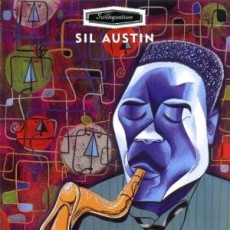
Sil Austin was born Sylvester Austin on September 17, 1929 in Dunnelion, Florida and taught himself to play as a 12 year old. He won the Ted Mack Amateur Hour in St. Petersburg, Florida in 1945, playing “Danny Boy”. His performance brought him a record deal with Mercury Records and he moved to New York and studied at the Juilliard School of Music.
Austin played briefly with Roy Eldridge and with Tiny Bradshaw from 1952-54, before setting up his own successful touring group. He recorded over 30 albums for Mercury with a number of Top 40 hits on the pop charts with tunes like “Danny Boy” (his signature), “Slow Walk” and “My Mother’s Eyes”.
Sil Austin, a saxophonist who considered Coleman Hawkins, Lester Young and Sonny Stitt as his major influences, passed away of prostate cancer on September 1, 2001.

More Posts: saxophone
Daily Dose Of Jazz…
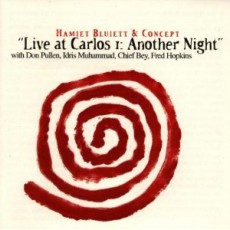
Hamiet Bluiett was born on September 16, 1940 in Brooklyn a.k.a. Lovejoy, Illinois, that was founded as a free black refuge community in the 1830s. As a child, he studied piano, trumpet, and clarinet, but was attracted most strongly to the baritone saxophone from the age of ten. He began his musical career by playing the clarinet for barrelhouse dances in Brooklyn, Illinois, before joining the Navy band in 1961. He attended Southern Illinois University Carbondale.
Following his time in the Navy, he returned to the St. Louis area in the mid-1960s. In the late 1960s Bluiett co-founded the Black Artists’ Group (BAG) in St. Louis, Missouri, comprised of a collective dedicated to fostering creative work in theater, visual arts, dance, poetry, film, and music. He led the BAG big band during 1968 and 1969.
Bluiett moved to New York City in 1969 and joined the Charles Mingus Quintet and the Sam Rivers large ensemble. In 1976 he co-founded the World Saxophone Quartet with two other BAG members, Julius Hemphill and Oliver Lake. The group would quickly become jazz music’s most renowned saxophone quartet. He has remained a champion of the somewhat unwieldy baritone saxophone, organizing large groups of baritone saxophones.
In the 1980s, he also founded The Clarinet Family, a group of eight clarinetists playing clarinets of various sizes ranging from E-flat soprano to contrabass. Since the 1990s he has led a virtuosic quartet, the Bluiett Baritone Nation, made up entirely of baritone saxophones, with drum set accompaniment. His return to his hometown in 2002 affords him the opportunity to gig, perform with students from Neighborhood Music School in New Haven, Connecticut under the name of “Hamiet Bluiett and the Improvisational Youth Orchestra”. He has recorded over three-dozen albums and continues to perform, record and tour.

From Broadway To 52nd Street
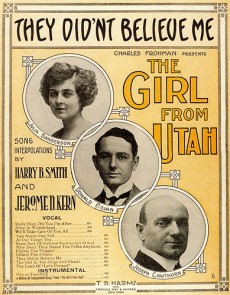
The Girl From Utah, a British import to Broadway, opened at the Knickerbocker Theater on August 24, 1914 and ran for 120 performances. J. A. E. Malone directed this musical that starred Julia Sanderson, Donald Brian, Joseph Cawthorn, Queenie Vassar and Venita Fitzhugh. Composer Jerome Kern was asked to give it an American flavor and along with lyricist Herbert Reynolds they composed “They Didn’t Believe Me”. History contends that this was Kern’s career-making opportunity to express himself and this musical would hint at the emerging American style of musical comedy.
The Story: In London, an American girl named Una is pursued across the Atlantic Ocean to London by a Mormon but is saved from a bigamous marriage when she falls in love with a handsome hoofer.
Broadway History: It was during 19th century that the development of not only the American theatre took place throughout the country but the all powerful “Syndicate” – the cartel of theatre owners who joined forces under the influence of one of Broadway’s early great producers, Abraham Lincoln Erlanger. One of the great stars of theatre in the early twentieth century was George M. Cohan. Rising through the ranks of vaudeville from a child star to adulthood, he flaunted his patriotism not for those born in America but those immigrating to this great country to become citizens and patriots. Cohan epitomized the sense of the country by self-proclaiming himself as a real live nephew of Uncle Sam.
Sponsored By

www.whatissuitetabu.com
More Posts: broadway
Daily Dose Of Jazz…
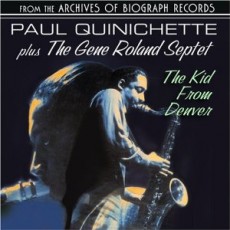
Gene M. Roland was born September 15, 1921 in Dallas, Texas and learned to play several instruments, such as trumpet and piano. He received a degree in music from the University of North Texas College of Music, first hooked up with Kenton in 1944, playing fifth trumpet and contributing arrangements. He worked briefly with Lionel Hampton and Lucky Millinder, and then rejoined Kenton in 1945 as a trombonist and writer, arranging the hit “Tampico”.
In 1946 Roland played piano and wrote for a group that included Stan Getz, Zoot Sims, Jimmy Giuffre and Herbie Steward, and would lead Woody Herman’s Four Brothers Second Herd. By the late 40s, he played trombone with George Auld, trumpet with Count Basie, Charlie Barnet and Lucky Millinder, and contributed charts for the big bands of Claude Thornhill and Artie Shaw. He led a giant rehearsal band in 1950 that included Dizzy Gillespie and Charlie Parker, wrote for Kenton in 1951, Dan Terry in 1954, and Woody Herman from 1956-58, for whom he contributed 65 arrangements.
Gene was a major force in Kenton’s mellophonium band of the early 1960s, not only writing for the ensemble, but also performing as one of the mellophoniums, occasionally doubling on soprano sax with the orchestra. He provided the robust vocal on “Hawaiian Teenage Girl”, and remained active as a writer in the 1960s and 70s, working with Copenhagen’s Radiohus Orchestra and playing trumpet, piano and tenor with his own groups.
Arranger, composer, vocalist and multi-instrumentalist Gene Roland, who was the only arranger to write for Kenton in all four decades of the band’s existence, passed away on August 11, 1982 in New York City.
