

Daily Dose Of Jazz…
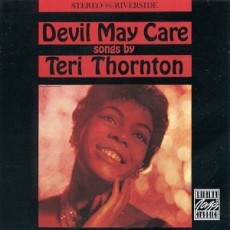
Teri Thornton was born Shirley Enid Avery on September 1, 1934 in Detroit, Michigan. Encouraged by her mother to study classical music, as a teenager she turned to jazz, singing and playing piano. Thornton first performed in local Detroit clubs in the 1950s but her debut as a professional took place at the Ebony Club in Cleveland, Ohio. She moved to Chicago and worked with Cannonball Adderley and Johnny Griffin. Her debut release of “Devil May Care” in 1961 for Riverside brought her national attention, with and a subsequent move to New York City where she established herself on the jazz and club scene.
Scoring her biggest hit with the theme to the television show Naked City “Somewhere In The Night” in 1963, she would next appear on the Ed Sullivan Show, get a recording contract from Columbia Records and receive a personal stamp of approval from Ella Fitzgerald as her favorite singer. Thornton also found work during this period singing for television ads and recording for several different labels.
By the late Sixties, Teri faded from public view, due to poor managers, alcohol and drugs. She moved to Los Angeles and it wasn’t until 1979 that she reemerged singing in small piano bars. It was decades later that she was discovered to have been singing on various song poem records in Los Angeles on the Preview label as “Teri Summers.”
Teri moved back to New York in 1983 and once again started performing on the club circuit. In 1998 she fully revived her career after a surprise win at the Thelonious Monk Institute of Jazz Vocal Competition. Thornton signed with Verve Records, releasing I’ll Be Easy to Find. Fame short-lived however, diagnosed with bladder cancer, jazz vocalist Teri Thornton passed away of the disease on May 2, 2000 in Englewood, New Jersey.

More Posts: vocal
From Broadway To 52nd Street
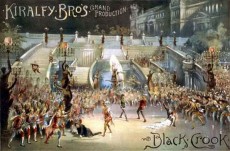
Though no jazz standards came out of the musical, The Black Crook took the stage on September 12, 1866 and shocked, outraged and totally delighted American audiences. It was the first long running musical hit with a record 475 performances. Though often at odds with the Puritan morality that underwrote the founding of this nation, a new totally American art form, the Broadway musical, was born.
The Story: Set in 1600 in the Harz Mountains of Germany where evil, wealthy Count Wolfenstein seeks to marry the lovely village girl, Amina. With the help of Amina’s scheming foster mother Barbara, the Count arranges for Amina’s fiancé, Rodolphe, an impoverished artist, to fall into the hands of Hertzog, an ancient, crook-backed master of black magic. Hertzog has made a pact with the Devil (Zamiel, “The Arch Fiend”): he can live forever if he provides Zamiel with a fresh soul every New Year’s Eve. As Rodolphe is led to this horrible fate, he escapes, discovers a buried treasure, and saves a dove. The dove magically turns out to be Stalacta, Fairy Queen of the Golden Realm, who is pretending to be a bird. The grateful Queen rescues Rodolphe by bringing him to fairyland and then reuniting him with his beloved Amina. The Count is defeated, demons drag the evil Hertzog into hell, and Rodolphe and Amina live happily ever after.
Broadway History: The bastion of artistic collaboration, Broadway is the quintessential stage experience that marks the pinnacle of excellence between writer, composer, lyricist, director, choreographer, dancer and actor; thus very often creating a magical event that astonishes, amazes and delights the patron. Synonymously, 52nd Street was the mecca for interpretation of a new genre of music that emanated from the souls of black folks. It was jazz and the district symbolized greatness and brought together the creativity and individual voice of the masters with those who aspired to gain membership into this elite society of players.
Broadway and 52nd Street, where the avant-garde and art starved minions of high-society went to be entertained, are not only streets. They evolved into contractual classifications, industries, traditions and states of mind. They both became adventures into the depth of bawdiness, art and culture. A theatre or nightclub – devoid of clientele – was home to gypsies or musicians who practiced and rehearsed for hours, weeks, months and even years for that one opening night of lights where a star was often born. Whether the musical review lauded the performance or bespoke the incredulity of its author and/or performers, a select few songs garnered perpetual encores by living on in the voice of the jazz musician or vocalist who recognized the beauty of the melody that helped moved the musical story.
The Broadway musical is purely an American art form. While many consider 1927’s Showboat as the first great book musical, the use of drama, dance and music in one production all happened quite by accident and over sixty years earlier. In 1866, a Parisian ballet troupe was imported to perform at the Academy of Music. The theatre burned to the ground before the show could be staged, stranding the performers and financially draining the show’s producers. They, in turn, went to another impresario, William Wheatley – the manager of Niblo’s Garden, located on Broadway near Prince Street – who was preparing a melodrama called “The Black Crook”. Wheatley decided to turn The Black Crook into a musical extravaganza and for the first time ever on September 12th, audiences saw a drama, were entertained by an orchestra and saw a hundred gypsies kicking up their heels.
Sponsored By

www.whatissuitetabu.com
Daily Dose Of Jazz…
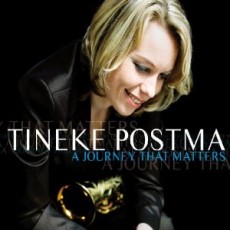
Tineke Postma was born on August 31, 1978 in Heereveen, The Netherlands. At the age of eleven she began playing the saxophone and studied at the Amsterdam Conservatory. Graduating the conservatory in 2003, Tineke received a Masters from the Manhattan School of Music in New York and during this period of her education Tineke was taught by David Liebman, Dick Oatts and Chris Potter. She has been teaching at the Amsterdam Conservatory since 2005.
Performing internationally the saxophonist and composer has worked with Esperanza Spaulding, Terri Lyne Carrington and Wayne Shorter; she has received numerous recognitions from Down Beat Poll, won the Dutch Edison Award, the Jazz Juan Revelations Award, the Midem International Jazz Revelation of the Year Award and The Sisters in Jazz All Star Award.
Postma leads the Tineke Postma Quartet and The Tineke Postma International Quartet featuring Geri Allen on piano, Scott Colley on bass and Terri Lyne Carrington on drums. They have played festivals around the globe and recorded five albums under the leaders name. Postma has recorded as a sideman and collaborator and continues to compose, perform and tour.

More Posts: saxophone
Daily Dose Of Jazz…
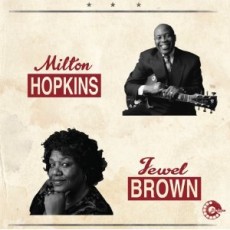
Jewel Brown was born on August 30, 1937 in Houston, Texas and her first professional performance was at the age of 12 in the Manhattan Club in Galveston, Texas. Before she graduated from Jack Yates High School Lionel Hampton heard her sing and offered the opportunity to tour professionally in Europe.
In 1957 while on a vacation in Los Angeles, California, Jewel sat in with organist Earl Grant at the Club Pigalle and he hired her that night. Their collaboration lasted for a year. She went on to work for nightclub owner Jack Ruby in Dallas, Texas.
In the Sixties she was offered singing positions with Duke Ellington and Louis Armstrong, and she chose the later, appearing with Armstrong in the films, “Louis Armstrong and All Stars” and “Solo”.
Brown recorded an exuberant solo of “Jerry” and vocal backup and “twist choreography” on “When the Saints” on the 1962 live performance “Jazz Festival, Vol. 1 with ‘Louis Armstrong All Stars”, “With Louis Armstrong: Best Live Concert 1: Jazz In Paris” and also recorded with Milton Hopkins.
She retired in 1971 to care for ailing members of her family, establishing a successful hair salon in Houston. In recent years she has revived her career, singing in the Heritage Hall Jazz Band.

More Posts: vocal
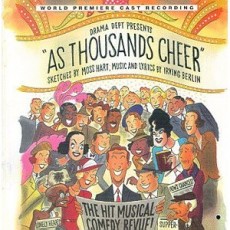
From Broadway To 52nd Street
In just three days, on Saturday, September 1, 2012, Notorious Jazz presents its latest documentary series – “From Broadway To 52nd Street” – the history of the compositions written for the musical stages of Broadway that have become jazz standards.
You’ll get historical insight into the era, the composers, the play, the lyricists, the streets, theatres, clubs and the people who made the songs famous on both performance stages. To the present day, the music continues to celebrate perpetual encores through the interpretive talents of great jazz musicians and vocalists.
So join Notorious Jazz on Saturday, September 1st as we present the first installment, and then each successive Saturday for a new series element to the history of this timeless music.
Sponsored By
www.whatissuitetabu.com