

Daily Dose Of Jazz…
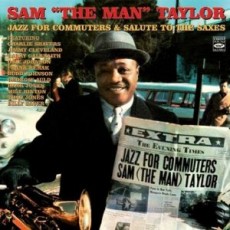
Sam Taylor was born on July 12, 1916 in Lexington, Tennessee. Playing tenor saxophone he attended Alabama State University and was a part of the Bama State Collegians. Picking up the moniker “The Man”, Taylor would go on to work with Scatman Crothers, Cootie Williams, Lucky Millinder, Cab Calloway, Ray Charles, Buddy Johnson, Louis Jordan and Big Joe Turner.
He was one of the most requested session players in the New York recording studios in the 1950s and replaced Count Basie as the house bandleader on Alan Freed’s ‘Camel Rock ‘n Roll Dance Party’ radio series over CBS.
Venturing into rhythm and blues, Taylor’s saxophone solo appeared on Turner’s “Shake, Rattle and Roll”, Clyde McPhatter and The Drifters “Money Honey” and “Sh-Boom” by The Chords. During the 1960s, Sam led a five-piece band called the Blues Chasers and in the 1970s frequently played and recorded in Japan.
Tenor saxophonist Sam “The Man” Taylor died on October 5, 1990 in Lexington, Kentucky. He left a discography of fifteen albums as a leader across the MGM, Moodsville, Decca, Pony Canyon, Epic and Japanese labels.
More Posts: saxophone
Daily Dose Of Jazz…
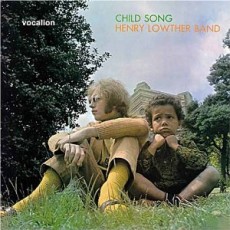
Henry Lowther was born Thomas Henry Lowther on July 11, 1941 Leicester, Leicestershire, England. Learning trumpet, his first experience was on cornet in a Salvation Army band. He studied violin briefly at the Royal Academy of Music but returned to trumpet by 1960 though he sometimes played violin professionally.
In the 1960s, he worked with pianist and composer Mike Westbrook, a relationship that lasted into the 80s, Manfred Mann, John Dankworth from 1967-77, Graham Collier, John Mayall, John Warren, and would appear with the Keef Hartley Band.
The Seventies brought work with Mike Gibbs, Kenny Wheeler, Tony Coe, Gordon Beck and Barbara in addition to his own ensemble, Quaternity. In the 80s Henry worked with the Buzzcocks, Talk Talk, Peter King, Gil Evans, Humphrey Lyttleton on a Buddy Bolden documentary.
He played with Charlie Watts’ band in the late 80s, and then led his own band, Still Waters. From the late 1980s he did much work in big bands, such as the Berlin Contemporary Jazz Orchestra and the London Jazz Composers Orchestra; in the Nineties he worked with Kenny Wheeler’s group, The Dedication Orchestra, the London Jazz Orchestra, George Russell’s Living Time Orchestra, and the Creative Jazz Orchestra. Trumpeter Henry Lowther most recently plays in the band Jazzmoss.

Daily Dose Of Jazz…
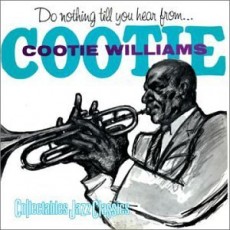
Cootie Williams was born Charles Melvin Williams on July 10, 1911 in Mobile, Alabama and began his professional career with the Young Family band, which included saxophonist Lester Young, when he was 14 years old.[2] In 1928, he made his first recordings with pianist James P. Johnson in New York, where he also worked briefly in the bands of Chick Webb and Fletcher Henderson.
Williams rose to prominence as a member of Duke Ellington’s orchestra, with whom he performed from 1929 to 1940. He recorded his own sessions during this time, both freelance and with other Ellington sidemen. In 1940 he joined Benny Goodman’s orchestra, then a year later formed his own orchestra. Over the years he employed Charlie Parker, Eddie “Lockjaw” Davis, Bud Powell, Eddie Vinson and other important young players.
In 1947, Williams wrote the song “Cowpox Boogie” while recuperating from a bout with smallpox; began playing more rhythm and blues in the late 1940s, in the Fifties he toured with small groups and fell into obscurity. By 1962, he rejoined Ellington, stayed with the orchestra until 1974, after Ellington’s death, and in 1975, and performed during the Super Bowl IX halftime show.
Trumpeter Cootie Williams, who was noted for his occasional singing, renowned for his growling “jungle” style trumpet playing, reputed to have inspired Wynton Marsalis, and was inducted into the Alabama Jazz Hall of Fame, passed away in New York on September 15, 1985, at age 74.

More Posts: trumpet

Daily Dose Of Jazz…
June Richmond was born July 9, 1915 in Chicago, Illinois. She became one of the very first black singers to be featured regularly with a white band when she performed with Jimmy Dorsey’s Orchestra in 1938.
An enthusiastic vocalist who was excellent on blues but also effective on ballads, June was a popular attraction during the swing era although never a major name. She worked with Les Hite early on in California, toured with Jimmy Dorsey, was with Cab Calloway in 1938 and then became best known for her association with Andy Kirk’s Orchestra during 1939-42.
Richmond became a solo act after leaving Kirk and then from 1948 on mostly worked in Europe, at first based in France and then later on in Scandinavia. Her only recordings as a leader were a self-titled album on the Barclay label, four numbers in 1951 with Svend Asmussen and four songs on the album “Jazz In Paris” with the Quincy Jones Orchestra in 1957.
Vocalist June Richmond, who gained fame during the swing era, died of a heart attack at the age of 47 on August 14, 1962 in Gothenburg, Sweden.
>
More Posts: vocal
Daily Dose Of Jazz…
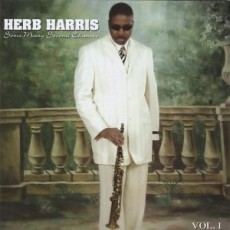
Herb Harris was born in Washington D.C. on July 8, 1968. He began his musical journey on clarinet at age 12. Upon entering high school, he switched to alto saxophone, playing the instrument in the marching band, and then switched to tenor saxophone at age 17.
His interest in jazz peaked when he heard a recording of John Coltrane’s Giant Steps. Early on, he admired the sound and style of Dexter Gordon, followed by Sonny Rollins, Sonny Stitt and Charlie Parker.
Upon graduating high school, Harris spent several years of study at Florida A&M University. It was while attending the university that Harris met and jammed with Marcus Roberts, eventually playing with Roberts, touring the States and Europe and recording with him on Deep in The Shed.
Harris also spent a short period in the Nineties with the Wynton Marsalis Septet with whom he toured the States, Europe, and South America. He has appeared on the soundtrack “Tune In Tomorrow”, was featured in the group of saxophonists dubbed the “Tough Young Tenors” on the album “Alone Together”, was a member of the second edition of the Jazz Futures, and saxophonist Herb Harris embarked on his first tour as a leader in the spring of 2002. He continues to perform, tour, compose and record.

More Posts: saxophone