
Requisites
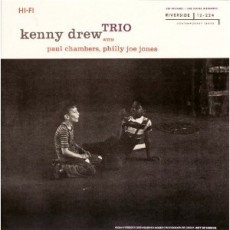
It’s 1956 when pianist Kenny Drew steps into a New York studio with two absolute legend, bassist Paul Chambers and drummer Philly Joe Jones, to record his first album as a bandleader. The Kenny Drew Trio. This should’ve been his big break, the moment that launched him into the jazz stratosphere but America wasn’t ready to listen.
There’s a twist though. While Drew struggled to find acceptance at home, his brilliance didn’t go unnoticed everywhere. Fast forward to the early 1970s when the album finally gets released in Japan, and suddenly everything clicks. Japanese audiences and critics got it. The record became a best-seller, earning the acclaim it deserved all along.
Recorded across two September days in 1956, with production by the legendary Orrin Keepnews and Bill Grauer, and cover photography by the brilliant Roy De Carava, this trio tackled everything from Duke Ellington’s “Caravan” to Thelonious Monk’s “Ruby, My Dear,” from the Disney classic “When You Wish Upon A Star” to Drew’s own composition “Blues For Nica.”
Sometimes the world has to catch up to genius. Kenny Drew’s story reminds us that great art doesn’t always find its audience right away—but when it does, it’s worth the wait.

More Posts: collectible,piano
Jazz In Film
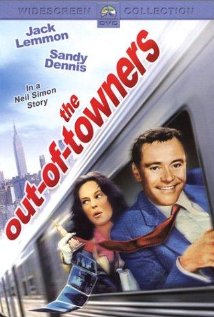
Ever have one of those trips where everything goes wrong? Well, buckle up, because George and Gwen Kellerman’s adventure in The Out-Of-Towners (1969) takes “bad travel day” to comedic extremes.
Here’s the setup: George is up for a big promotion, and the company’s flying him and his wife Gwen to New York City—all expenses paid—for an interview with the higher-ups. Sweet deal, right? They’ve got it all planned out: arrive the night before, catch dinner and a Broadway show, wake up refreshed and ready to impress. What could possibly go wrong?
Everything!
Their plane gets diverted to Boston. Okay, minor hiccup. But then comes a train ride from hell, a mugging, getting caught up in a police chase, and—just for good measure—George breaks a tooth. It’s like the universe conspired to turn their dream trip into an absolute disaster.
Director Arthur Hiller orchestrates this chaos beautifully, with Jack Lemmon and Sandy Dennis playing the increasingly frazzled couple to perfection. And keeping the whole madcap adventure moving? A fantastic score by none other than Quincy Jones.
Sometimes the journey to success is… well, let’s just say it’s memorable.
More Posts: film
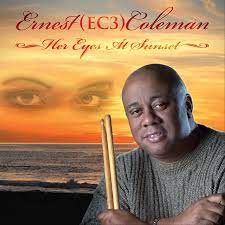
Review: Ernest Coleman | Her Eyes At Sunset
The title Her Eyes At Sunset ambiguously defines the listener’s journey. At first glance, Mr. Coleman’s choice of tunes appears to be indiscriminate, however, upon closer inspection one finds a carefully crafted playlist to delight the ear.
Ernest’s point of embarkation is a driving tempo with the title theme from the 1948 film The Night Has a Thousand Eyes, and yet, it is not surprising that he follows with the Gershwin’s They Can’t Take That Away From Me from the 1937 Astaire/Rogers vehicle Shall We Dance, done refreshingly as a quiet ballad. Combining the Latin rhythms of Jobim’s Waters of March, Romero’s Quinta Anauco and his original title track with the delivery of Chantae Cann on Estrada Branca is a happy madness.
The arrangement of Blue In Green is unprecedented as is the well-executed bass on the Bricusse/Newley composition Pure Imagination. If homework is a prerequisite for testing the musicianship of this excellent assemblage of players and voices, this project raises the bar of the listening experience, and thus, is no stranger to my Serenade To The City playlist.
carl anthony |serenade to the city | jazz 91.9fm wclk | july 28, 2011
Give A Gift Of Jazz ~ Share 
#preserving genius
More Posts: bandleader,drums,history,instrumental,jazz,music,review

Review: Kathleen Bertrand | Katharsis
In many ways the task of the music critic is anything but easy. We tediously wade through the multitudes that dub themselves singers, seeking storytellers who transport us to new and exciting destinations. To truly hear music, we must divorce prejudices and likes, and in doing so, permit the customary to wane to make way for nuance and subtlety.
As our collective musical tastes evolve, we constantly anticipate the arrival of fresh and exciting sounds, and to that extent our wait has run its term. Kathleen Bertrand’s latest offering Katharsis lingers between meaningfulness and elation as thoughts about you wrap around her finger, relate grandma’s hands that are stronger than pride and ushers a younger generation of lyricists and composers into the pantheon of the great American songbook.
We are blessed to be in the presence of a vocalist who understands interpretation, not only of classic songs and original compositions but is also equally adept at hearing orchestration and arrangement. Without too much fanfare or divulging too many delights, suffice it to say you will hear the Kathleen Bertrand you have come to know and love in a new light.
As you listen to Katharsis, you will uncover its many moods that tempt you to dance, move and realize your own indulgences. Katharsis will not be limited to wonderful, extraordinary, marvelous or exceptional, nor will these words designate it so simply because they are written. These are merely cautionary pronouncements describing the pleasure I received as I drove down the highway on a warm summer night. You, like I, will be challenged to find your own words for this unexpectedly delightful exposé and return hungry for more. Why, you may ask… because it’s what he likes!
carl anthony | notorious jazz | may 24, 2011
host, serenade to the city, jazz 91.9fm
Give A Gift Of Jazz ~ Share
#preserving genius
More Posts: bandleader,history,instrumental,jazz,music,review,vocal
Daily Dose Of Jazz…
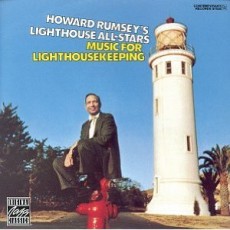
Howard Rumsey was born on November 7, 1917 in Brawley, California and first began playing the piano, followed by the drums and finally the bass. After jobs with Vido Musso and Johnnie Davis, he became part of Stan Kenton‘s first band. After an argument ensued he left Kenton and played with Charlie Barnet and Barney Bigard before taking a short hiatus from music.
Upon his return Howard hit the Los Angeles jazz scene and formed the Lighthouse All-Stars. For most of the 1950s this group played each Sunday at the Lighthouse Cafe in Hermosa Beach. During its lifetime, the Lighthouse All-Stars were one of the primary modern jazz institutions on the West Coast that provided a home for many Los Angeles musicians. He opened his debut show on May 29, 1949 to immediate success.
Rumsey employed in the first Lighthouse All-Stars group the Los Angeles musicians who had been a part of the Central Avenue scene in the 1940s, including Richie Kamuca, Rolf Ericson, Bud Shank, Bob Cooper, Shorty Rogers, Jimmy Giuffre, Hampton Hawes, Shelly Manne, Herb Geller, Stan Levey, Max Roach, Chet Baker, Russ Freeman, Sonny Clarke, Conte Candoli, Pepper Adams, Barney Kessel,and Frank Rosolino among others. His second band featured a new wave of players, Jimmy Giuffre, Shorty Rogers, and Shelly Manne. The success of this group soon had them recording for Les Koenig’s Contemporary Records. This contract expanded to include many of the members of the group leading sessions for this same label, such as Art Pepper and Stan Getz.
This third edition of the Lighthouse All-Stars included Bud Shank, Bob Cooper, Rolf Ericsson and Max Roach. This band took part in a historic recording in 1953 that featured both Chet Baker and Miles Davis, along with Russ Freeman and Lorraine Geller.
Various editions of the band hosted other players until the early Sixties when jazz interest faded in Los Angeles, but during its heyday some seventy-five musicians came through their ranks until the group eventually dissolved. From 1971 to 1985 he owned and operated the 200 seat club Concerts by the Sea in Redondo Beach, California.In 2005 the film Jazz on the West Coast: The Lighthouse was released about the group. Double-bassist Howard Rumsey passed away on July 15, 2015 from complications of pneumonia in Newport Beach, California, at the age of 96.
More Posts: bass