


Daily Dose Of Jazz…
Teddy McRae was born in Waycross, Georgia on January 22, 1908 but was raised in Philadelphia, Pennsylvania. Playing with local ensembles, including one composed of family members, when he was young. He played with June Clark in 1926 before his move to New York City to form his own band.
Through the Thirties he played with Charlie Johnson, Elmer Snowden, Stuff Smith, Lil Armstrong, and Chick Webb, the last as both a soloist and arranger. After Webb’s death he was musical director for the orchestra during its tenure under the leadership of Ella Fitzgerald from 1939 to 1941. He recorded in the decade with Benny Morton, Teddy Wilson, and Red Allen.
In the 1940s McRae worked in the orchestras of Cab Calloway, Jimmie Lunceford, Lionel Hampton, and Louis Armstrong; he also served as Armstrong’s musical director during his period with that band. He wrote tunes for Artie Shaw and formed his own band in 1945.
He and Eddie Wilcox formed their own short~lived R&B label, Raecox, in the 1950s. Teddy recorded with Champion Jack Dupree in 1955-56, and recorded a few sides for Groove Records in 1955 and Moonshine Records in 1958.
Tenor saxophonist and arranger Teddy McRae, who was also known as Teddy (Mr. Bear) McRae, or simply as Mr. Bear, passed away on March 4, 1999.
More Posts: arranger,bandleader,history,jazz,music,saxophone
The Quarantined Jazz Voyager
Having adapted to this new paradigm of social distancing and self-quarantining from the continuous spikes in the corona virus by those who refuse to wear a mask and are congregating, gives me a certain amount of uninterrupted time to kick back, relax and listen to music.
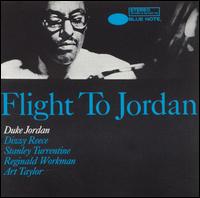
The album I am choosing to place on the turntable today is the studio album Flight To Jordan recorded August 4, 1960 at the Van Gelder Studio in Englewood Cliffs, New Jersey by pianist Duke Jordan.
The album was produced by Alfred Lion and released later the same year on the Blue Note record label. All compositions are by Duke Jordan.
Track List | 38:21
- Flight to Jordan ~ 5:32
- Star Brite ~ 7:49
- Squawkin’ ~ 5:00
- Deacon Joe ~ 8:43
- Split Quick ~ 5:11
- Si-Joya (No Problem) ~ 6:46
- Duke Jordan – piano – solo track 8
- Dizzy Reece – trumpet
- Stanley Turrentine – tenor saxophone
- Reggie Workman – bass
- Art Taylor – drums
This pandemic is here for the long run but those of us who are smart and vigilant are going to come out on the otherside healthy and ready to jetset around the world. That’s when I will be hitting the friendly skies once again. In the meantime, stay vigilant, wear masks and remain healthy.

More Posts: adventure,club,genius,jazz,museum,music,preserving,restaurant,travel
Daily Dose Of Jazz…
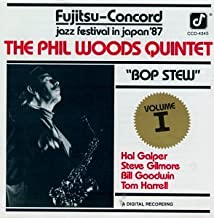
Steven Dirk Gilmore was born January 21, 1943 in Trenton, New Jersey and picked up bass when he was twelve years old, playing locally in Philadelphia, Pennsylvania as a teenager. At age 17 he enrolled at the Advanced School of Contemporary Music, run by Oscar Peterson.
Later in the 1960s Steve played with Ira Sullivan and the Baker’s Dozen Big Band. In 1967 he joined Flip Phillips’s group and remained until 1971, after which he worked with Al Cohn and Zoot Sims, Mose Allison, The Thad Jones/Mel Lewis Orchestra, Phil Woods, Richie Cole, and the National Jazz Ensemble.
The 1980s saw him performing with John Coates, Meredith D’Ambrosio, Dave Frishberg, Hal Galper, Tom Harrell, and Toshiko Akiyoshi, as well as with Woods. Gilmore and Woods would remain collaborators well into the 1990s.
In 1988 he began working with Dave Liebman, with whom he would work intermittently through the late 1990s. Other performing and recording associations included Carol Sloane, Susannah McCorkle, Bill Charlap, and Jim Hall, Tony Bennett, Michele LeGrand, Tom Waits, Susannah McCorkle, and Eddie Jefferson.
An experienced clinician, he has recorded eight jazz Play-along teaching recordings with Jamey Aebersold. In addition he has produced two transcribed bass line books and has received three Best Of The Year Grammy Group Awards in 1977, 1982, 1983 as part of the Phil Woods Quartet. Bassist Steve Gilmore continues to perform and record.
More Posts: bass,instrumental,jazz,music
Daily Dose Of Jazz…
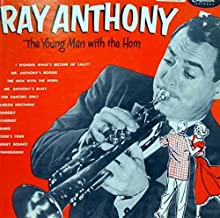
Ray Anthony was born Raymond Antonini on January 20, 1922 into an Italian family in Bentleyville, Pennsylvania but moved with his family to Cleveland, Ohio, where he studied the trumpet. From 1940~1941 he played in Glenn Miller’s band and appeared in the Glenn Miller movie Sun Valley Serenade before joining the U.S. Navy during World War II. After the war he formed his own group and the Ray Anthony Orchestra became popular in the early 1950s with The Bunny Hop, Hokey Pokey, and the theme from Dragnet. He had a No. 2 chart hit with a remake of the Glenn Miller tune At Last in 1952, the highest charting pop version of the song in the United States.
The following year his orchestra was featured when Helen O’Connell and Bob Eberly headlined a summer replacement program for Perry Como’s CBS television show. From 1953–1954 Ray was musical director of the television series TV’s Top Tunes.
After appearing as himself in the 1955 film Daddy Long Legs and starring in a short-lived television variety show, The Ray Anthony Show. Anthony he revved up his acting appearing in films during the late 1950s. In 1957, Anthony and his orchestra recorded the music score for the film This Could Be The Night, with vocals performed by Julie Wilson.
After his marriage to Mamie van Doren ende so did his brief film career. He continued his musical career and had another hit record with the theme from Peter Gunn, which reached No. 8 on the Billboard Hot 100 pop chart. Among his pianists was Allen “Puddler” Harris, and Kellie Greene, who also played the vibraphone. As a composer he wrote Thunderbird, The Bunny Hop, Trumpet Boogie, Big Band Boogie, and Mr. Anthony’s Boogie. Trumpeter Ray Anthony remains active today.
More Posts: bandleader,history,instrumental,jazz,music,trumpet
Three Wishes
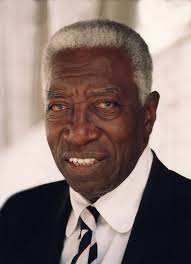
Pannonica had the opportunity to query three wishes from Joe Williams and he told her:
- “I wish everyone could be happy.”
- “Since God’s given me the tenor, I’d like to sing the things I want to sing, with the apropos background.”
- “I wish that there would be as much publicity about the jazz musicians that support their families as there is about their failings. And that’s ninety-five percent of them, support their families.”
*Excerpt from Three Wishes: An Intimate Look at Jazz Greats ~ Compiled and Photographed by Pannonica de Koenigswarter

More Posts: baroness,history,instrumental,jazz,music,pannonica,three,vocal,wishes