


Daily Dose Of Jazz…
Paul Moer was born Paul Moerschbacher on July 22, 1916 in Meadville, Pennsylvania. He attended the University of Miami, graduating in 1951, and following this moved to the West Coast. There he frequently played on the jazz scene with Benny Carter, Vido Musso, Zoot Sims, Stan Getz, Bill Holman, and Shorty Rogers.
He did extensive work in Los Angeles, California studios as a pianist and an arranger. In the late 1950s, Paul led his own trio with Jimmy Bond and Frank Butler. In 1960 he toured Australia with Benny Carter and also recorded with Charles Mingus, Jack Montrose, John Graas, Paul Horn from 1960 to ‘63, then with Ruth Price, and Buddy DeFranco.
As a sideman he recorded with Jack Montrose, John Graas, Paul Horn, Jimmy Witherspoon, Dave Pell, Jack Sheldon, Emil Richards, Paul Whiteman, Rosemary Clooney, and Maynard Ferguson. Playing little after the 1960s, he made a comeback with a release in 1991 of Elmo Hope tunes and released his final album, Get Swinging, in 2005. Pianist Paul Moer passed away on June 9, 2010.

More Posts: bandleader,history,instrumental,jazz,music,piano
Three Wishes
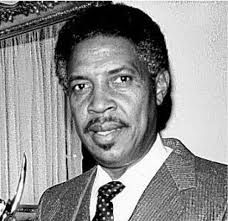
Three wishes were requested of Walter Perkins and he replied to Pannonica with:
-
-
“Happiness for my brothers. All of them.”
-
“To get a sound out of those drums that has never been heard before. ”
- “More cooperation between our brothers.”
-
*Excerpt from Three Wishes: An Intimate Look at Jazz Greats ~ Compiled and Photographed by Pannonica de Koenigswarter

More Posts: baroness,drums,history,instrumental,jazz,music,pannonica,three,wishes
Daily Dose Of Jazz…
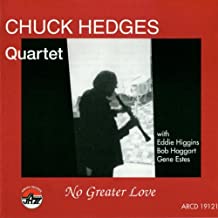
Chuck Hedges was born in Chicago, Illinois on July 21, 1932 and began playing clarinet while attending a military school. He received formal training under Claude Bordy and learned to play jazz on his own.
After studying at Northwestern University, Chuck joined George Brunis’s ensemble in 1953, remaining with Brunis through the end of the decade. He was active on the Dixieland revival scene in the 1960s, playing regularly at clubs in Chicago and Milwaukee, Wisconsin into the 1990s.
Working with Wild Bill Davison for most of the 1980s, he also worked with Alan Vaché and Johnny Varro. He with Ray Leatherwood, Gene Estes, Eddie Higgins, Bob Haggart, Duane Thamm, John Bany, Dave Baney, Charles Braugham, Howard Elkins, Jack Wyatt, Jim Vaughn, John Sheridan, Henry “Bucky” Buckwalter, Gary Meisner, Dave Sullivan, Mike Britz, and Andy LoDuca.
Clarinetist Chuck Hedges released several albums as a leader in the 1990s and 2000s before passing away on June 24, 2010.
More Posts: bandleader,clarinet,history,instrumental,jazz,music
Daily Dose Of Jazz…
Arnold Fishkind, sometimes credited as Arnold Fishkin was born July 20, 1919 in Bayonne, New Jersey. Growing up in Freeport, Long Island, he met and began a lifelong friendship with Chubby Jackson. At age 7, he began learning the violin, and played in The Musical Aces, a local band of budding musicians. By age 14 he was playing bass.
His first professional gig with Bunny Berigan in 1937. In the early Forties, he played with Jack Teagarden, Van Alexander, and Les Brown, however, his career was interrupted by three years of military service during World War II.
The mid-1946 saw Arnold meeting and playing with pianist Lennie Tristano in New York City, but by the fall he left to go to Hollywood to play with Charlie Barnet. During this experience, he played alongside Stan Getz. In 1947 he returned to New York City, where for the next two years he again played with Tristano, and from 1949 to 1951 he recorded with Lee Konitz and on Johnny Smith’s Moonlight in Vermont. He also continued to play with Barnet and played with Benny Goodman.
In the 1950s he became a successful session musician, for radio on Across the Board, television on The Steve Allen Show, and pop musicians including Frankie Laine. His career at ABC lasted fifteen years and included appearances in the Andy Williams Show in 1961. Fishkind became well known enough during this time to be mentioned by Jack Kerouac in his novel Visions of Cody.
With rock and roll decimating the market for jazz musicians in New York City, he moved from New York City back to California, where he found work with Dean Martin and Bob Hope television shows. He also had a few jobs substituting on the Tonight and Merv Griffin television shows, as well as some recording and film work. He toured with Les Brown and Lena Horne. He continued to record into the 1980s, playing with, among others, Frank Scott.
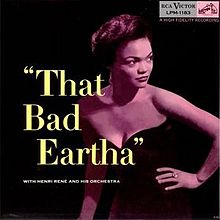
During his career, he performed swing and bebop jazz, television, jingles, and even western-themed music, working with Eartha Kitt, Ella Fitzgerald, Stan Hasselgard, Peanuts Hucko, Charlie Parker, Shorty Rogers, Coleman Hawkins, Hank Jones, Howard McGhee, Miles Davis, Butch Stone, and Jerry Wald. Although there is no mention in the record from whom he learned bass, he gave as his primary influence Jimmy Blanton. Bassist Arnold Fishkind, who never recorded as a leader, passed away on September 6, 1999 in Palm Desert, California.
More Posts: bass,history,instrumental,jazz,music
Requisites
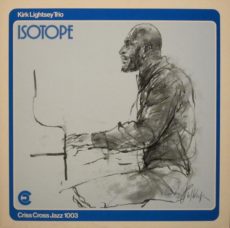
Isotope ~ Kirk Lightsey Trio | By Eddie CarterI’m a huge fan of jazz piano, so I was delighted to be introduced to The Kirk Lightsey Trio recently. I first heard him on the 1987 album Heads Up by David Newman and recently acquired a copy of this morning’s record to discuss. Isotope (Criss Cross Jazz 1003) is a marvelous session featuring Lightsey on piano, Jesper Lundgaard on bass, and Eddie Gladden on drums. My copy used in this report is the original 1983 Netherlands Stereo release.
The title tune was written by Joe Henderson who recorded it on the 1965 album, Inner Urge. It kicks off Side One with a sprightly collective theme, then Kirk crackles with excitement on the opening statement. Jesper gives a spirited performance as bright and sunny as a hot summer day next. Kirk presents a few final lines before closing on a vivacious note. Oleo by Sonny Rollins premiered on the 1954 album, Bags Groove by Miles Davis. Lightsey starts this swift swinger with a brief intro of the melody segueing into a breakneck main theme and first solo. Lundgaard delivers some ferociously spirited bass lines next and Gladden makes a prominent comment into the coda.
Pee Wee is a very pretty tune by Tony Williams that was first heard on the 1988 album, Angel Street. The trio’s rendition opens with an affectionately warm melody. Kirk’s opening and the closing chorus is exceptionally tender and intimately sincere. Jesper follows with a gentle reading of serene beauty in-between the leader’s statements with Eddie’s compassionate brushwork backing both soloists into a lovely finale.
Witch Hunt by Wayne Shorter was first heard on the saxophonist’s 1966 album, Speak No Evil. The trio swings into the main theme with remarkable ease and Lightsey shapes the first solo with effortless spontaneity. Lundgaard walks his bass with a delightful, laid-back bounce that’s perfectly easy and natural before the pianist makes a final comment ahead of the closing chorus. A Monk’s Dream was written by Johnny Griffin and originally recorded on the 1979 album, Return of The Griffin. The ensemble opens with a very friendly melody and Kirk infuses the song’s only solo with an insightful performance that’s passionate and rewarding.
Little Daphne is by Rudolph Johnson and made its debut on the composer’s 1971 record, Spring Rain. It ends the date with a lovely, charming rendition by the trio opening with a gorgeous melody. Lightsey establishes a vivacious momentum on the opening solo with an expertly crafted performance. Lundgaard takes the next turn for an eloquent reading that’s vividly expressive and the leader adds the finishing touches on a brief reprise preceding the coda.
Isotope was produced by Criss Cross Jazz founder Gerry Teekens and engineered by the owner of Studio 44, Max Bolleman. The sound of the album is superb with an exquisite soundstage amid the highs, midrange, and low-end that’s a sonic treat I’m sure you’ll enjoy. Kirk Lightsey has eighteen albums under his leadership and twenty-eight as a sideman. If you’ve not yet heard him and are looking for a trio jazz album for a spot in your library, I offer for your consideration Isotope by The Kirk Lightsey Trio. In my opinion, it’s a perfect choice to begin your day or end your evening of listening with a smile!
~ Angel Street (Blue Note B1-48494); Bags Groove (Prestige 7109); Inner Urge (Blue Note BLP 4189/BST 84189); Return of The Griffin (Galaxy GXY-5117); Speak No Evil (Blue Note BLP 4194/BST 84194); Spring Rain (Black Jazz Records BJ 4) – Source: Discogs.com
~ Oleo – Source: JazzStandards.com ~ © 2020 by Edward Thomas Carter SynopsisIsotope is an album by pianist Kirk Lightsey that was recorded at Studio 44, Monster, Holland on February 14, 1983 and released by the Dutch Criss Cross Jazz label.
Tracks | 48:21
- Isotope (Joe Henderson) – 6:54
- Oleo (Sonny Rollins) – 4:59
- Pee Wee (Tony Williams) – 9:46
- Witch Hunt (Wayne Shorter) – 7:59
- A Monk’s Dream (Johnny Griffin) – 5:30
- Little Daphne (Rudolph Johnson) – 12:43
- Kirk Lightsey – piano
- Jesper Lundgaard – bass
- Eddie Gladden – drums
More Posts: choice,classic,collectible,collector,history,instrumental,jazz,music,piano