

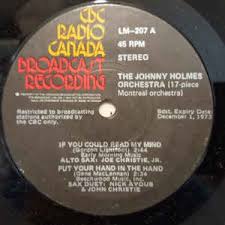
Daily Dose Of Jazz…
John Joseph Harold Holmes, better known in the music world as Johnny was born in Montreal, Canada on June 8, 1916. He began playing cornet at 10 and studied briefly with C. Van Camp. After playing trumpet for a year in 1940 in a co-operative band, the Esquires, he took over its leadership from 1941 to 19.50.
After establishing the Johnny Holmes Orchestra they played Saturday nights at Victoria Hall in Montreal that was broadcast on CBC radio. They occasionally toured in Quebec and Ontario. One of Montreal’s leading dance bands of the day, it boasted a healthy jazz quotient and benefited from Holmes’ ability to identify talented younger musicians. At various times his sidemen included Nick Ayoub, Al Baculis, Percy and Maynard Ferguson, pianist Bud Hayward, Art Morrow, and Oscar Peterson. Lorraine McAllister and Sheila Graham, in turn, sang with the band.
Holmes retired from music from 1951 to 1959 but was heard 1959 to 1969 on several CBC radio shows including The Johnny Holmes Show, Broadway Holiday, among others. His orchestras made several broadcast recordings between 1966 and 1973 for the CBC’s LM series and continued to perform periodically until his retirement from music in 1978. One edition without saxophones took the name Brass Therapy.
He wrote numerous arrangements for his orchestra and his radio shows, more than 40 songs, and such extended works as The Fair City, a jazz suite dedicated to Expo 67. Trumpeter, bandleader, arranger, and composer Johnny Holmes, who has no known recording on line, passed away on June 11, 1989 in Montreal.
More Posts: arranger,bandleader,composer,history,instrumental,jazz,music,trumpet
Requisites
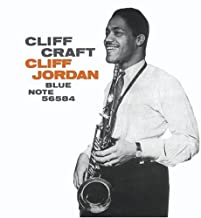
Cliff Craft~Cliff Jordan | By Eddie Carter
Submitted for your approval to begin this morning’s discussion is a pleasant album that was loaned to me to audition by tenor saxophonist, Cliff Jordan. Cliff Craft (BLP 1582) is the third and final album the Chicagoan would record for Blue Note following his debut with tenor man John Gilmore, Blowin’ In From Chicago, and his self-titled album, Cliff Jordan, all three were released in 1957. My copy used in this report is the 2011 Music Matters 45-rpm Stereo audiophile reissue (MMBST-81582)! The first true Stereo reissue of Cliff Craft was discovered in Blue Note’s vaults, thanks to a master tape Rudy Van Gelder made that was released by Classic Records in 1999.
Backing him on this LP is one of my favorite musicians, Art Farmer on trumpet; alongside Sonny Clark on piano; George Tucker on bass and Louis Hayes on drums. Record One begins with Laconia, Jordan’s middle name starts with a Latin flavor on the melody that’s sheer magic. Art solos first, delivering an expressive opening solo reminiscent of Miles Davis’ sound on Round About Midnight, also released in 1957. Sonny takes the next interpretation with youthful energy as smooth as velvet; Cliff closes with a mellow tone on the final performance that’s vividly imaginative and right on the beat.
Soul-Lo Blues, the second Jordan tune occupies Side Two and starts with an impressive bass line by Tucker who’s joined briefly by Clark, then the ensemble on the main theme. Jordan shows his prowess on the first statement with an illuminating exploration that strives forward at a smooth flow. Farmer mesmerizes with impeccable chops on the second easy-going interpretation. Clark continues this bluesy adventure, swinging comfortably on the third reading, inspiring Tucker who makes a significant contribution on the closer with a relaxed delivery before a splendid closing chorus by the ensemble.
Record Two opens with the title tune, Cliff Craft by the saxophonist comes out the gate quickly with a rapid introduction and melody. Cliff takes off first with a strong performance that fuels the rhythm section with a rocking beat. Art follows with a dazzling presentation of passionate exhilaration on the next solo. Sonny responds to the previous statements with radiant verses that follow one another with confident assurance. Louis shines last in an engaging conversation with Farmer and Jordan ahead of the finale.
Up next is Confirmation by Charlie Parker that opens with Sonny playing a few bars before the quintet’s vivacious delivery of the melody. Jordan is up first with a lead solo that shows the joy in his playing and that his music comes from the heart. Farmer puts some fresh clothes on this bebop anthem with a soulful tone, then Clark instills the third interpretation with energetic exuberance supported by the solid supplement of Tucker and Hayes. The drummer gives the final statement a spirited workout illustrating his impeccable sense of time while trading choruses with Farmer and Jordan before the out-chorus and concise punctuation by Tucker at the song’s climax.
The final side starts with Sophisticated Lady by Duke Ellington, Irving Mills, and Mitchell Parish. The 1933 standard is a quartet performance handled with tender finesse by Jordan, Clark, Tucker, and Hayes. Cliff opens with a smoky, sultry reading, then Sonny follows with a regal interpretation that’s delicately gentle. George culminates the statements with a tender touch of elegance, and Louis binds the song together with compassionate timekeeping into a pretty coda.
Anthropology by Charlie Parker and Dizzy Gillespie was composed in 1945 and originally titled, Thriving From a Riff. The ensemble is firing on all cylinders for this brisk swinger; both horns fire the first shot beginning the introduction and opening chorus. Farmer takes charge first with a prodigious performance that sets the tone. Jordan is up next with a sprightly reading, then comes Clark who’s bright, lively, and cheerful on the third solo. The front line returns to exchange a few choruses with Hayes who makes the perfect comment into the out-chorus. The quality and care that go into the MMJ reissues are well-known among jazz lovers and audiophiles.
There’s the excellent remastering of Rudy Van Gelder’s analog tapes utilizing 180-gram Virgin Vinyl. Also, the high-quality of the gatefold covers and superb photography inside the gatefold could hang on the wall in your listening room. The music on Cliff Craft is exquisitely recorded with a sensational soundstage that one could listen to repeatedly. If you’re a fan of tenor sax, Hard-Bop, or in the mood for an album perfect for late-night listening, I submit for your consideration Cliff Craft by Cliff Jordan. It’s a solid record that’s capable of smoothing the rough edges from your day and enjoy with your favorite drink!
~ Blowin’ In From Chicago (Blue Note BLP 1547); Cliff Craft (BST 81582); Cliff Jordan (BLP 1565); Round About Midnight (Columbia CL 949) – Source: Discogs.com ~Confirmation, Sophisticated Lady, Anthropology – Source: JazzStandards.com ~© 2020 by Edward Thomas Carter Synopsis
Cliff Craft is an album by American jazz saxophonist Clifford Jordan featuring performances recorded at Rudy Van Gelder Studio in Hackensack, New Jersey on November 10, 1957 and released on the Blue Note label. Track Listing | 43:18
- Laconia ~ 7:06
- Soul-Lo Blues ~ 8:29
- Cliff Craft ~ 6:30
- Confirmation (Charlie Parker) ~ 7:34
- Sophisticated Lady (Duke Ellington, Irving Mills, Mitchell Parish) ~ 6:46
- Anthropology (Dizzy Gillespie, Parker) ~ 7:03
- Clifford Jordan – tenor saxophone
- Art Farmer – trumpet (tracks 1-4 & 6)
- Sonny Clark – piano
- George Tucker – bass
- Louis Hayes – drums

More Posts: choice,classic,collectible,collector,history,instrumental,jazz,music,saxophone
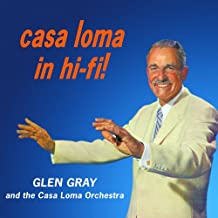
Daily Dose Of Jazz…
Glenn Gray Knoblauch was born on June 7, 1900 in Metamora, Illinois. Known professionally as Glen Gray, his father was a saloon keeper and railroad worker who died when he was two years of age. Along with an older sister, his widowed mother remarried a coal miner and moved her family to Roanoke. He went on to graduate from Roanoke High School, in 1917 where he played basketball and acquired his nickname, Spike.
Glen attended the American Conservatory of Music in 1921 but left during his first year to go to Peoria, Illinois, to play with George Haschert’s orchestra. From 1924 to 1929, he played with several orchestras in Detroit, Michigan.
In 1956, he went back into the studio to record the first of what became a series of LPs for Capitol Records, which recreated the sounds of the big band era in stereo. Casa Loma in Hi-Fi was the result, with 14 high-fidelity recordings.
Swing saxophonist Glen Gray passed away from lymphoma on August 23, 1963 in Plymouth, Massachusetts aged 63.
More Posts: bandleader,history,instrumental,jazz,saxophone
Daily Dose Of Jazz…
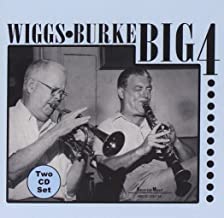
Raymond Burke was born Raymond Barrois on June 6, 1904 in New Orleans, Louisiana. His first instrument was a flute he carved from a fishing pole, then played the tin whistle, kazoo, and clarinet. His first job in music came in 1913 when he panhandled on the kazoo with future New Orleans Rhythm Kings drummer Leo Adde who played percussion on a cigar box.
A polite, albeit eccentric with wavy hair and a thin mustache, the conservatively dressed clarinetist did not drink, smoke, or gamble. Burke rarely left the city except for out-of-town gigs or tours with the Preservation Hall Jazz Band later in life.
In the 1930s Burke played with The Henry Belas Orchestra, spent a short period of time in Kansas City for a musical job, but soon returned. In the 1940s and ’50s, he played with Alvin Alcorn, Sharkey Bonano, and frequently in a trio with pianist Jeff Riddick and bassist Sherwood Mangiapane. Through the 1960s and 70s Burke he played with Preservation Hall musicians.
For a time he ran a rabais shop, a personal collection that the owner makes semi-available to the public for sale. Located in a residential section of Bourbon Street which had light pedestrian traffic the shop was filled with old jazz records, historical memorabilia, musical instruments and equipment, books, magazines, and a collection of sheet music. It generated little financial income.
During his active years, he never achieved mainstream popularity or commercial success. He was known for playing modestly, and in large ensembles, his clarinet could easily be overpowered. Refusing to let contemporary music influence his sound for commercial reasons, he associated with “Second Line” jazz, which differentiated White imitators who simplified the style from Black or Creole musicians.
He gained some popularity around 1939 when fans started using portable recorders at live performances during local jam sessions. Clarinetist Raymond Burke, who played in the Dixieland style, passed away on March 21, 1986.
More Posts: bandleader,clarinet,history,instrumental,jazz,music
Daily Dose Of Jazz…
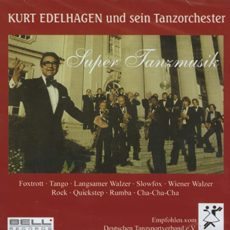
Kurt Edelhagen was born on June 5, 1920 in Herne, Germany. He studied conducting and piano in Essen and b 1945, he started a trio, then a big band a year later. He performed on a Frankfurt radio station, am Main, then for three years beginning in 1949 led the Bayerischer Rundfunk in Nuremberg.
From 1952 to 1957 he led the Südwestfunk big band, and 1954 saw him participating in the concerto for jazz band and orchestra by Rolf Libermann. Three years later he began leading the radio station Westdeutscher Rundfunk Big Band (WDR) in Cologne. Members included Dusko Goykovich and Jiggs Whigham. During the 1960s the band toured East Germany, USSR, Czechoslovakia, and several Arab countries.
His radio orchestra played at the opening ceremony of the 1972 Munich Olympics. Big band leader Kurt Edelhagen passed away on February 8, 1982 in Cologne, Germany.
More Posts: bandleader,history,instrumental,jazz,music