

Daily Dose Of Jazz…
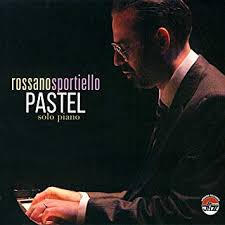
Rossano Sportiello was born in Vigevano, Italy on June 1, 1974 and began studying piano at the age of 9 under the tutelage of Italian classical pianist Carlo Villa and continued until his graduation in classical piano from the Conservatory in 1996. At 16, he was performing professionally at jazz venues in the Milan, Italy area, and in 1992, he joined one of Europe’s historic jazz bands, the Milano Jazz Gang. He toured with the group throughout Italy and West Europe until the end of 2000.
That same year, Sportiello met legendary jazz pianist and educator, Barry Harris, who became a mentor and good friend. Drawing international acclaim at the 2002 Ascona Jazz Festival in Switzerland while performing with the eight-piece, all-star American band led by Dan Barrett. In 2007, Rossano established himself in New York City and has performed with Slide Hampton, Clark Terry, Kenny Davern, Bucky Pizzarelli, Bob Wilber, Warren Vache, Bob Cranshaw, Mickey Roker, Harry Allen, Howard Alden, Joe Wilder, Eddie Locke, Joe La Barbera, Scott Hamilton, Jake Hanna, Houston Person, Bill Charlap, Dick Hyman, and the list goes on.
As an educator, Rossano has given lectures on jazz and masterclasses on piano at institutions such as the University of Toronto Jazz Studies, University of Central Florida and Claremont College in California and has lectured as a professor in residence at the Master’s Lodge of St. John’s College, Cambridge, UK.
Stride piano player Rossano Sportiello lists his influences have been Harris along with Ralph Sutton, Dave McKenna and Barry Harris, Fats Waller, Teddy Wilson, Art Tatum, Count Basie, Earl Hines, Ellis Larkins, and Bill Evans, to name a few. He continues to perform, record, and tour.

More Posts: bandleader,history,instrumental,jazz,music,piano
Requisites
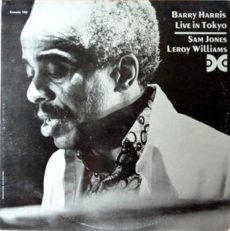
Live In Tokyo~Barry Harris | By Eddie CarterIn April 1976, Xanadu Records recorded three live albums in Japan featuring an all-star quintet including alto saxophonist, Charles McPherson, and guitarist Jimmy Raney. The tapings resulted in Charles McPherson Live In Tokyo, Jimmy Raney Live In Tokyo, and this morning’s choice from the library that was the first performance by pianist Barry Harris. Live In Tokyo (Xanadu 130) documents concerts at two locations, Yubin Chokin Hall and Nakano Sun Plaza with the ensemble’s rhythm section featuring Sam Jones on bass and Leroy Williams on drums. It was Harris’s second record for the label and my copy used in this report is the 1976 US Stereo release.
The set opener, A Soft Spot is a lively tune from Barry’s pen that leaves the ground and starts flying from the melody into a swinging solo of fire by the leader. Leroy follows with a stunning interpretation that’s right on the mark leading to a spirited finale. The trio slows the pace for Round Midnight, the timeless jazz standard by Bernie Hanighen, Thelonious Monk, and Cootie Williams. As the song’s only soloist, Harris gives a stylishly, sensuous reading that’s hauntingly moving, and stands up to other versions of Monk’s most recorded tune.
Tea For Two by Vincent Youmans and Irving Caesar was written in 1924 and introduced in the Broadway musical, No, No, Nanette, that year. Barry gives a nearly minute solo introduction before taking off on a full-speed run through the opening melody and first reading. Leroy engages in a vigorous exchange with Harris preceding the hard-hitting coda.
Bud Powell’s Dance of The Infidels is a midtempo swinger that closes the first side on an upbeat note and allows each member, solo space. Powell composed the song in 1949, and first recorded it for Blue Note Records. The trio takes a brisk approach to the tune with a splendid theme treatment. Harris kicks off the solos with a feisty opening statement possessing a carefree zest. Sam is up next with a short reading that hits its target like a sharpshooter. Barry shares the final solo with Leroy who executes a passionate exchange before the closing chorus.
I’ll Remember April is a beautiful song by Gene De Paul, Patricia Johnston, and Don Raye that was composed in 1941, making its debut in the 1942 comedy, Ride ‘Em Cowboy. The threesome brings a little sunshine to this treasured tune with an easy beat on the main theme. Harris picks up the pace with a cheerful, effervescent first statement, then Jones swings softly on a passionately conceived presentation. Barry and Williams make an indelible impression with a blissful resolution on the closing reading that arrives at a very gratifying conclusion.
Barry takes a moment to make a sincere and heartfelt Dedication In Japanese to the crowd. He follows with a beautiful solo composition also devoted to the audience titled Fukai Aijoh which means Deep Love. Harris expresses personal feelings in an elegant interpretation of tenderness and subtle finesse into a delicately gentle ending. The final selection is the 1951 jazz standard, Un Poco Loco by Bud Powell beginning with a brisk theme treatment in unison leading to Barry’s aggressive opening solo of astonishing ferocity. Leroy has the last word with a concise reading of compelling power before the pianist’s vivacious out-chorus preceding a thunderous ovation by the concert crowd.
This album and its two companions were produced by label founder Don Schlitten and recorded by Japanese sound engineer, Shinji Ohtsuka. Live In Tokyo is a sonic treat with an exceptional soundstage of the piano, bass, and drums, and though the LP length is just short of forty-three minutes, the listener will feel they’ve received their money’s worth on the strength of the performances. Now that I’ve got this album, I’ll be seeking the other two to add to my library, and if you’re a fan of piano jazz or trio jazz, I invite you to audition Live In Tokyo by pianist Barry Harris. It’s a fun listen, and a title I’m sure you’ll enjoy in your library!
~ Dance of The Infidels (Blue Note 362-1); Charles McPherson Live In Tokyo (Xanadu 131); Jimmy Raney Live In Tokyo (Xanadu 132) – Source: Discogs.com ~ I’ll Remember April, Round Midnight, Tea For Two – Source: JazzStandards.com ~ Dance of The Infidels – Source: The Complete Bud Powell Blue Note Recordings (1949-1958) Mosaic Records MR5-116 ~Un Poco Loco – Source: Wikipedia.org © 2020 by Edward Thomas CarterSynopsis
Live in Tokyo is a live album recorded on April 12 & 14, 1976 at Sun Plaza Hall in Tokyo, Japan by pianist Barry Harris and released on the Xanadu record label. The session was produced by Don Schlitten. Harris contributed two songs to this swinging, straight-ahead album, A Soft Spot and Fukai Aijoh in addition to his Dedication In Japanese.
Track Listing | 41:09- A Soft Spot – 5:46
- Round Midnight (Thelonious Monk) – 5:58
- Tea for Two (Vincent Youmans, Irving Caesar) – 4:45
- Dance of the Infidels (Bud Powell) – 5:43
- I’ll Remember April (Gene de Paul, Patricia Johnston, Don Raye) – 8:39
- Dedication in Japanese – 1:15
- Fukai Aijoh – 4:09
- Un Poco Loco (Powell) – 6:14
- Barry Harris – piano
- Sam Jones – bass
- Leroy Williams – drums

More Posts: choice,classic,collectible,collector,history,instrumental,jazz,music,piano
Daily Dose Of Jazz…
Toby Hardwicke was born Otto James Hardwicke on May 31, 1904 in Washington, D.C., and started on string bass at the age of 14, then moved to C melody saxophone and finally settled on alto saxophone. A childhood friend of Duke Ellington, he joined Ellington’s first D.C. band in 1919. He also worked for banjoist Elmer Snowden at Murray’s Casino.
In 1923, Ellington, Hardwick, Snowden, trumpeter Arthur Whetsol, and drummer Sonny Greer had success as the Washingtonians in New York City. After a disagreement over money, Snowden was forced out of the band and Duke Ellington was elected as the new leader. Booked at a Times Square nightspot called the Kentucky Club for three years, they met Irving Mills, who produced and published Ellington’s music.
Otto left the Duke Ellington band in 1928 to visit Europe, where he played with Noble Sissle, Sidney Bechet and Nekka Shaw’s Orchestra, and led his own orchestra before returning to New York City in 1929. He went on to have a brief stint with Chick Webb that year, then led his own band at the Hot Feet Club, with Fats Waller leading the rhythm section in 1930. He led a group at Small’s before rejoining Duke Ellington in the spring of 1932, following a brief stint with Elmer Snowden.
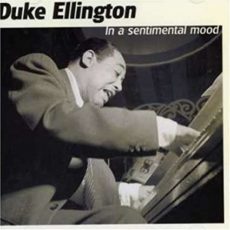
He played lead alto on most Ellington numbers from 1932 to 1946 and was a soloist on Black and Tan Fantasy, In a Sentimental Mood and Sophisticated Lady. Hardwick, with his creamy tone, was almost always the lead alto in the reed section of the Ellington orchestra except in some situations where Ellington required the more cutting tone of Johnny Hodges’ alto to set the tone of the ensemble. He left the band in 1946 over a disagreement with Ellington about his girlfriend, freelanced for a short time in the following year, and then retired from music.
>Occasionally doubling on violin and string bass in the Twenties, alto saxophonist Toby Hardwicke who also played clarinet and bass, baritone, and soprano saxes, passed away on August 5, 1970.

More Posts: bass,clarinet,history,instrumental,jazz,music,saxophone,violin
Daily Dose Of Jazz…
Shake Keane was born Ellsworth McGranahan Keane on May 30, 1927 in Kingstown, St. Vincent, West Indies into a family that loved music and books. He attended Kingstown Methodist School and St. Vincent Grammar School. He was taught to play the trumpet by his father Charles and gave his first public recital at the age of six. When he was 14 years old, Keane led a musical band made up of his brothers. In the 1940s, with his mother Dorcas working to raise six children, the teenager joined one of the island’s leading bands, Ted Lawrence and His Silvertone Orchestra.
During his early adulthood in St. Vincent, his principal interest was literature, rather than the music for which he would become better known. Dubbed “Shakespeare” by his school friends, on account of his love of prose and poetry. This nickname was subsequently shortened to “Shake”, which name he came to use throughout his adult life. He published two books of poetry in the early Fifties L’Oubili and Ixion, while still in St. Vincent.
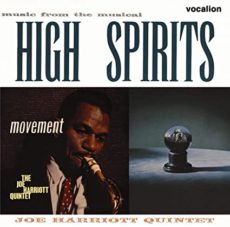
Emigrating to Great Britain in 1952 he worked on BBC Radio’s Caribbean Voices, reading poetry and interviewing fellow writers and musicians. He also began playing the trumpet in London nightclubs, working in a number of styles including cabaret, highlife, soca, mento, calypso, and jazz. From 1959 he committed more fully to jazz, spending six years as a member of pioneering alto saxophonist Joe Harriott’s band. The group was the first in Europe and one of the first worldwide, to play free jazz, and Keane contributed mightily to the band’s artistic success, thanks to his fleet and powerful improvisatory skills on trumpet and flugelhorn.
He also made a small handful of records under his own name, but these were usually light jazz. In 1966 he left Britain to settle in Germany and became a featured soloist with the Kurt Edelhagen Radio Orchestra, and also joined the Kenny Clarke-Francy Boland Big Band.
Setting aside his musical career, he returned to St. Vincent in 1972 taking up a government position as director of culture, where he remained in the post until 1975. He then became an educator as his main profession, while continuing to write poetry. In the early 1980s, Shake moved to New York City, settling the Bedford-Stuyvesant section of Brooklyn which became his base but found a second home in Norway.
He returned full-time to music in 1989 when he rejoined Michael Garrick and his old bandmates Coleridge Goode and Bobby Orr for a tour in honor of Joe Harriott. In 1991 Keane appeared in a BBC Arena documentary with the Jamaican poet Linton Kwesi Johnson.
In the 1990s, he remained based in Brooklyn, but found a second home in Norway, where he worked most extensively. He contributed music to Norwegian television and stage productions for the next few years, also touring the country playing jazz. It was while preparing for one such tour that he became ill, and subsequently, trumpeter and poet Shake Keane passed away from stomach cancer on November 11, 1997 in Oslo, Norway.
More Posts: bandleader,flugelhorn,history,instrumental,jazz,music,trumpet
Daily Dose Of Jazz…
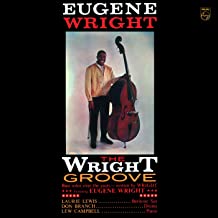
Eugene Joseph Wright was born May 29, 1923 in Chicago, Illinois. Mostly self-taught but took a few lessons late in his career from Paul Gregory. He studied cornet in high school. He played with the Lonnie Simmons group and led his own 16-piece band, the Dukes of Swing in the Forties. He played with Gene Ammons, Count Basie, and Arnett Cobb in the late ’40s and early ’50s, then worked with Buddy DeFranco from 1952 to 1955, touring Europe with him.
He played in the Red Norvo trio in 1955, toured Australia with them, and was featured in a film short with Charlie Barnet. His biggest opportunity came when he was hired by pianist Dave Brubeck, remaining until 1968. He led his own ensemble on a tour of Black colleges in 1969 and 1970, then played with Monty Alexander’s trio from 1971 to 1974.
During the ’70s working in television studios found him film soundtrack work as well as play in clubs. He also did private teaching and became head of the advisory board in the jazz division of the International Society of Bassists, and head of the University of Cincinnati’s jazz department.
Over the course of his lengthy career Wright has worked with Charlie Parker, Billie Holiday, Carmen McRae, Buddy DeFranco, Cal Tjader, Kai Winding, Sonny Stitt, Paul Desmond, Kenny Drew, Dottie Dodgion, Lee Shaw, Buddy Collette, Gerry Wiggins and Dorothy Donegan among others, participating on more than five dozen recordings, thirty-two of which were with Brubeck.
With the death of Brubeck on December 5, 2012, he became the last surviving member of the quartet. Cool and swing bassist Eugene Wright, who has recorded once as a leader, The Wright Groove, is presently still active on the jazz scene at age 96.
More Posts: bandleader,bass,history,instrumental,jazz,music