

The Quarantined Jazz Voyager
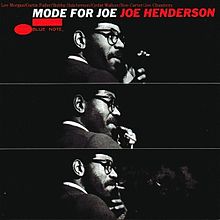
The Quarantined Jazz Voyager is placing Mode For Joe on the turntable and is another timeless classic that influenced my listening in the Eighties and has since been a part of my collection. Recorded and released in 1966 box tenor saxophonist Joe Henderson, it would be the last Blue Note album to feature Henderson as a leader in the classic era. The session was recorded by Rudy Van Gelder on January 27, 1966, and produced by Alfred Lion for Blue Note Records.
It is a concept album combining modal and hard bop modes aimed at creating an oceanic atmosphere. Many of the track titles refer to marine biology or the sea, and the musicians develop the concept through their use of space. The album was presented with the Grammy Hall of Fame Award in 1999.
A Shade of Jade, Mode for Joe, Black, Caribbean Fire Dance, Granted, and Free Wheelin’ are the six compositions that make up the hard-bop album. The personnel on the date are tenor saxophonist Joe Henderson, trumpeter Lee Morgan, trombonist Curtis Fuller, vibraphonist Bobby Hutcherson, bassist Ron Carter and drummer Joe Chambers.
So stay diligent my fellow voyagers in being healthy, continue to practice social distancing, and don’t be so anxious to rush back to the new normal. It has been said that music soothes the savage beast, so listen to great music. I share that music to give you a little insight into the choices this voyager has made over the years during this sabbatical from jet setting investigations of jazz around the globe.

More Posts: adventure,club,genius,jazz,museum,music,preserving,restaurant,saxophone,travel,voyager

Daily Dose Of Jazz…
Reginald Foresythe was born on May 28, 1907 in London, England. He played piano from age eight and by the second half of the 1920s was working as a pianist and accordionist in dance bands in Paris, Australia, Hawaii, and California. He wrote music for films by D.W. Griffith and played in Paul Howard’s Quality Serenaders.
In 1930 Foresythe moved to Chicago, Illinois, wrote arrangements for Earl Hines and music for Paul Whiteman. Hines made one of his songs, Deep Forest, a part of his repertory, while Louis Armstrong, Fats Waller, Adrian Rollini, and Hal Kemp recorded his compositions. He worked in New York City in 1934–35, arranging for Whiteman and recording with Benny Goodman, John Kirby, and Gene Krupa.
Returning to London, Reginald assembled a studio recording group called The New Music of Reginald Foresythe. Between 1933-1936 he recorded for British Columbia and British Decca, usually spotlighting his jazzy tone poems. Among the more well known were Serenade to a Wealthy Widow, Garden of Weed, Dodging a Divorcee, and Revolt of the Yes-Men. His recordings featured reeds and sax, but no horns.
1935 saw Foresythe assembling a one-off session in New York City which featured Benny Goodman and Gene Krupa recording four of his compositions. He also recorded a number of piano solos and piano duets with Arthur Young that included at least three medleys and four arrangements of St. Louis Blues, Tiger Rag, Solitude and Mood Indigo for H.M.V. in 1938.
After serving in the Royal Air Force during World War II, he accompanied vocalists and played solo piano in London in the 1950s. He collaborated with songwriters Andy Razaf and Ted Weems, composing Be Ready with both, Please Don’t Talk About My Man with Razaf, and He’s a Son of the South with Razaf and Paul Denniker. Pianist, arranger, composer, and bandleader Reginald Foresythe passed away in relative obscurity in London on December 28, 1958.

More Posts: arranger,bandleader,composer,history,instrumental,jazz,music,piano
Hollywood On 52nd Street
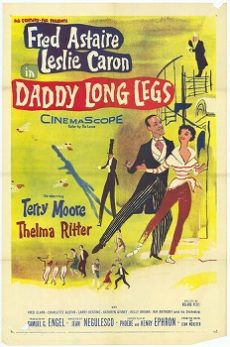
Something’s Gotta Give was composed by Johnny Mercer for his friend Fred Astaire who starred in the 1955 film Daddy Long Legs. It is the love song duet between him and Leslie Caron. The song playfully uses the irresistible force paradox – which asks what happens when an irresistible force meets an immovable object – as a metaphor for a relationship between a vivacious woman and an older, world-weary man. The man, it is implied, will give in to temptation and kiss the woman.
The film also stars Terry Moore, Thelma Ritter, Fred Clark, and Ray Anthony who appear as himself with his orchestra. Filming took place on location at 20th Century Fox Studios in Hollywood and the Andrew Carnegie Mansion in Manhattan.
The Story: On a trip to France, millionaire Jervis Pendleton III (Astaire) sees an 18-year-old girl Julie Andre (Caron) in an orphanage. Immediately enchanted with her, but mindful of the difference in their ages and what the press may report should his involvement be discovered, he anonymously sponsors her to attend a fictional college in New England. She writes him letters, which he doesn’t read. After 3 years, he goes to visit her at a dance, not telling her that he is her benefactor. They fall in love, but the usual movie-type difficulties get in the way before they can get together at the end.

Daily Dose Of Jazz…
Earl Malcolm “Jock” Caruthers Sr. was born on May 27, 1910 in Monroe, Mississippi and studied at Fisk University in the 1920s. He began playing in Bennie Moten’s ensemble in 1928.
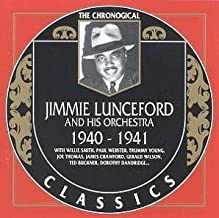
Working in St. Louis, Missouri early in the next decade with Dewey Jackson and Fate Marable, Jock then joined Jimmie Lunceford’s band in 1932, recording often with the band. He remained a member of the orchestra until Lunceford’s death in 1947.
Following this he played with Joe Thomas and Ed Wilcox, and he worked locally in Kansas City through the 1960s. Saxophonist Earl Caruthers, who was a mainstay on the Kansas City jazz scene, passed away on April 5, 1971 in Kansas City, Kansas.
More Posts: history,instrumental,jazz,music,saxophone
Three Wishes
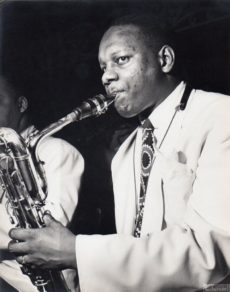
The Baroness asked Harry Carney what his three wishes would be and he replied:
-
-
“To be healthy.”
-
“To be happy.”
-
“For everyone to have eternal life and healthy minds.”
-
*Excerpt from Three Wishes: An Intimate Look at Jazz Greats ~ Compiled and Photographed by Pannonica de Koenigswarter

More Posts: baroness,clarinet,history,instrumental,jazz,music,pannonica,saxophone,three,wishes