


Three Wishes
When Nica asked Sonny Rollins what his three wishes would be he responded with…
- “Money.”
- “To be able to do what I want to do on the horn.”
- “To have a closer affinity with nature.”
*Excerpt from Three Wishes: An Intimate Look at Jazz Greats – Complied and Photographed by Pannonica de Koenigswarter

More Posts: baroness,history,instrumental,jazz,musician,pannonica,saxophone,three,wishes
Requisites
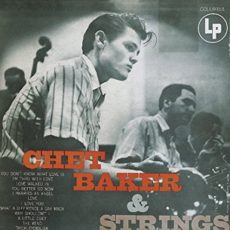
Chet Baker & Strings is an album recorded In Los Angeles, California by trumpeter Chet Baker in late December 30 & 31, 1953 and February 20, 1954 and released on the Columbia label. This quintet setting was augmented with a nine-piece string section and the easygoing strings support the cool bop giving it a light, airy though sometimes a melancholy film noir feel.
The 15 original track listing includes You Don’t Know What Love Is, I’m Thru With Love, Love Walked In, You Better Go Now, I Married An Angel, Love, I Love You, What a Diff’rence a Day Made, Why Shouldn’t I?, A Little Duet for Zoot and Chet, The Wind, Trickleydidlier, You Don’t Know What Love Is, You Better Go Now. A bonus track, an alternate take of A Little Duet for Zoot and Chet was reissued on the compact disc.
Joining the sessions were Bud Shank on alto saxophone and flute, Zoot Sims on tenor saxophone, pianist Russ Freeman, bassist Joe Mondragon, Shelly Manne on drums, Sam Cytron, Jack Gasselin, George Kast, Eudice Shapiro, Paul Shure and Felix Slatkin playing violin, Lou Kievman and Paul Robyn on viola and Victor Gottlieb on cello.
The four arrangers for the sessions were Jack Montrose, Johnny Mandel, Marty Paich and Shorty Rogers.

More Posts: choice,classic,collectible,collector,history,instrumental,jazz,music,trumpet

The Jazz Voyager
Bix Restaurant is the next destination for the Jazz Voyager as he heads to the West Coast and the city by the bay. Located in Gold Alley in the historic Barbary Coast enclave at 56 Gold St, San Francisco, California 94133, there is never a cover charge. They offer jazz seven nights a week ranging from solo piano to piano and vocal to trio settings with a grand piano for a nostalgic reminiscence of the glorious decades gone by.
Opened in 1988 by Doug “Bix” Biederbeck, this now San Franciscan landmark is a personal ode to his passions for jazz, art and hospitality. Wrapped in accents of mahogany furnishing, the tasteful decor and timeless artwork lends to the ambience of the mezzanine dining. The award-winning menu serves up refined versions of American classics that are only subject to seasonal change.
This elegant two-story setting in the unassuming alley opens up to an unforgettable experience. As reservations are recommended, this Jazz Voyager has already made his online at bixrestaurant.com for some trio jazz on Friday, or you can opt to call 415-433-6300. Don’t know who will be playing but looking forward to being surprisingly entertained. #wannabewhereyouare

More Posts: adventure,club,genius,jazz,museum,music,preserving,restaurant,travel,voyager

Three Wishes
Tadd Dameron had only one thing he would wish for when asked…
- “To be me.”
*Excerpt from Three Wishes: An Intimate Look at Jazz Greats – Complied and Photographed by Pannonica de Koenigswarter
Requisites
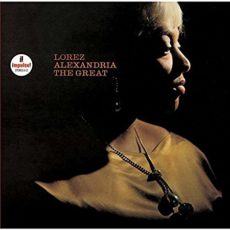
Alexandria The Great was recorded in 1964 by vocalist Lorez Alexandria and released and distributed on the MCA Impulse! label. Emerging from the Los Angeles, California studio, this now classic recording sessions, three, each with a different group of musicians, rendered ten songs for a total time of 36:25, proving that greatness does not require length.
The compositions are a group of standards that we’ve heard time and again but not in the emotive manner that Lorez relates. This album reflects her soulful, playful and swinging sides with a hint of her gospel roots. Her ballads remind of us how good love is as she speaks to our hearts of relationships new and old.
The songs are listed as: Show Me, I’ve Never Been in Love Before, Satin Doll, My One and Only Love, Over the Rainbow, Get Me to the Church On Time, The Best Is Yet to Come, I’ve Grown Accustomed to His Face, Give Me the Simple Life and I’m Through With Love.
Along with vocals added finger snaps and contributing to the liner notes, her musical colleagues included Paul Chambers on bass, Jimmy Cobb on drums, Ray Crawford on guitar, Victor Feldman on piano and vibraphone, Paul Horn on flute and alto saxophone, Wynton Kelly on piano, Al McKibbon on bass and Bud Shank on flute.
Session and design personnel were Tutti Camarata/producer and original recording producer, Bill Marx/arranger, Ken Druker/executive producer, Mark Cooper Smith/production assistant, Sherniece Smith/art producer, Bob Thiele/producer & liner notes, Joe Lebow/liner design, Hideaki Nishimura/mastering, Hollis King/art direction, Bryan Koniarz/producer, Roger Marshutz/photography and cover photo, and Robert Flynn did the cover design.
Though Lorez Alexandria never received her due as a jazz singer, probably due in part to her long layoff from recording for 11 years. This, however, is an excellent introduction to a fine vocalist worthy of much wider recognition.
More Posts: choice,classic,collectible,collector,history,instrumental,jazz,music,vocal