

Daily Dose Of Jazz…
Harold Land Jr. was born April 25, 1950 in San Diego, California to Harold and Lydia Land. Five years later the family moved to Los Angeles, California where he was raised in a world of jazz through his father’s acclaimed career. His earliest influences were drummer Frank Butler, bassist Curtis Counce, pianist Elmo Hope, trumpeters Carmell Jones and Jack Sheldon. But what really turned him onto jazz piano was a pair of albums by Sonny Clark, Cool Struttin’ and Leapin’ and Lopin‘.
He began piano lessons at the age of seven and began performing in jazz clubs by the age of 16. Crusaders pianist Joe Sample introduced Harold to Wayne Henderson which led to his first professional gig, and to his first two album appearances, including the cult favorite People Get Ready. He credits bandleader Gerald Wilson with giving him his first traditional Jazz gig, which came shortly after his time with Henderson. He accumulated important credits touring with guitarist Kenny Burrell and saxophonist Pharoah Sanders.
Over a career, spanning jazz, funk, and jazz fusion, Land has worked with Marvin Gaye, Roy Ayers, Gerald Wilson, Freddie Hubbard, Bobby Hutcherson, Lee Morgan, Eric Gale, and Roland Kirk.
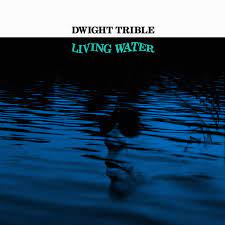
He has recorded with Dwight Trible, Fela Kuti, Justo Almario, Gerald Wilson, Roy Ayers, Gene Ammons, Anna Fisher, Spiders Webb, The Freedom Sounds, Paul Humphrey. He performed often with his father and has recorded on three of his albums, Choma (Burn), Damisi, and Xocia’s Dance.
As an educator Land has taught and given workshops at several Los Angeles based music schools and high schools, such as Washington Prepatory High School, Alain LeRoy Locke College Preparatory Academy, Alta Loma Music, and The World Stage.
Pianist Harold Land Jr., who also played with his father, currently performs with his trio.
More Posts: bandleader,history,instrumental,jazz,music,piano

Daily Dose Of Jazz…
Fatty George was born Franz Georg Pressler on April 24, 1927 in Vienna, Austria. He originally modeled himself after Benny Goodman but subsequently became a bebop player under the banner of Charlie Parker. He started out playing in clubs near the end of World War II for an audience of both American and Russian soldiers. his setlist adhering to the enormously popular swing recipes of the era.
He became involved in personally running nightclubs in both Germany and Austria, opening Fatty’s Jazz Casino in Insbruck, Austria in the early ’50s and Fatty’s Saloon in Vienna in 1958. His Fatty George Jazzband performed throughout the European continent at both clubs and festivals and released a series of albums under his own name, including Two Sides of Fatty George and Fatty’s Saloon. His playing partners often included the brothers Bill Grah and Heinz Grah on piano and trombone, respectively.
His recorded legacy includes about 50 recordings made over four decades beginning in the Forties, covering aspects of European history as well as ongoing developments in jazz itself.
Clarinettist Fatty George, who may have acquired the stage name of Fatty George with the help of double servings of apple strudel and goulash, transitioned on March 29, 1982.
More Posts: bandleader,clarinet,history,instrumental,jazz,music
Daily Dose Of Jazz…
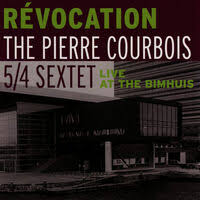
Pierre Courbois was born on April 23, 1940 in Nijmegen, Netherlands and after studying percussion at the Hogeschool der Kunsten in Arnhem, he left for Paris, France which was the center of jazz in Europe in the early 1960s. He worked with pianist Kenny Drew, violinist Jean-Luc Ponty, saxophonists Eric Dolphy, Ben Webster, Stan Getz, and Johnny Griffin, and guitarist René Thomas.
Courbois was one of the first musicians in Europe to experiment with free jazz. In 1961 he became the drummer and leader of the original Free Jazz Quartet. In 1965 he started another group, the Free Music Quintet, composed of international musicians. He also played and recorded with Gunter Hampel’s Heartplants Group with Manfred Schoof and Alexander von Schlippenbach.
Founding the first European jazz-rock group, Association P.C. in 1969, they won the Down Beat poll and stayed together until 1975. In 1982 Pierre put together the group New Association, and played with pianists Mal Waldron and Rein de Graaff, horn players Willem Breuker, Hans Dulfer and Theo Loevendie, and Ali Haurand’s European Jazz Quintet with Gerd Dudeck, Leszek Zadlo and Alan Skidmore.
In 1992 Courbois started a quintet and for the first time in his career performed pieces all composed by himself. This ensemble pleasantly surprised both the critics and the public with a return to the Charles Mingus tradition – thematic, melodic ensemble jazz and an experimentation with linear improvisation. Consistently reinventing himself he has gone on to create the Double Quintet, and the Five Four Sextet.
Drummer, bandleader and composer Pierre Courbois, who was awarded the Bird Award, the highest in the Dutch Jazz World and is a Knight of the Order of Orange-Nassau, continues to perform, record and compose.
More Posts: bandleader,drums,history,instrumental,jazz,music

Daily Dose Of Jazz…
Born near Kyiv, Ukraine on April 22, 1920 Benjamin “Buzzy” Drootin moved to Boston, Massachusetts with his family when he was five. His father played the clarinet, and two of his brothers and his nephew were musicians. He began playing drums professionally as a teenager. At age twenty, he toured with the Jess Stacy All-Stars, a band that includeded Lee Wiley.
In 1940, he also toured with Ina Ray Hutton, then joined the Wingy Manone band. From 1947 until 1951, he worked as the house drummer at Eddie Condon’s night club in New York City. He was a bandleader at El Morocco club in New York City, and a member of the house band with his brother Al at George Wein’s Storyville club in Boston. During these years he worked with Doc Cheatham, Vic Dickenson, Bobby Hackett, Ruby Braff, Claude Hopkins, Jimmy McPartland, Pee Wee Russell, and Arvell Shaw.
Drootin recorded with Tommy Dorsey, Bobby Hackett, Jack Teagarden, Eddie Condon, Ruby Braff, Anita O’Day, George Wein, the Newport All-Stars, Lee Konitz, Sidney Bechet, PeeWee Russell and The Dukes of Dixieland. In 1968–69, he toured and recorded with Wild Bill Davison’s Jazz Giants and then formed Buzzy’s Jazz Family, borrowing some of Davison’s sidemen, Herb Hall and Benny Morton, plus added Herman Autrey on trumpet and his nephew, Sonny Drootin, on piano.
In 1973, after touring Europe and America, he returned to his hometown of Boston, where he and his brother Al and nephew Sonny formed the Drootin Brothers Band. They played at the Newport Jazz Festival. He played at the first Newport festival and at many festivals after that. He also played at the Los Angeles Classic Jazz Festival in the 1980s.
Drummer Buzzy Drootin transitioned on May 21, 2000 from cancer at the age of 80 at the Actors Fund Retirement and Nursing Home in Englewood, New Jersey.
More Posts: bandleader,drums,history,instrumental,jazz,music
Daily Dose Of Jazz…
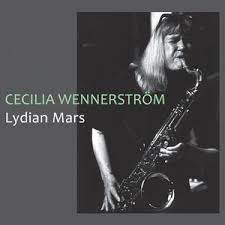
Cecilia Wennerström was born on April 21, 1947 in Stockholm, Sweden. Educated at the music academies in Malmoe and Gothenburg. She was influenced by Archie Shepp, Eric Dolphy, John Coltrane, Elvin Jones, Jack DeJohnette, and Charlie Haden. She took part in a workshop led by David Murray and has allied herself with the music since the Eighties.
From 1979-91 she was the leader of Salamander, a jazz group that toured a lot in Sweden and Europe on festivals and clubs. Salamander made its debut 1981 at the Women’s Jazz Festival in Kansas City, Missouri.
In 1990 she started working with the talented singer and voice art performer Marie Selander in several creative and exciting projects, like for instance Maries composition “Blåst-Tuuli-Wind” that was performed in Kallio-Kuninkala Festival, Finland in 1996. She would go on to tour many times between 1997 to 1999. During the decade she was a member of the all nordic women big band April Light Orchestra
Cecilia is a member of Wennerstrom Larsson Explicity with her husband Sven Larsson. They released their first CD Tussilago in 2011, and she is in the octet LARS 8 which plays compositions by Lars Gullin and other Swedish jazz icons.
Saxophonist, composer and arranger Cecilia Wennerström has won several awards over the three decades and continues to perform, record and compose.
More Posts: arranger,bandleader,composer,history,instrumental,jazz,music,saxophone