

Daily Dose Of Jazz…
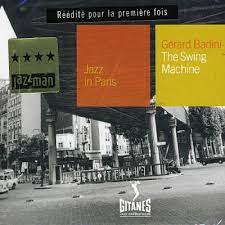
Gérard Badini was born April 16, 1931 in Paris, France to an opera singing father. He began playing professionally in the early 1950s, playing clarinet in New Orleans jazz-style ensembles with Michel Attenoux, Jimmy Archey, Lil Armstrong, Sidney Bechet, Bill Coleman, and Peanuts Holland.
In 1955, he joined Claude Bolling’s ensemble and then joined him on a worldwide tour as members of Jack Diéval’s orchestra. He switched principally to tenor sax beginning in 1958, continuing to work with Roger Guérin and Geo Daly in the late 1950s. In the 1960s he worked with Alice Babs, Duke Ellington, Jean-Claude Naude, Cat Anderson, Paul Gonsalves, Jef Gilson, and François Guin.
He founded his own group, Swing Machine, in 1973, working in this group with Bobby Durham, Raymond Fol, Michel Gaudry, Helen Humes, Sonny Payne, and Sam Woodyard. From 1977 to 1979, Badini lived in New York City, performing with Roy Eldridge, Major Holley, Oliver Jackson, Dick Katz, Clark Terry, Gerald Wiggins, and Reggie Workman.
In 1984, he formed a new big-band ensemble, Super Swing Machine, which he led and played piano in through the late 1990s. Known as Mr. Swing, bandleader, composer, reedist, and pianist Gérard Badini continues to .
More Posts: bandleader,composer,history,instrumental,jazz,music,piano,saxophone
Daily Dose Of Jazz…
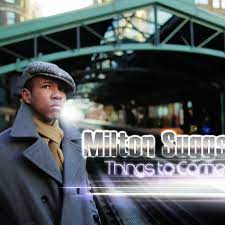
Milton Suggs was born on April 15th in Chicago, Illinois as a third generation musician. While growing up in Atlanta, Georgia he was continually exposed to music of varying styles, especially with his church choir at the age of seven. He recognized music as a gift from a young age; it was later that he would accept it as a calling. While in elementary and middle school, he gravitated toward the upright bass and later played the alto saxophone and drums, however, it was not until after high school that he committed to the pursuit of music as his life’s work.
Returning to Chicago, he began studying piano with the legendary Willie Pickens, while also honing his craft as a vocalist and performer. In 2012 Milton moved to New York City where he immediately took to performing throughout the city, branching out internationally as a performer and educator.
His voice and approach to music are a reflection not only of his direct lineage, but of the many great voices in Black American Music and culture from the past century and beyond. Firmly rooted in the blues Milton sports a rich baritone with the breadth and power reminiscent of Joe Williams, Donny Hathaway, and Nat King Cole.
Downbeat Magazine’s annual critc’s poll has been repeatedly voted a top 10 rising star male vocalist. Sugg’s fixture in jazz is cemented having worked with artists and bands such as the Jazz at Lincoln Center Orchestra, Orrin Evans, Wycliffe Gordon, Ulysses Owens, and Marquis Hill among others.
Vocalist Milton Suggs has produced four albums to date and is continually developing new projects with new ensembles.
More Posts: bandleader,history,instrumental,jazz,music,vocal
Daily Dose Of Jazz…
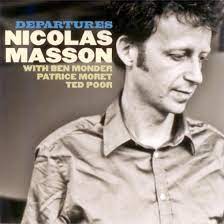
Nicolas Masson was born on April 14, 1972 in Geneva, Switzerland. He took up the saxophone in his youth and at twenty years old he met Cecil Taylor in New York and took lessons from Frank Lowe and Makanda Ken McIntyre. Returning home he enrolled in the jazz program at the Conservatoire Populaire de Musique de Genève with Maurice Magnoni as a saxophone teacher.
While a student he attended master classes withLee Konitz, Dave Douglas and Misha Mengelberg. In 1999 Masson spent the summer in New York City studying with Chris Potter. Graduating from the conservatoire in 2000 with a jazz performance and teaching degree, he returned to New York City for a year and studied regularly with Rich Perry and played with local musicians.
His debut album Awake was released in 2002 on the Swiss label Altri Suoni. The session was recorded with his New York band featuring trumpeter Russ Johnson, bassist Eivind Opsvik and drummer Mark Ferber. A year later they were touring Switzerland and Italy.
Receiving a grant from the Bourse d’Aide à la Création he was able to tour Italy and record his sophomore album Yellow (A Little Orange) that was released in 2006 on the Fresh Sound/New Talent label. In 2005 and 2006, the Quartet toured Italy again, taking part in an itinerant Swiss festival organized by Rome’s Swiss Cultural Centre, sharing the evening with Irène Schweizer, Lucas Niggli and Malcolm Braff.
In 2007, a New York concert, European duo tour with Kris Davis of Switzerland, Italy, France and Germany, a New York gig with the Quartet and a 2009 release Thirty Six Ghosts on Clean Feed Records kept him busy. Saxophonist Nicolas Masson continues to record and play throughout Europe.
More Posts: history,instrumental,jazz,music,saxophone
Daily Dose Of Jazz…
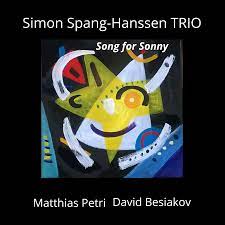
Simon Spang-Hanssen was born on April 13, 1955 in Copenhagen, Denmark andstarted playing alto saxophone but later added tenor and soprano. Receiving the annual Ben Webster Prize he created his own quartet Spacetrain with Ben Besiakov, Jesper Lundgaard and Alex Riel in 1979. He played in several groups before joining the sextet of Brazilian drummer and composer Nenê, and touring Denmark and France with Hermeto Pascoal e Grupo.
A move to Paris, France saw him playing with among others Denis Badault, Andy Emler, Nguyên Lê, Quintet Moutin, Ramuntcho Matta, Edouard Ferlet and with his own projects including musicians such as Richard Bona, Billy Hart, Niels Lan Doky, J.F. Jenny-Clarke, Bojan Z., and others. Returning to Copenhagen he created the tentet Central Earth and recorded Wondering with Maaneklar for Dacapo. Concerts and recording followed with a new quartet and quintet into the new millennium. He has had several iterations
Simon started the record label Alisio and released Rainbow Spirit and Coexistence with a quintet. These were followed with several other releases including The Riddle with Ear Witness, a live-recording in Copenhagen Jazzhouse with Maneklar XL, and two nominations for Danish Jazz Awards: Composer of the Year, Album of the year.
He has played and toured with the Aliso Ensemble South America, Scandinavia, and Zanzibar with Ear Witness. He released a new recording with the Epistrophy Septet with trombonist Peter Dahlgren. Saxophonist Simon Spang-Hanssen continues to perform and tour with a variety of musicians.
More Posts: bandleader,history,instrumental,jazz,music,saxophone
Daily Dose Of Jazz…
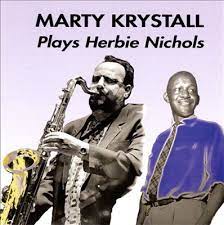
Marty Krystall was born on April 12, 1951 in Los Angeles, California. He beame fluent on tenor saxophone and clarinet and his sound was somewhat influenced by Ben Webster but is open to adventurous improvisations.
Marty has appeared in several of Buell Neidlinger’s groups through the years. Since the late 1970s he has worked as a Los Angeles studio musician and helped run the K2B2 record label. He has recorded with Neidlinger in Krystall Klear and the Buells, Buellgrass which was later renamed String Jazz, the group Thelonious, and a tribute album to Herbie Nichols.
He has recorded with Leon Kottke, Aretha Franklin, Peter Erskine, Hugh Schick, Yasushi Yoneki, and his marty krystall spatial quartet. Saxophonist and clarinetist Marty Krystall, who is a member of the Hollywood Bowl Orchestra, continues to explore the genres of jazz.
More Posts: bandleader,clarinet,history,instrumental,jazz,music,saxophone