Daily Dose Of Jazz…
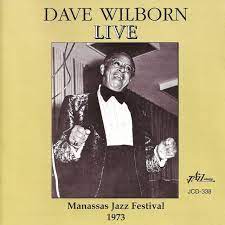
David Buckley Wilborn was born April 11, 1904 in Springfield, Ohio, on April 11, 1904. He started on piano at the age of 12 but switched to banjo soon after. He played with Cecil and Lloyd Scott in 1922, then joined William McKinney’s Synco Septet, which became the Cotton Pickers soon after. He sang and played banjo for the group until its dissolution in 1934, and when it reformed a short time later he remained in the group until 1937.
After 1937, Dave worked as a bandleader until 1950, after which he left full-time performance. When David Hutson formed the New McKinney’s Cotton Pickers, Wilborn also played in this ensemble. He sang and played on their albums New McKinney’s Cotton Pickers released in 1972 and their 1973 You’re Driving Me Crazy.
Banjoist and vocalist Dave Wilborn, who recorded with Louis Armstrong in 1928, transitioned during a performance in Detroit, Michigan on April 25, 1982.
Daily Dose Of Jazz…
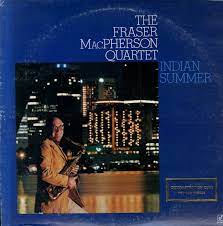
John Fraser MacPherson was born on April 10, 1928 in Saint Boniface, Manitoba, Canada. He moved with his parents to Victoria, British Columbia, Canada as a child where he learned piano, clarinet, and alto and tenor saxophones. After relocating to Vancouver, British Columbia to continue a commerce degree, he played in bands led by Ray Norris, Dave Robbins, Paul Ruhland, and Doug Parke.
He led his own groups and eventually took over the leadership of the Cave supper club band.In 1958 Fraser took a year’s leave to study in New York City, adding flute to his list of instruments.
Throughout the 1960s and 1970s MacPherson was a first-call studio player in Vancouver, as well as leading the house band at the Cave supper club. He also taught briefly in the Jazz and Commercial Music department at Vancouver Community College, where his students included future Powder Blues Band baritone saxophonist Gordie Bertram and New Orleans based saxophonist and jazz educator John Doheny.
Fraser’s debut album as leader of a small jazz group, Live at the Planetarium, was recorded for broadcast on the French-language CBC radio network. He leased the master tapes and released them on his own independent label, West End Records. The album was re-released by Concord Records, and he recorded several other releases for them. He also recorded for Sackville and Justin Time record labels.
In the summer of 1993, Pacific Music Industry Association (PMIA) created the Fraser MacPherson Scholarship Fund which annually awards grants of $2000 to four to eight aspiring music students.
Fraser MacPherson, who won a Juno Award for Best Jazz Album and was awarded the Order of Canada, transitioned in Vancouver at the age of 65 on September 27, 1993.
More Posts: bandleader,clarinet,history,instrumental,jazz,music,piano,saxophone
Daily Dose Of Jazz…
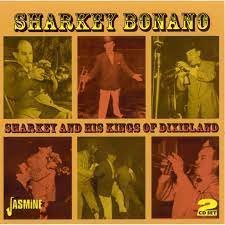
Sharkey Bonano was born Joseph Gustaf Bonano on April 9, 1904 in the Milneburg neighborhood of New Orleans, Louisiana near Lake Pontchartrain. In the 1920s he was in the local bands of Freddie Newman and Chink Martin. After moving to New York City he found work as a member of the Wolverines and with Jimmy Durante.
He worked next to Frankie Trumbauer and Bix Beiderbecke as a member of the Jean Goldkette orchestra. At the end of the 1920s, he led a band which included Louis Prima. During the 1930s he formed the Sharks of Rhythm and played in the Original Dixieland Jass Band. His sidemen during this period included Santo Pecora and Thurman Teague.
After World War II he toured Europe, Asia, and South America, played residencies in Chicago and New York, and then was a regular on Bourbon Street in the New Orleans French Quarter. In 1949, he appeared at the Roosevelt Hotel’s Blue Room and the Famous Door Bar.
Trumpeter Sharkey Bonano transitioned on March 27, 1972, at the age of 67.
More Posts: history,instrumental,jazz,music,trumpet
Daily Dose Of Jazz…
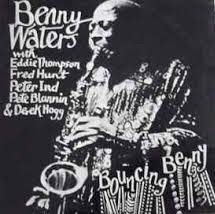
Derek Hogg was born April 8, 1928 in Oldham, England and started playing early in his career with marching bands. He began working in professional ensembles in the Fifties, including those of Freddy Randall, Don Rendell, Joe Saye, Ken Moule, Buddy Featherstonhaugh, Kenny Baker, Sandy Brown and Al Fairweather’s All Stars group.
He played with Vic Lewis in 1959-1960, then with The Squadronaires and Dudley Moore in the first few years of the decade. In 1962 he began working with Danny Moss, with whom he would continue to perform until the end of his career. Hogg went on to perform with Rosemary Clooney, Tony Coe, Digby Fairweather, Budd Johnson, Colin Purbrook, Benny Waters and Teddy Wilson.
Drummer Derek Hogg retired from active performance in 1987.
Confer a dose of an Oldham drummer to those seeking a greater insight about the musicians around the world who are members of the pantheon of jazz…
Derek Hogg: 1928 | DrumsMore Posts: drums,history,instrumental,jazz,music
Daily Dose Of jazz…
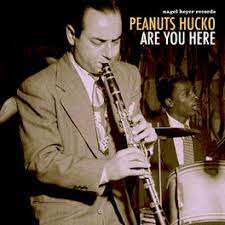
Peanuts Hucko was born Michael Andrew Hucko in Syracuse, New York on April 7, 1918. He moved to New York City in 1939 where he played tenor saxophone with Will Bradley, Tommy Reynolds, and Joe Marsala until 1940.
After a brief time with Charlie Spivak, he joined the Glenn Miller Army Air Force Band while serving in Europe during World War II. During this time, Peanuts began to concentrate on the clarinet. He was featured in Miller’s hard-driving versions of Stealin’ Apples and Mission to Moscow. Post-war, he played in the bands of Benny Goodman, Ray McKinley, Eddie Condon and Jack Teagarden. From 1950 to 1955, he was busy in New York as a studio musician for CBS and ABC.
He continued working with Goodman and Teagarden, When he visited Tokyo, Japan in 1951 as the lead alto saxophonist in Benny Goodman’s Orchestra, he listened to clarinetist Shoji Suzuki and his Rhythm Aces. With Suzuki and his band, they recorded the song Suzukake No Michi, which broke sales records in Japan. He then joined the Louis Armstrong All-Stars for two years from 1958 to 1960.
Hucko led his own group at Eddie Condon’s Club from 1964 to 1966. He became known for his work with Frank Sinatra as the clarinet soloist on Cole Porter’s What Is This Thing Called Love?, which was featured on Sinatra’s album In the Wee Small Hours. In 1964, he opened his own nightclub Peanuts Hucko’s Navarre, in Denver, Colorado which featured his singer wife Louise Tobin and Ralph Sutton. From 1966, he was featured regularly at Dick Gibson’s Colorado jazz parties where he appeared with the Ten Greats of Jazz, later called the World’s Greatest Jazz Band.
The Seventies saw Peanuts leading the Glenn Miller Orchestra and toured across the U.S. and abroad. He also toured with the Million Airs Orchestra, and appeared with the Lawrence Welk Orchestra. The next decade he toured with his Pied Piper Quintet before going into semi-retirement with his wife in Denton, Texas. He recorded his last session Swing That Music in 1992 featuring Tobin, trumpeter Randy Sandke, and pianist Johnny Varro.
As a composer he wrote or co-wrote See You Again, A Bientot, Peanut Butter, Blintzes Bagel Boogie, Falling Tears, First Friday, Tremont Place, and Sweet Home Suite. Big band clarinetist Peanuts Hucko, who sometimes played saxophone, transitioned in Fort Worth, Texas on June 19, 2003 at the age of 85.
More Posts: bandleader,clarinet,club owner,history,instrumental,jazz,music,saxophone