

Daily Dose Of Jazz…
Jerry Ross was born Jerold Rosenberg on March 9, 1926 in Bronx, New York to Russian parents of the Jewish faith. Growing up, he was a professional singer and actor in the Yiddish theater. Following high school, he studied at New York University under Rudolph Schramm and introductions to singer Eddie Fisher and others brought him into contact with music publishers at the Brill Building, the center of songwriting activity in New York.
Ross met Richard Adler in 1950 and as a duo they became protégés of composer, lyricist, and publisher Frank Loesser. They began their career in the Broadway theater with John Murray Anderson’s Almanac, a revue for which they provided most of the songs, resulting in recordings of Acorn in the Meadow by Harry Belafonte and Fini by Polly Bergen.
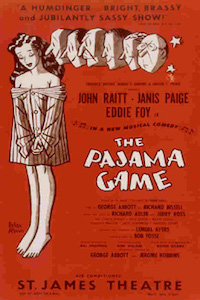
Their second effort, The Pajama Game, opened on Broadway in May 1954. It ran for 1063 performances, produced the jazz standard Hey There, won a Tony Award, Donaldson Award and the Variety Drama Critics Award. Two songs from the show,
Their next musical, Damn Yankees, opened on Broadway in 1955, starring Gwen Verdon. It ran for 1019 performances and produced the jazz standard Whatever Lola Wants, and won the Tony Award for Composer/Lyricist and Musical.
Composer and lyricist Jerry Ross, who wrote, alone or in collaboration more than 250 songs and was entered posthumously into the Songwriters Hall of Fame, transitioned on November 11, 1955, at the age of 29, from complications related to the lung disease bronchiectasis.

More Posts: composer,history,instrumental,jazz,lyricist,music,vocal

Daily Dose Of Jazz…
Anat Fort was born March 8, 1970 near Tel Aviv, Israel. She studied music at William Paterson University in Wayne, New Jersey and moved to New York City in 1996 to develop her skills in jazz improvisation under the guidance of pianist Paul Bley and study composition with Harold Seletsky before releasing her debut self-produced album Peel in 1999.
Signing with ECM Records, her first album A Long Story, released in 2007 arose from an association with drummer Paul Motian. This was followed by And If in 2010, the first album with her regular working group, the Anat Fort Trio.
Pianist and composer Anat Fort has recorded several acclaimed albums, has performed across Europe and the United States, and continues to pursue her jazz endeavors.
More Posts: bandleader,composer,history,instrumental,jazz,music,piano

Daily Dose Of Jazz…
Jean-Claude Naude was born on March 7, 1933 in Amiens, France. He attended the Amiens conservatory and played early in his career as a trumpeter for Raymond Fonsèque’s orchestra and with Georges Arvanitas.
By 1955 Naude was working with Maxim Saury, an association that would last a decade. He also played piano with Raymond Fonsèque in a trio with trombonist Luis Fuentes.
In the second half of the 1960s Jean~Claude led his own big bands and played with Gerard Badini, Jacky Samson, and Andre Paquinet. The 1970s saw him playing with Claude Bolling and in the 1980s with Bob Quibel.
Pianist and trumpeter Jean~Claude Naude transitioned on January 9, 2008.
More Posts: bandleader,history,instrumental,jazz,music,piano,trumpet
Daily Dose Of Jazz…
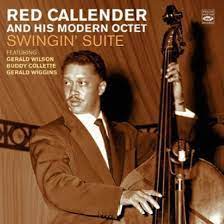
George Sylvester “Red“ Callender was born on March 6, 1916 in Haynesville, Virginia. He made his recording debut at 19 with Louis Armstrong’s band. In the early 1940s, he played in the Lester and Lee Young band, and then formed his own trio. Through the 1940s, he recorded with Nat King Cole, Erroll Garner, Charlie Parker, Wardell Gray, Dexter Gordon, Uffe Baadh and many others.
After a period spent leading a trio in Hawaii, Callender returned to the mainland, settling in Los Angeles, California. He became one of the first black musicians to work regularly in the commercial studios, including backing singer Linda Hayes on two singles. He would later turn down offers to work with Duke Ellington’s Orchestra and the Louis Armstrong All-Stars.
On his 1957 Crown LP Speaks Low, Callender was one of the earliest modern jazz tuba soloists. Keeping busy up until his death, some of the highlights of the bassist’s later career include recording with Art Tatum and Jo Jones, playing with Charles Mingus at the 1964 Monterey Jazz Festival, working with James Newton’s avant-garde woodwind quintet on tuba, and performing as a regular member of the Cheatham’s Sweet Baby Blues Band.
He reached the top of the British pop charts as a member of B. Bumble and the Stingers. In 1964, he was introduced and highlighted in performance with entertainer Danny Kaye on his television variety show, in a duet on the George and Ira Gershwin song, Slap That Bass.
He worked with an array of pop, rock and vocal acts as a member of The Wrecking Crew, a group of first-call session musicians in Los Angeles, California. Double bassist Red Callender, who also plays tuba, transitioned from thyroid cancer at his home in Saugus, California on March 8, 1992.
More Posts: bandleader,bass,history,instrumental,jazz,music,tuba
Daily Dose Of Jazz…
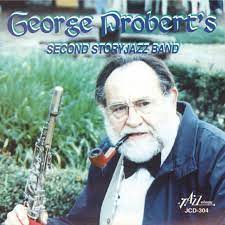
George Arthur Probert, Jr. was born on March 5, 1927 in Los Angeles, California and was an autodidact on his instruments. He first played with Bob Scobey from 1950 to 1953 and then went on to play with Kid Ory’s Creole Jazz Band.
Between 1954 and 1969, George played in the Firehouse Five Plus Two Dixieland Revival Band, an ensemble formed by Walt Disney Studios animators. They recorded with Disney composer George Bruns in 1957 and again in 1968.
Probert led his own bands from 1973, touring America and Europe. In 1997 he toured England, Germany & the Netherlands with Big Bill Bissonnette’s International Jazz Band. The all-star group featured Anthony “Tuba Fats” Lacen of New Orleans & British pianist Pat Hawes.
Clarinetist, soprano saxophonist and bandleader George Probert, who also worked as a television and movie music editor, transitioned on January 10, 2015 in Monrovia, California.
More Posts: bandleader,clarinet,history,instrumental,jazz,music