

Daily Dose Of Jazz…
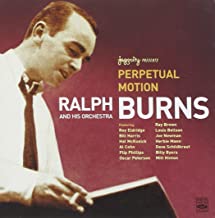
Ralph Jose P. Burns was born on June 29, 1922 in Newton, Massachusetts and began playing the piano as a child. Attending the New England Conservatory of Music, he learned the most about jazz by transcribing the works of Count Basie, Benny Goodman and Duke Ellington. While a student, he lived in the home of Frances Wayne, who was an established big band singer and her brother Nick Jerret was a bandleader who began working with him. He found himself in the company of performers as Nat King Cole and Art Tatum.
Moving to New York in the early 1940s, he met Charlie Barnet and the two men began working together. In 1944, he joined the Woody Herman band with members Neal Hefti, Bill Harris, Flip Phillips, Chubby Jackson and Dave Tough. Together, the group developed Herman’s sound. For 15 years, Burns wrote or arranged many of the band’s major hits including Bijou, Northwest Passage, Apple Honey, and on the longer work Lady McGowan’s Dream and the three-part Summer Sequence.
Herman band member Stan Getz was featured as a tenor saxophone soloist on Early Autumn, a hit for the band and the launching platform for Getz’s solo career. Burns also worked in a small band with soloists including Bill Harris and Charlie Ventura. The success of the Herman band provided Ralph the ability to record under his own name. He collaborated with Billy Strayhorn, Lee Konitz and Ben Webster to create both jazz and classical recordings.
Writing compositions for Tony Bennett and Johnny Mathis led to his later work with Aretha Franklin and Natalie Cole. He was responsible for the arrangement and introduction of a string orchestra on two of Ray Charles’s biggest hits, Come Rain or Come Shine and Georgia on My Mind. In the 1990s, Burns arranged music for Mel Tormé, John Pizzarelli, Michael Feinstein and Tony Bennett.
During the 1960s he quit touring as a band pianist and began arranging and orchestrating for Broadway shows including Chicago, Funny Girl, No, No, Nanette, and Sweet Charity. His first film score was for Woody Allen’s Bananas. He worked with Bob Fosse and won an Academy Award for Cabaret, and went on to compose the film scores for Lenny, New York, New York and All That Jazz, the latter garnered an Academy Award. Besides winning Oscars, Burns won an Emmy, a Tony and a Drama Desk Award. From 1996 until his death, he restored many orchestrations for New York City Center’s Encores! series.
Carefully hiding his homosexuality throughout his life, pianist, composer and arranger Ralph Burns, who was posthumously inducted into the New England Jazz Hall of Fame in 2004, passed away on November 21, 2001 from complications of a stroke and pneumonia in Los Angeles, California.
More Posts: arranger,composer,history,instrumental,jazz,music,piano
Daily Dose Of Jazz…
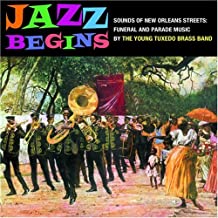
Herman Edward Sherman, Sr. was born in New Orleans, Louisiana on June 28, 1923. He played clarinet in high school and later picked up the alto and tenor saxophone. He began working with brass bands on the New Orleans jazz scene around 1940, playing in the Eureka Brass Band, the Onward Brass Band, and the Young Tuxedo Brass Band.
Taking over the leadership of the Young Tuxedo Brass Band in 1971, he remained for the rest of his life. During his tenure the group toured the United States repeatedly and performed in Berlin, Germany in 1980. He led the ensemble in the studio for their 1983 release Jazz Continues on 504 Records.
Occasionally he played in dance bands, but concentrated on his work in brass bands. Saxophonist and bandleader Herman Sherman passed away on September 10, 1984 in his hometown.
More Posts: bandleader,history,instrumental,music,saxophone
Daily Dose Of Jazz…
Antonio Sparbaro was born on June 27, 1897 in New Orleans, Louisiana to an immigrant Sicilian family. Early in his career he played with the Frayle Brothers Band, possibly as early as 1911, and the Reliance Band of Papa Jack Laine. He did side work with Merritt Brunies and Carl Randall.
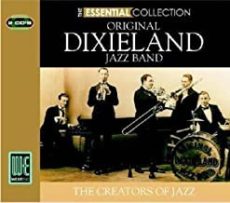
He joined the Original Dixieland Jass Band for their initial recordings in 1917 and he became its leader in the 1940s, remaining a member of the ensemble until its dissolution in the 1960s. He was the only founding member still in the group at that time. Sbarbaro composed for the group, writing the tune Mourning Blues among others. He remained a fixture of Dixieland jazz performance for most of his life. He played later in life in New Orleans with Miff Mole, Big Chief Moore, Pee Wee Erwin, and Eddie Condon.
He played at the New York World’s Fair in 1941 and with Connee Boswell in the 1950s. Quitting music in the 1960s due to the popularity of rock & roll, drummer Tony Sparbaro, known professionally as Tony Sbarbaro or Tony Spargo, passed away on October 30, 1969 in New York City. He was the drummer of the Original Dixieland Jass Band for over 50 years and their tune Darktown Strutters’ Ball was inducted into the Grammy Hall of Fame in 2006
More Posts: drums,history,instrumental,jazz,music

Daily Dose Of Jazz…
Clarence Profit was born on June 26, 1912 in New York City. Coming from a musical family, he began studying piano at the age of three and led a ten-piece band in New York City in his teens.
A visit to his grandparents in Antigua resulted in his staying in the Caribbean for five years. He also led a group in Bermuda. Returning to the States, Clarence led a trio. He co-composed Lullaby In Rhythm with Edgar Sampson. He was respected in his era, but after his early death he fell into obscurity. He was born, and died, in New York City.
Pianist and composer Clarence Profit, closely associated with the swing era, passed away in New York City on October 22, 1944.
More Posts: bandleader,composer,history,instrumental,jazz,music,piano
Daily Dose Of Jazz…
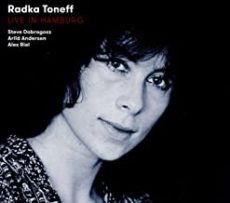
Ellen Radka Toneff was born on June 25, 1952 in Oslo, Norway. She was the daughter of the Bulgarian folk singer, pilot and radio technician Toni Toneff, and grew up in Lambertseter and Kolbotn. She studied music at Oslo Musikkonservatorium (1971–75), combined with playing in the jazz rock band Unis.
From 1975 to 1980 she led her own Radka Toneff Quintet, with a changing lineup including musicians like Arild Andersen, Jon Balke, Jon Eberson and Jon Christensen, among others. From 1979 she cooperated with Steve Dobrogosz, and in 1980 she participated in the Norwegian national final of the Eurovision Song Contest with the song Parken by Ole Paus.
Toneff was awarded the Spellemannsprisen 1977 in the category best vocal for the album Winter Poem, and posthumously received the Norwegian Jazz Association’s Buddypris in 1982. The Radka Toneff Memorial Award is funded with royalties from the albums Fairytales and Live in Hamburg. A biography of her life was published in 2008.
Her 1982 album Fairytales was voted the best Norwegian album of all time. Vocalist Radka Toneff, considered one of Norway’s greatest jazz singers, committed suicide with an overdose of sleeping pills and was found in the woods of Bygdøy outside Oslo on October 21, 1982.
More Posts: history,instrumental,jazz,music,vocal