


Daily Dose Of Jazz…
Floyd “Candy” Johnson was born on May 1, 1922 in Madison, Illinois and started on drums before moving to saxophone, with Ben Webster being his biggest influence. His professional career began in St. Louis, Missouri where he was a member of a group led by Chuck Finney. He attended Wilberforce University until the draft intervened but after his service, he played in bands led by Ernie Fields, Tiny Bradshaw, and Andy Kirk. With the Kirk orchestra he recorded for Decca Records.
Johnson preferred candy to alcohol, so a band member started calling him Candy, and the moniker stuck. In Detroit he started a band called the Peppermint Sticks. One musician recalled that the band dressed in candy-striped suits, and sometimes Johnson tossed peppermint sticks to the crowd.
1951 saw him as a member of the Count Basie Orchestra, recording with Basie for Clef Records before working in more of a rhythm and blues vein with Bill Doggett. The band had hits with Blip Blop, Honky Tonk, and Night Train. Leaving Doggett in the 1960s he went on to study music at Bowling Green State University.
By 1974, Candy was playing with the Duke Ellington Orchestra, the Count Basie Orchestra, and his friend Clark Terry. During a visit to New York City, he recorded with Helen Humes and Roy Eldridge. A year later, he accompanied the New McKinney’s Cotton Pickers at the Bix Beiderbecke Festival in Iowa.
Saxophonist Candy Johnson, who retired from performing, moved to Toledo, Ohio and taught at local schools, passed away on June 28, 1981 in Framingham, Massachusetts.

Daily Dose Of Jazz…
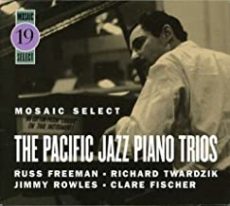
Richard Henryk Twardzik was born on April 30, 1931 in Danvers, Massachusetts and trained in classical piano as a child. He was taught by Margaret Chaloff, the mother of baritone saxophone player Serge Chaloff.
He made his professional debut at the age of fourteen. During his teen years Dick became addicted to heroin, which would eventually be his downfall later in life. Twardzik recorded with Serge Chaloff and Charlie Mariano. He worked with Charlie Parker on several occasions toward the end of Parker’s life. He also played professionally with Lionel Hampton and Chet Baker, recording with the latter and Chaloff in 1954 and 1955.
Pianist Dick Twardzik, who worked in Boston for most of his career, passed away of a heroin overdose while on a European tour with Chet Baker on October 21, 1955 in Paris, France.
More Posts: bandleader,history,instrumental,jazz,music,piano
Daily Dose Of Jazz…
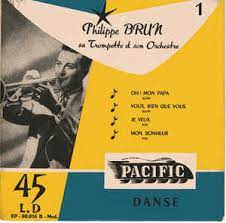
Philippe Brun was born on April 29, 1908 in Paris, France and first began playing professionally in the late 1920s with the bands of Gregor, Danny Polo, and Ray Ventura. In the early 1930s he spent time in London, England working with Bert Ambrose, Jack Hylton, and Fred Waring.
Returning to Paris around 1936, he performed with Jazz du Poste Parisien and with Ventura again, as well as with Django Reinhardt and Alix Combelle. He was recorded as a leader from 1937-1940. During World War II he worked in Switzerland, with Eddie Brunner, André Ekyan, Edmond Cohanier, and Teddy Stauffer.
Brun’s wife, Annie Fratellini, a vocalist and comedian, also performed with Raymond Fol and Kenny Clarke. Trumpeter Philippe Brun passed away on January 15, 1994 in Paris.
More Posts: bandleader,history,instrumental,music,trumpet

Daily Dose Of Jazz…
Raymond Fol was born in Paris, France on April 28, 1928 and along with his brother Hubert was raised in a musical household. He began playing piano at five years of age, and both he and his brother played in Claude Abadie’s ensemble after the end of World War II.
The Fol brothers then formed their own group, the Be Bop Minstrels, however, Raymond worked around this time with musicians such as Pierre Braslavsky, Jean-Claude Fohrenbach, Django Reinhardt, Roy Eldridge, and Johnny Hodges. In 1952, he did a European tour in Dizzy Gillespie’s band, and for several years in the middle of the decade was a regular at Paris’s Club Saint-Germain. He also worked in the 1950s with Sidney Bechet, Claude Luter, Guy Lafitte, and Stephane Grappelli.
He worked briefly in Rome, Italy in 1958, then returned to Paris, playing both piano and celesta at the Club Saint-Germain. In the 1960s and 1970s he worked with Kenny Clarke, Duke Ellington, Paul Gonsalves, Cat Anderson, and Gerard Badini. Raymond also recorded a few times on solo piano in the first half of the 1970s.
Pianist Raymond Fol passed away in the City of Lights on May 1, 1979.
More Posts: bandleader,history,instrumental,jazz,music,piano
Daily Dose Of Jazz…
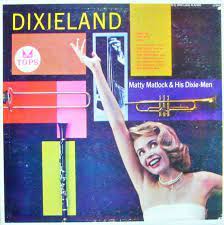
Julian Clifton Matlock was born on April 27, 1907 in Paducah, Kentucky and raised in Nashville from the age of ten. He began playing clarinet when he was 12.
From 1929 to 1934, Matlock replaced Benny Goodman in the Ben Pollack band doing arrangements and performing on clarinet. He was one of the main arrangers for Bob Crosby’s band and joined Crosby’s group in 1935 as clarinettist, playing with both the main Crosby band and the smaller Bobcats group. However, he was often seconded to write full-time for the orchestra and the Bobcats. He stayed with Crosby until the band broke up in 1942.
After the dissolution of Crosby’s group, Matty worked in Los Angeles, California playing for recordings made by a variety of Dixieland groups. In 1955, he appeared in the film Pete Kelly’s Blues, playing clarinet for a band that is seen in a scene in a Kansas City speakeasy in 1927. He would go on to play with Bing Crosby, Ella Fitzgerald, Ray Heindorf, Ben Pollack and Beverly Jenkins.
Dixieland clarinettist, saxophonist and arranger Matty Matlock, who recorded three albums as a leader, passed away on June 14, 1978 in Los Angeles, California.
More Posts: arranger,bandleader,clarinet,history,instrumental,jazz,music,saxophone