

Daily Dose Of Jazz…
William Earnest Green was born on February 28, 1925 in Kansas City, Kansas and learned to play the alto saxophone at age ten, picking up the clarinet when he was twelve. He eventually learned to play most varieties of saxophone, clarinet, and flute.
Serving in the military until 1946, Green began working at a club called Small’s in Kansas City. Relocating to Los Angeles, California in 1947 he enrolled at the Los Angeles Conservatory of Music and Arts, and graduating in 1952 remained on staff as an educator until 1962. He also ran a music education studio on La Brea Avenue in Los Angeles for many years.
During his early career Bill played with Gerald Wilson, and began working with Benny Carter in the latter half of the 1950s. From 1959 to 1962 he played in Louie Bellson’s big band, then went to work extensively as a section player in the bands of Quincy Jones, Henry Mancini, and Buddy Rich. He would accompany vocalists such as Frank Sinatra, Tony Bennett, Nat King Cole, Nancy Wilson, and Dionne Warwick.
Through the mid to late Sixties he played the Monterey Jazz Festival with Gil Fuller, worked with Oliver Nelson, and then Blue Mitchell. The 1970s saw him performing or recording with Gene Ammons, the Capp-Pierce Juggernaut, Ella Fitzgerald, Sonny Rollins, and Sarah Vaughan. He continued working with the Capp-Pierce Orchestra in the early 1980s, as well as with Lionel Hampton, Woody Herman, and the Clayton-Hamilton Jazz Orchestra.
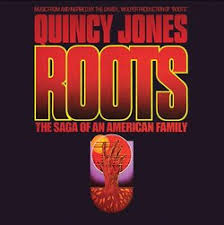
His most notable recordings are Benny Carter’s Aspects and the Quincy Jones recording of the soundtrack for Roots. Multi-instrumentalist Bill Green, who played most saxophones, clarinet and flute, passed away on July 29, 1996. His personal papers and recordings are archived at University of California, Los Angeles..

More Posts: clarinet,flute,history,instrumental,jazz,music,saxophone
Daily Dose Of Jazz…
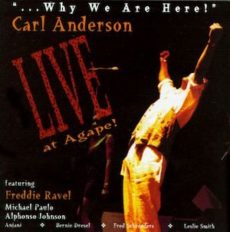
Carl Anderson was born Carlton Earl Anderson on February 27, 1945 in Lynchburg, Virginia, one of 12 children to James and Alberta Anderson. During his junior year of high school, he enlisted in the U.S. Air Force, where he served as a communications technician for two years. Honorably discharged and returning home he completed high school, graduating in 1965. He went on to sing at military bases across the United States as part of the World Wide Air Force Talent Contest.
Making his way to Washington, D.C. in 1969, he and some friends formed a group called The Second Eagle with Anderson handling the vocals. They covered jazz and rock tunes that included songs from the album Jesus Christ Superstar, released long before the stage production was launched. In 1971, a talent agent from the William Morris Agency saw Anderson perform some songs from the show at St. Stephen’s Church and recognized his potential as a solo performer.
His global popularity and star power came from his role as Judas in Jesus Christ Superstar both on Broadway and in the film. He also had rolesin The Black Pearl, The Color Purple, The Eddie Capra Mysteries, Cop Rock, Days of Our Lives, and Hill Street Blues.
As a recording artist, Carl was equally prolific, initially signing with Motown Records in 1972, working with Stevie Wonder on his Songs in the Key of Life double album, as well as numerous others. While working the club circuit in Los Angeles, California he was noticed by and signed to Columbia Records and released four albums on their Epic label. He would go on to perform duets with Gloria Loring, Angie Bofill, Linda Eder and Nancy Wilson.
His duet with Loring, Friends and Lovers, reached Number 2 on the charts, and endeared Anderson to soap opera fans, after being performed on Days of Our Lives. He also recorded Between You and Me, as the title theme for the film Her Alibi.
In 2003 he had a minor car accident on his way to perform and while being treated for his injuries, doctors discovered that he had leukemia. Soul jazz vocalist and actor Carl Anderson passed away the following year from the illness on February 23, 2004, in Los Angeles, just four days before his 59th birthday.
Daily Dose Of Jazz…
Ray Perry was born on February 25, 1915 in Boston, Massachusetts to a musical family and began playing the violin at a young age, and didn’t pick up the alto saxophone till he was twenty. He organized his first band, the Arabian Knights, in 1932.
Working the bread and butter gigs, he performed with the best in the business from 1935 to 1943, among numerous others, Dean Earl in the Little Harlem Orchestra, Clarence “Chick” Carter Orchestra with Gerald Wilson, then with Joe Nevils band when it masqueraded as the Blanche Calloway Orchestra, before joining the Lionel Hampton band. In the mid-thirties Ray developed a technique of simultaneously singing an octave below his playing as he bowed his violin. Hearing him, bassist Slam Stewart adopted the same technique, except he sang an octave above his playing.
Poor health forced him to return to Boston in late 1942, where he found work with Sherman Freeman, Sabby Lewis, and his fraternal band, the Perry Brothers Orchestra with Joe on tenor saxophonoe and Bey on drums, Performing more frequently on alto saxophone, despite his short career, Perry worked with Shadow Wilson, Illinois Jacquet Vernon Alley, J. C. Heard, Joe Newman, Fred Beckett, Sabby Lewis, Sir Charles Thompson, and Irving Ashby.
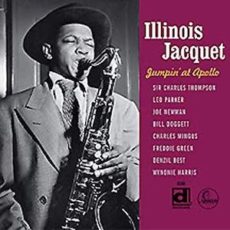
Health problems continued to dog him for almost a decade leading to the passing away of violinist and alto saxophonist Ray Perry from kidney disease at age 35 in November 1950 in New York City. However, his final record date was with Illinois Jacquet earlier that year. Some of his best surviving violin work was recorded with a Hampton septet in late 1940.
More Posts: bandleader,history,instrumental,jazz,music,saxophone,violin
Daily Dose Of Jazz…
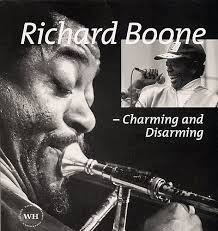
Richard Bently Boone was born on February 24, 1930 in Little Rock, Arkansas and began singing in a Baptist church choir as a boy. By age twwelve he was playing the trombone. He went on to serve in the U.S. Army from 1948 to 1953 where he played trombone in a military band. Following his discharge from the Army, he returned to Little Rock to study music at Philander Smith College.
In 1956 Boone moved to Los Angeles, California where he played with Dolo Coker, Sonny Criss, and Dexter Gordon. Working in the backup band for Della Reese between 1962 and 1966, he then became a member of the Count Basie band. A few years later he left Basie and emigrated to Copenhagen, Denmark and mking it his home, performed with the Ernie Wilkins Big Band.
Trombonist and scat singer Richard Boone passed away in Copenhagen on February 8, 1999.
More Posts: history,instrumental,jazz,music,scat singer,trombone,vocal
Daily Dose Of Jazz…
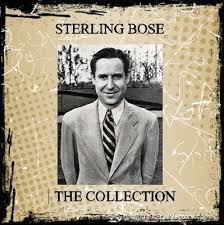
Sterling Belmont “Bozo” Bose was born on September 23, 1906 in Florence, Alabama and his style was heavily influenced by Bix Beiderbecke and changed little over the course of his life.
His early experience came with Dixieland jazz bands in his native Alabama before moving to St. Louis, Missouri in 1923. He played with the Crescent City Jazzers, the Arcadian Serenaders, and the Jean Goldkette’s Orchestra in 1927-28 after the departure of Beiderbecke. Following this he worked in the house band at radio station WGN in Chicago, Illinois before joining Ben Pollack from 1930 to 1933. He also worked with Eddie Sheasby in Chicago.
Moving to New York City in 1933, Bose had many gigs in the city during the 1930s to the mid 1940s, including time with Joe Haymes, Tommy Dorsey, Ray Noble, Benny Goodman, Lana Webster, Glenn Miller, Bob Crosby, Bobby Hackett, Bob Zurke, Jack Teagarden, Bud Freeman, George Brunies, Bobby Sherwood, Miff Mole, Art Hodes, Horace Heidt, and ending with Tiny Hill in 1946.
Following this period he did some further freelancing for the next two years in Chicago and New York, and finally moved to Florida in 1948, setting up his own bands there. Suffering from an extended period of illness in the 1950s, trumpeter and cornetist Sterling Bose, whose nickname was Bozo, eventually committed suicide in June of 1958. in St. Petersburg, Florida.
More Posts: bandleader,cornet,history,instrumental,jazz,music,trumpet